 English
  Arabic
  Indonesian
  Vietnamese
  Malay
Malay  Thai
Thai  Korean
  Russian
  French
  Italian
  Japanese
  Portuguese
  Turkish
  Spanish
 Back-Seal (Center-Seal) Bags
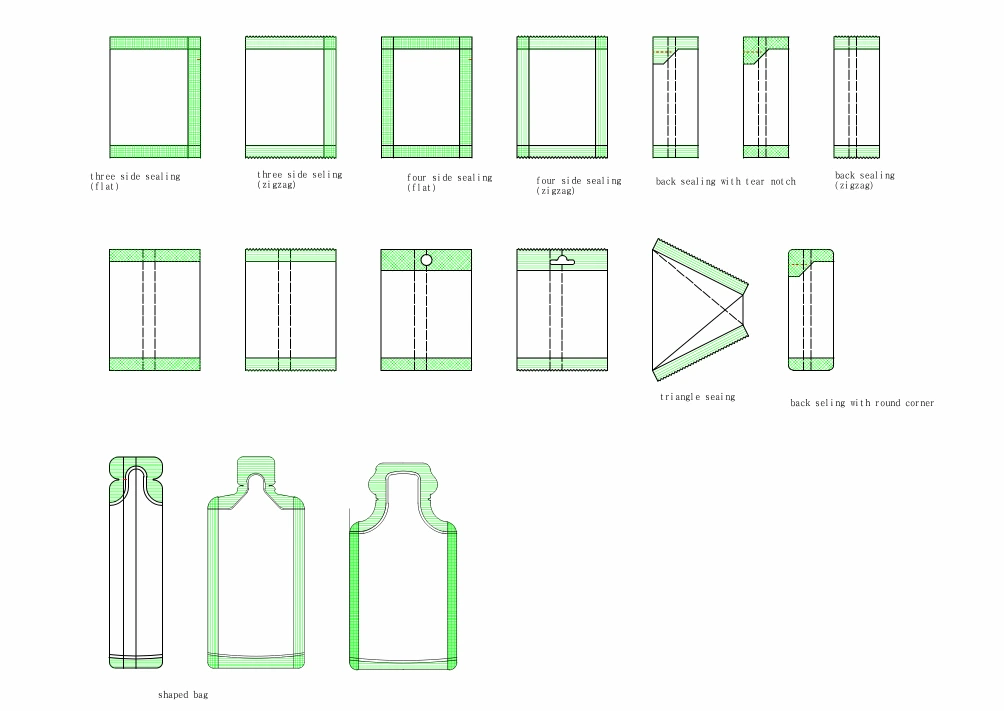
 A back-seal bag (also called a center-seal or fin-seal bag) is formed from a film that is folded with a vertical fin (back) seal. The film is folded in half and the two free edges are sealed together along the back, forming a seam running lengthwise. The top and bottom ends are then heat-sealed or finished, creating a simple tube‐shaped pouch. This design yields a flat front and back panel with a reinforced spine at the center.
Sealing Method: The back seal (fin seal) runs vertically down the center of the bag, created by heat-sealing two layers of film together. The top and bottom edges are sealed horizontally after filling. This leaves the front of the bag as a single, unbroken surface.
Advantages: Back-seal bags use minimal film compared to other pouch types, so they are highly cost-effective to produce. The strong vertical fin seal provides good durability and tensile strength. The flat faces of the bag maximize printable area for branding and product information. Because the structure is essentially a finished tube, back-seal bags run very efficiently on high-speed packaging lines.
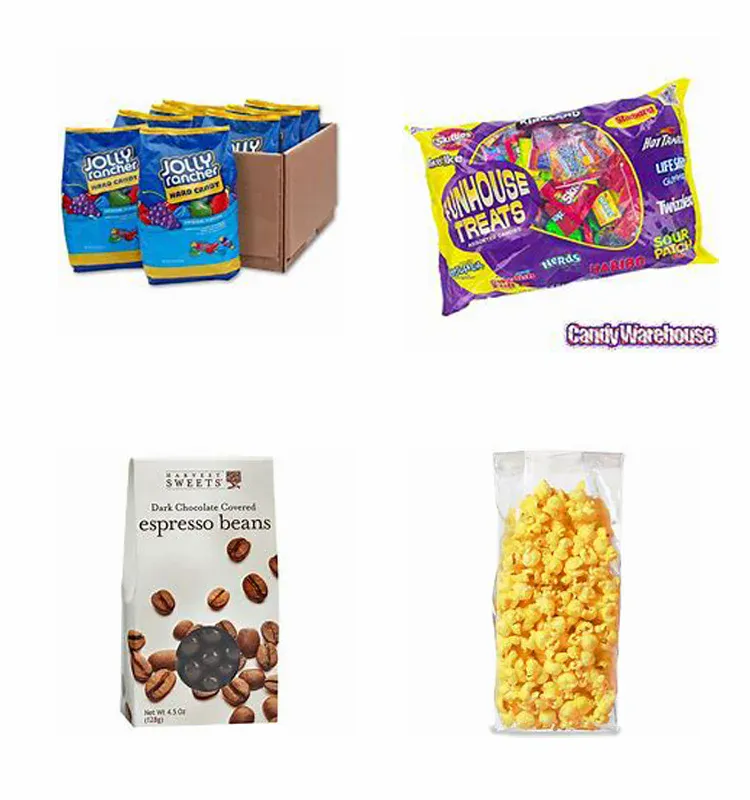
Applications: This style is widely used for dry foods and powders. Common uses include coffee, tea, snacks (chips, popcorn, nuts), candy, and pet food. The robust seal and simple shape make it suitable for detergents and bulk staples (rice, grains) as well.
Key benefits of back-seal bags: low production cost; strong, secure seal; streamlined stacking and display. For example, a center-seal coffee pouch can withstand high fill weights and pressures, yet still lie flat on a shelf with the product label fully visible on the front.
Three-Side Seal Bags
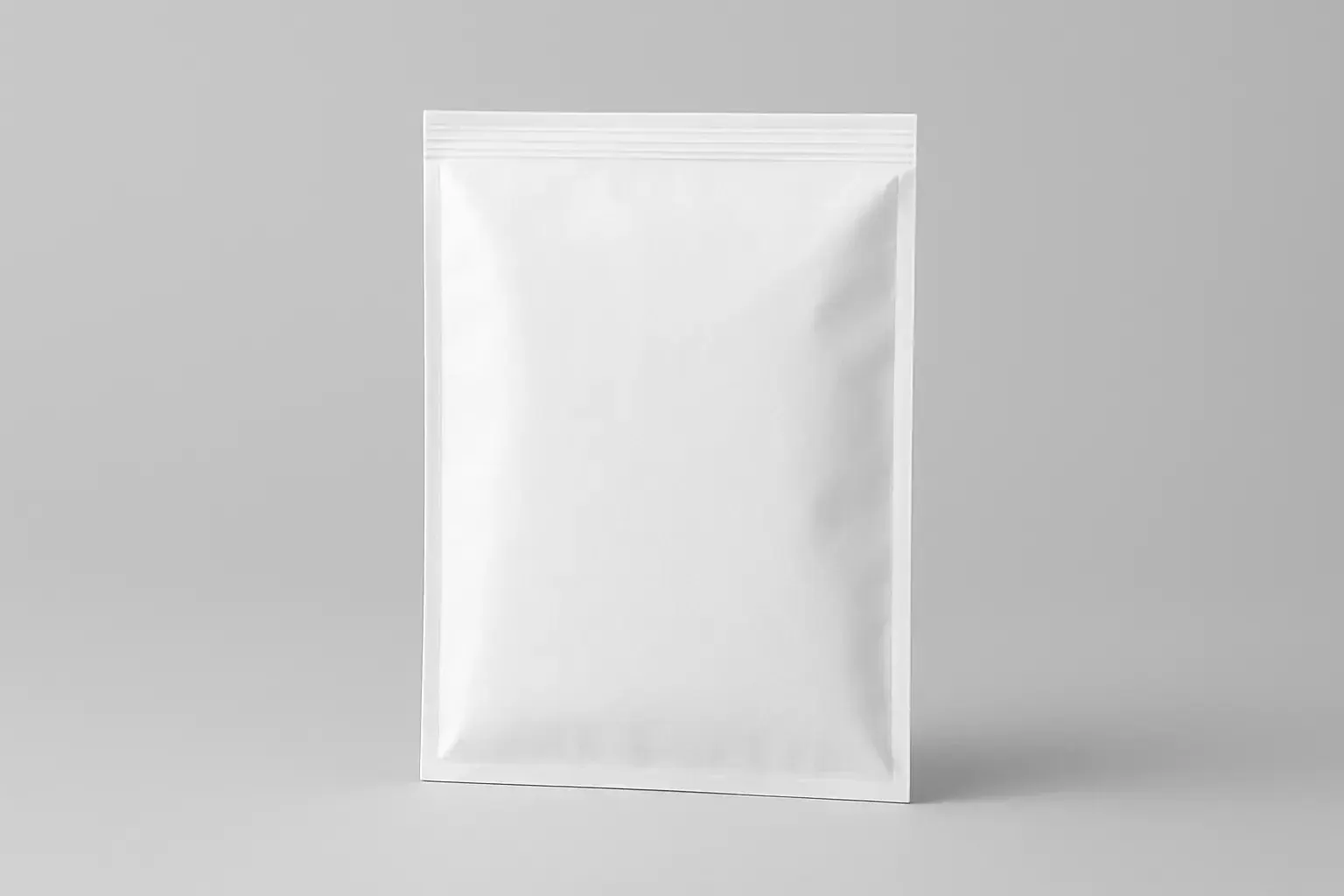 A three-side seal bag (sachet) is sealed on three edges and typically opens at the top. Usually, the bottom and two side edges are heat-sealed, while the fourth edge is folded or left open for filling. This results in a flat, pillow-like pouch (often called a “flat pouch”) that is compact and rectangular.
Sealing Method: After the film is cut to size, three edges are heat-sealed (often bottom and both sides), leaving one edge unsealed. The filled bag is then sealed on that final side or secured after filling. Some variations use a bottom fold (lap seal) instead of a third seal for the bottom edge.
Advantages: Three-side seal bags are highly economical and easy to produce. They provide more bag volume than a rigid box of the same footprint and more internal space than a four-side pouch (because one side can expand). The flat shape is well suited for carton-packing or multi-pack displays, ensuring package uniformity. It is simple to incorporate tear notches, reclose zippers, spouts or hang holes for added consumer convenience. They also can be used on automated pouching machines.
Applications: These pouches are popular for portion packs and samples. Foods like single-serve drink mixes, spice blends, snack chips, dried fruit, jerky, pet treats, and condiments are commonly packaged in three-side seal pouches. They work well for solid or powdered products (granola, sugar, powdered soups) and are often sold in a box of multiple sachets.
Typical advantages: flat, compact profile; good for carton display; cost-effective; easier fill (especially on gravity or pump fillers). Three-side pouches are favored when consistent bag size is needed (e.g. multi-pack boxes) and where barrier can be provided by multi-layer films.
Four-Side Seal Bags
 A four-side seal bag (also called a 4-side pouch or flat sachet) is sealed on all four edges. It has no gussets and no fold—each of the front, back, and two side edges is heat-sealed. This creates a fully enclosed, rectangular package.
Sealing Method: The entire perimeter of the pouch is sealed. Typically, two seals form the top and bottom, and two form the side edges. The pouch is often made by placing a stack of films (or cutting a folded film) and sealing the edges, then cutting between seals to separate individual bags.
Advantages: Sealing on all sides gives maximum protection and rigidity. A four-side pouch holds its shape well (it’s difficult to collapse or distort). The continuous seals block out moisture, light, and air very effectively. The flat, smooth faces allow 360° of printing and a clean appearance, which is especially useful for premium or medical products. Uniform cuboid shape also eases automated filling and handling.
Applications: Four-side bags are ideal for liquid or viscous foods (soups, sauces, smoothies) because they resist leakage on all edges. They are also used for sample-size products (cosmetics, pharmaceuticals), and any goods needing an airtight seal and glossy flat surface. Smaller portions of candy, nutraceuticals, or condiments in single-serve packs often use four-side seals. Because they can incorporate zipper or spout closures, they fit well for refillable or resealable applications.
Key benefits: outstanding seal strength; very uniform, premium look; excellent for barrier-sensitive products. For example, a four-side seal mayonnaise pouch stays airtight under pressure, and its four smooth panels showcase branding on the front and back.
Gusseted Bags
 Gusseted bags have additional folded panels (gussets) on one or more sides, which expand when the bag is filled. The most common types are side-gusset and bottom-gusset pouches. A gusset is a fold that lies flat against the back or base when empty but opens out to create extra room inside.
Sealing Method: Gusseted bags are typically back-sealed or have side-seal plus gussets. For a bottom-gusset (stand-up) bag, the bottom of the pouch has a gusset that unfolds when filled, while the pouch may have a back fin seal or side seals. For a side-gusset bag, the gussets run along each side edge of a flat bag (front/back panels intact) and only one back or front seal is needed. Top edges are heat-sealed after filling.
Advantages: The gussets allow the bag to accommodate bulky or heavy contents. A bottom gusset lets the pouch expand in volume (ideal for granules or powders) and typically enables it to stand upright. Bottom-gusset bags often include a zipper and can hold more weight than a simple flat bag. Side-gusset bags are standard for products like coffee or tea: the side folds expand outward as contents shift, improving shelf stability. These bags often incorporate degassing valves, tear notches, and custom printing. Gusseted designs preserve a rectangular printing area even when full, giving both marketing space and functional volume.
Applications:
Bottom Gusset Pouches: Common for snacks (nuts, popcorn), baking mixes, pet food, powdered drinks, and any item needing stand-up display. They are prevalent for products like trail mix, pancake mix, candy, or even liquids (with spouts), since the flat bottom provides support.
Side Gusset Pouches: The industry standard for packaging coffee beans and ground coffee. The double side folds expand as coffee is added, and a one-way vent valve is often included to release gases. These bags also fit rice, legumes, detergents, or large quantities of tea. Side gusset bags are usually constructed from strong barrier films (foil or multi-layer) to keep freshness.
Key benefits: Gusseted pouches maximize product capacity in a compact footprint. Bottom-gusset pouches stand up on shelves for visibility, while side-gusset bags pack efficiently in cartons or on pallets. Both types give designers extra surface area for graphics and allow clear windows or reclose features without sacrificing volume.
Stand-Up Pouches (Doypack)
 Stand-up pouches, often called Doyen bags or simply “doypacks,” are fully-formed flexible pouches with a gusseted base so they can stand upright on shelves. They typically use a back seal (fin seal) or side seals and include a folded bottom (either a Doyen round bottom or a flat K-seal) that expands when filled. Because of their upright format, they offer excellent shelf presence and ease of display.
Sealing Method: Most stand-up pouches are sealed on the back (vertical fin seal) and have a special bottom gusset. Two main bottom styles are used: the round Doyen bottom and the flat K-seal bottom. The pouch is first sealed into a tube, then heat-sealed at the bottom to create the base. The K-seal variant allows manufacturers to use a universal tool (no custom dies needed), while the classic Doyen bottom requires a custom tool for each size. After filling, the top is sealed or fitted with a zipper.
Advantages: Stand-up pouches combine the flexibility of bags with the self-supporting nature of a box. Their gusseted base means they require no external support and can stand alone, attracting consumer attention. They have a larger capacity and more surface area for printing than a flat pouch of the same footprint. The pouch walls can accommodate heavy-duty seal layers for barrier protection, and add-ons like zippers or spouts are easy to integrate. Stand-up pouches also handle a wide weight range; for example, a doypack can hold several pounds of product while still standing upright.
Applications: These pouches are extremely versatile. Foods commonly packaged in stand-up pouches include coffee, tea, pet kibble, frozen vegetables, juices (with spout), and snack foods (chips, nuts). They are also used for sauces, soups, dry mixes, and even non-food items like detergents. The design makes them ideal for products that benefit from shelf display and resealability. For example, a bottom-gusseted pouch can contain coffee beans with a zip-lock closure, preserving aroma while standing attractively on the shelf.
Production Note: Modern machines allow rapid production of doypacks. The common K-seal design, in particular, simplifies tooling and enables high-speed output. Figure: The schematic below illustrates the two bottom styles: the traditional Doyen (round) bottom vs. the flat K-seal bottom. Each creates a footed pouch when expanded.
Pillow Pouches (Lay-Flat Pouches)
 A pillow pouch (lay-flat pouch) is the simplest flexible bag. It is essentially a tube sealed at both ends. The name comes from its shape when filled – a bulging pillow-like middle with flat sealed edges. A pillow pouch is typically made from a single piece of film: after forming a tube (by a fin seal or lap seal), the top and bottom ends are heat-sealed. Because there are only three seals (two horizontal ends and one vertical back seal), the structure is very efficient.
Sealing Method: Construction involves three critical seals. A vertical fin seal runs down the back (overlapping edges of the tube). The top seal and bottom seal are heat presses applied after filling. In some cases, a lap seal (overlapping flat film edges) may be used instead of a fin seal. The result is a closed-end bag that needs no additional folds or gussets.
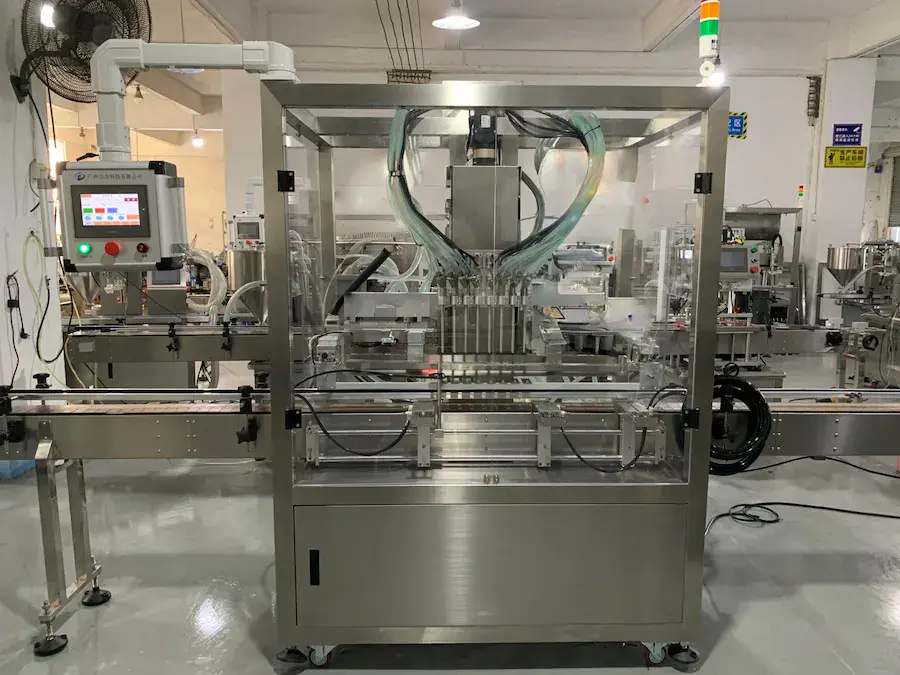
Advantages: Pillow pouches are the most cost-effective pouch style. Their simple shape uses minimal film and is easy to manufacture at very high speeds. This means low per-unit cost and fast throughput for large runs. The pillow design is still adequate to protect products, especially when flushed with nitrogen to cushion fragile items (like chips) and displace oxygen. Pillow bags pack flat for shipping, saving space, and can incorporate all the usual features (tear notches, zippers, windows) as needed.
Applications: Almost any dry food is sold in pillow pouches. You’ll find them used for potato chips, snack mixes, cereals, candy, powdered milk, coffee single-serve sticks, and frozen vegetables. They’re also common for small or single-serve portions of sauces, spices, and pet treats. Because they can be made from high-barrier films, they keep food fresh. For example, a chip bag (pillow pouch) is often nitrogen-flushed and then sealed – the three seals provide a secure enclosure that resists puncture.
Key features: lightweight and portable; economical for mass production; customizable in size and material. Their fully printable front and back surfaces allow vibrant graphics, making them a marketing workhorse. As one industry guide notes, the pillow pouch “remains the most common and economically efficient form of flexible packaging” for snacks and similar products.