 English
  Arabic
  Indonesian
  Vietnamese
  Malay
Malay  Thai
Thai  Korean
  Russian
  French
  Italian
  Japanese
  Portuguese
  Turkish
  Spanish
 Premade Pouch Packaging Machines: An Overview

Premade pouch packaging machines automate the filling and sealing of preformed bags (doypacks, stand-up pouches, zipper pouches, 3- or 4‑side seal bags, spouted pouches, etc.). Unlike form-fill-seal machines that form bags from film, these machines pick, open, fill and seal ready-made pouches. They are widely used in food, beverage, pharmaceutical and chemical industries for packaging powders, liquids, granules and other products in flexible bags. Modern pouch machines emphasize hygiene (stainless steel and food-grade parts) and precision (servo drives, PLC controls) to ensure consistent fill weights and high-speed output.
Pouch packaging lines may be rotary (vertical-turret) machines or horizontal machines. Both styles share many functions (bag feeding, opening, filling, sealing, discharge), but differ in layout, throughput and application. Below we compare rotary (vertical) and horizontal premade pouch machines, highlight why rotary machines often excel in high-volume lines, and explain key features of Yundu’s ZP-8R200 rotary stand-up pouch packer.
Rotary (Vertical-Turret) Premade Pouch Machines

Yundu-ZP-8R200 rotary pouch machine
A rotary pouch machine uses a rotating turntable or turret with multiple stations arranged in a circle. Each station performs one step of the cycle (bag loading, opening, filling, sealing, etc.) as the turret indexes pouch‑by‑pouch around the machine. This circular, multi‑station design enables continuous, high-speed operation – often much faster than linear machines. For example, typical rotary machines like the ZP-8R200 can run up to 60 bags per minute, handling fill ranges from a few grams to multi-kilograms.

Stand-up Pouch Packaging Machine Touchscreen
Key characteristics of rotary pouch machines include:
- Multi‑station turret:A rotating wheel (turret) holds bags at several stations. As the wheel turns, each bag is sequentially picked, opened (even zippered bags can be auto‑opened), filled and sealed. Because each function happens at a dedicated station, the process is smooth and continuous.

Stand-up Pouch Packaging Machine Heat Sealing Station
- High throughput:Continuous rotary motion with 4, 6, 8 or more stations yields very high output. For instance, an 8‑station rotary can approach 60 bags/min, much faster than many single‑station machines. The multistation design means one bag is being opened while another is sealing, etc., maximizing cycle overlap.

Unloading Station
- Versatility:Rotary machines can handle diverse pouch types and sizes with simple adjustments. They are used for stand-up pouches, flat pouches, spout pouches, gusseted bags, zipper bags, quad-seal bags, etc.. Swapping clamps or changeover parts lets them adapt to different bag formats. Minimal tooling changes are needed compared to linear machines. As one industry source notes, rotary machines “can handle a wide range of product types and packaging formats with minimal adjustments,” making them ideal for manufacturers with varied product lines.

Stand-up Pouch Packaging Machine Guide Rail
- Stable, continuous filling:The vertical orientation and fixed stations lend stability to the filling process. Every bag is held firmly and filled at a precise station, improving accuracy and seal quality. Automatic features (like no-bag/no-fill interlocks) ensure that if a bag fails to open or seal properly, filling is halted.

Packaging Machine Dust Removal Station
- Compact working profile:Although the machine footprint is larger (the turret and frame), the pouch handling is compact. Bags are typically oriented vertically (bottom down) around the circle. This often results in a relatively compact machine height compared to long horizontal conveyors. (Note: absolute footprint can be larger due to space needed for multiple stations around a radius.)

Packaging Machine Bag-Opening Station
A practical example is Yundu’s ZP-8R200 Rotary Stand-Up Pouch Machine. It uses an 8-station rotary to handle bags 80–200mm wide (up to 400mm long) at up to 60 pouches/min. The rotating system automatically feeds, opens and seals each bag in sequence. Key automatic features include one-button start/stop, a Siemens PLC with touchscreen interface for speed and parameter control, and advanced detection (e.g. no-bag/no-fill/no-seal interlocks). In operation, the ZP-8R200 continuously picks up a pre‑made bag, opens it (even a zipper pouch, via a servo-driven opener), adds the product (e.g. powder via an auger feeder), and then hermetically seals it—all without stopping the turret’s rotation. This yields very high output with minimal downtime.
Horizontal Premade Pouch Machines
A horizontal pouch machine feeds bags in a linear (horizontal) path. Pouches are usually taken from a stack or magazine and conveyed along a frame. Typical operations still include bag picking, opening, filling and sealing, but the pouch moves forward through each step rather than rotating.

Key features of horizontal machines include:
- Linear layout:Bags travel in a straight line on a conveyor or indexing system. Each bag may be filled in a single station or a few sequential stations. The design is often simpler and more compact in footprint for smaller machines.
- Versatile pouch styles:Modern horizontal machines handle almost any pouch style – stand-up (SUP), zipper, spout, doypack, pillow, flat, quad‑seal, even odd shapes. They often include bag holders or conveyors that can orient and open a variety of formats. For example, horizontal machines can run stand-up pouches, spout pouches and shaped bags by combining servo-driven fillers and special clamps.
- Suitable for varied products:They can fill liquids, powders or granules. Filling is done by integrated devices (auger fillers for powders, piston/valve fillers for liquids, multi-head weighers for granules). Modern lines allow quick switching between product types by changing dosing heads.
- User-friendly maintenance:Horizontal machines often have simpler single-axis drives and a straight structural layout. This makes them easy to access, clean and maintain. Operators can easily observe bag handling and adjust settings from the front of the machine.
For example, a horizontal pouch machine will typically “combine with combination scale, linear scale, volumetric cups, auger filler, and piston filler dosing systems” to handle powders, granules and liquids. They include safety and QC features like “no-bag, no-fill, no-seal” sensing and dust extraction for powders. Typical speeds vary widely – some horizontal machines run 3-15 bags/min (for large bags), while high-performance models can reach hundreds of bags per hour (see e.g. JR8-240 rotary mentioned at 3,000 bags/hr, which is still essentially a rotary design).
Key Differences: Rotary vs Horizontal Machines
Speed and Throughput: Rotary (vertical) machines generally achieve higher throughput due to multiple stations working in parallel. For example, a single 8-station turret can handle the same volume that would require multiple cycles on a single-head horizontal machine. In practice, a high-speed rotary can process on the order of 50–60 bags/min, whereas a comparable horizontal machine might run slower unless multiple infeed streams are added.
Motion and Process Flow: In a rotary machine, bags move in a circle and all operations happen around the turret. In a horizontal machine, bags move straight and may stop during filling/sealing. The rotary’s continuous indexing means less start/stop for each bag, increasing efficiency. As one packaging expert notes, “rotary machines have a circular design, with multiple stations… Products move through different stages … as the rotary mechanism rotates,” whereas horizontal/vertical machines feed products sequentially in a line.
Versatility: Both types are versatile, but in slightly different ways. Rotary machines excel at quick changeover between different pouch sizes (through automated clamp adjustments) and can handle large, heavy bags with their sturdy turret. They are often used for very diverse applications – powders, liquids, granules, even irregular or gusseted pouches. Horizontal machines also handle many pouch types and are especially easy to adapt for special features (e.g. T-punch holes, bag insertion, etc.). According to Rezpack, horizontal machines can handle stand-up, zipper, spout and shaped pouches for products from food to cosmetics. The choice may depend on the range of bag sizes and shapes: wide, short bags (e.g. 3‑side seal) may be easier on a horizontal format, while tall stand-up zipper bags may suit the vertical turret orientation.
Footprint and Layout: Rotary machines typically have a larger overall footprint because of the turret radius and multiple attachments around it. Horizontal machines can be more compact in linear length for small to medium speeds. However, because rotary machines pack so much capability into a circular layout, they can actually save floor space for equivalent high throughput. In space-constrained plants, the decision often comes down to whether machine height or floor area is more critical.
Complexity and Cost: Rotary machines are generally more complex mechanically (more moving stations, servo or pneumatic systems on each station) and thus tend to be higher cost and require more maintenance skill. Horizontal machines are simpler but may require duplicate components if multiple lanes or high speeds are needed. In a cost vs. productivity balance, high-volume producers often justify the advanced rotary machines for their output gains.
In summary, rotary machines are best for very high speeds and heavy automation with diverse bag formats, whereas horizontal machines shine in smaller footprints or specialized applications. The chart below compares some attributes:
- Throughput:Rotary machines can exceed 50 bags/min on one turret. Horizontals often top out lower unless multi-lane, but can still reach hundreds per hour.
- Bag Types:Both handle stand-up, spout, zipper, pillow and flat pouches. Rotary machines (like Yundu’s ZP-8R200) explicitly support stand-up, zipper, 3-side seal, flat pouches, etc. as standard. Horizontals likewise support stand-up, pillow, gusset, shaped, spouted bags.
- Changeover:Rotary designs often offer quick electronic adjustment of bag width (via servo clamps on the turret) and preset memory for parameters. Horizontal machines may require manual guide adjustments but can change formats rapidly too.
- Automation:Rotary turrets lend themselves to fully integrated lines (the turret can incorporate weight scales, dosing screws, labelers, etc.). Horizontal setups also connect easily with fillers and conveyors but might need more layout planning.
- Operator Access:Horizontal machines’ straight-line flow makes front access easy. Rotary machines typically have guarding around the turret, but well‑designed machines use safety doors and lights (see below) to allow quick access when needed.
Advantages of Rotary Vertical Bagging Machines
Because of their unique design, rotary (vertical) pouch packers offer several distinct advantages:
- High Speed & Efficiency:Multiple stations working in parallel mean the machine is always in action. This continuous operation yields very high throughput and better utilization of upstream/downstream equipment. It can keep up with very fast filling systems (auger, dosing, etc.) and meet demands of large-scale production.
- Versatile Integration:Rotary machines easily integrate with other packaging line components. For example, Yundu’s ZP-8R200 can be linked with multi-head weighers, automatic piston fillers or auger feeders (spiral conveyors) that continuously supply product to the filling station. It also readily connects to downstream conveyors, carton packers or labelers. This allows a completely automatic line – from batch mixing through final sealing – with minimal manual transfer.
- Consistent Quality:Each pouch is securely held and sealed at the same position every cycle, yielding uniform sealing and fill. Rotary machines often include features like dual (upper and lower) heat seal bars, precise servo-driven zipper openers, and tight clamp closure to ensure leak-proof, dust-free seals. In practice, this results in better product protection and appearance.
- Hygiene and Safety:The closed, vertical setup can maintain high hygiene standards. Machines like the ZP-8R200 use food-grade stainless steel and have hygienic designs (smooth surfaces, no dead spaces). Automated cleaning features (e.g. built-in dust extraction or vacuum cleaning of bag interiors) remove particulates before sealing. Safety is also built-in: the ZP-8R200 has four safety-door interlocks and warning lights so that opening any door halts operation and alerts the operator. In short, rotary machines can be highly compliant with food/pharma sanitation rules.
- Compact Handling of Bulk:Despite the larger footprint, the turret allows handling multiple heavy bags simultaneously. For large-volume fill weights (hundreds of grams to kilograms), a rotary machine’s robust design can manage the weight without strain on the system. This makes them suitable for dense products (frozen foods, powders, pellets, etc.) in large pouches.
- Automation Features:Advanced rotary machines come with many built‑in smart controls. For instance, Yundu’s ZP-8R200 includes one-touch start/stop and a Siemens PLC with rotatable touch screen for intuitive control and monitoring. Parameters for bag size, fill weight and sealing temperature can be stored and recalled for repeat jobs. Sensors enforce “no bag, no fill, no seal” logic, preventing spills or waste. Additional functions like nitrogen flushing, date coding, or weight inspection can be integrated seamlessly.
Overall, for a production line requiring reliability and speed, a rotary premade pouch machine often proves the superior choice. Its advantages in throughput, versatility, and integration enable streamlined, high-capacity operations.
Yundu’s ZP-8R200 Rotary Premade Pouch Machine
Yundu’s ZP-8R200 exemplifies a modern rotary vertical bagging system. Built to strict hygiene and safety standards, it is tailored for stand-up pouches, zipper pouches, 3-side seal bags and flat bags (among other styles) with widths of 80–200 mm and lengths up to 400 mm. Key features include:
- Sanitary Construction:All machine parts in contact with product or bags are made of food-grade stainless steel. The frame is fully welded (80×80 mm steel columns) for stability and easy cleaning. This ensures compliance with food- and pharma-grade hygiene requirements.
- Automated Feeding and Cleaning:The ZP-8R200 integrates an automatic spiral (auger) feeder that continuously lifts product (powder, granules, etc.) into the filling area. A built-in vacuum cleaning or dust extraction system removes excess product and particulates, keeping the pouch interiors clean before sealing. These features reduce manual intervention and improve fill precision.
- One‑Touch Control:A single start/stop button simplifies operation. Behind it, a Siemens PLC controls the machine, and an adjustable color touch screen shows status and faults. Operators can change bag width via electric clamps, adjust speed, and store recipes in memory. The system also supports remote access/editing of programs for quick line changeovers.
- Robust Safety:Four safety doors with interlocks guard the machine; opening any door triggers an alarm and stops the machine instantly. A three-color signal tower displays running status at a glance. These protections keep operators safe and alert maintenance teams to issues immediately.
- Intelligent Operation:The machine uses closed-loop servo drives and frequency inverters to modulate speed precisely based on load. It features smart detection: if a bag fails to present or open, the machine skips filling/sealing that cycle (no-bag, no-fill, no-seal). Alarms are also raised for low air pressure or temperature out of range.
- Sealing Quality:The ZP-8R200 employs double heat-sealing bars for strong, even seals that enhance package appearance and durability. Various seal patterns (straight, mesh, dot, line, etc.) are selectable for different bag materials and products.
- Easy Integration:The machine is designed to fit into automated lines. Its input magazine can be fed by an upstream conveyor or bag magazine loader. On the discharge end, it can hand off filled pouches to a packing table or carton inserter. Uplink interfaces allow synchronization with multi-head weighers, printers, metal detectors, checkweighers and more. For example, Yundu’s solution can be linked with Auger Fillers or Vibratory Elevators for bulk product feeding, then directly to their ZYD-8F filling machines or carton packers as needed.
In short, the ZP-8R200 provides a fully automated “bag pick‑open‑fill‑seal” sequence under one roof. Its features like Siemens controls, safety interlocks, and automated feeders exemplify the advantages of rotary vertical baggers. As one review notes, such machines “deliver a fully automated, hygienic, and efficient packaging solution that enhances your production line,” ensuring accuracy and quality for every pouch.
Production Line Integration and Automation

Modern pouch packaging demands seamless integration across the line. Key automation aspects of the ZP-8R200 and similar rotary machines include:
- Upstream Integration:The machine can connect with any supply feeder. For powders or granules, an auger feeder or spiral conveyor can continuously feed material into a weighing hopper above the turret. Multi-head weighers or vibratory feeders can be linked for precise dosing. An automated bag feeder or unscrambler supplies empty pouches into the bag magazine with minimal oversight.
- Downstream Integration:Filled pouches exit onto a discharge conveyor. This can lead directly into checkweighers, metal detectors or vision-inspection units for quality control. Ultimately, the pouches can be fed into cartoners or case packers in a bag-to-carton line. Yundu’s machines often include interfaces or rails to mount auxiliary equipment.
- Line Control:The central PLC on the ZP-8R200 can act as a master controller, or link via industrial networks (Ethernet/IP, Profibus, etc.) to other machines. This allows synchronized start/stop, recipe sharing, and real-time monitoring across the line. Parameter changes (bag type, fill amount) can propagate automatically to upstream fillers or downstream labelers to ensure all units switch in unison.
- HMI and Monitoring:The rotatable touchscreen shows alarm logs (e.g. “bag clamp not closed” or “pressure low”) and production counts. It provides on-the-fly adjustments and displays real-time data such as run speed and efficiency. Wireless or remote access is possible for service or diagnostics (some systems allow remote troubleshooting).
- Safety and Cleanliness:Integration also extends to safety. Entire lines are safeguarded with interlocks and emergency stops. Machines like the ZP-8R200 add vacuum dust collection to capture any escaped product, keeping the work environment clean. These automation features ensure the entire production line runs smoothly with minimal manual intervention.
Bag Types and Applications
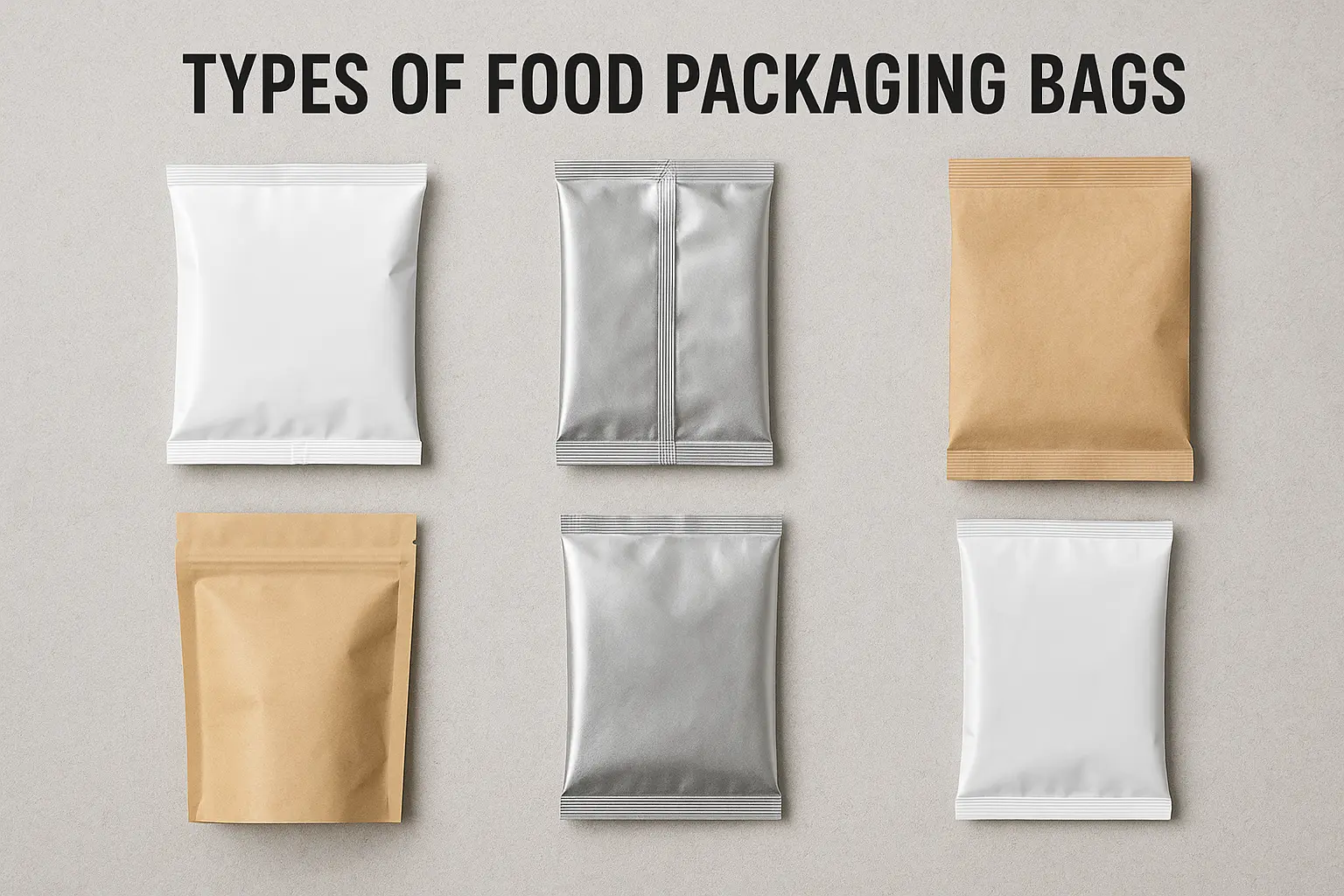
Rotary pouch machines, including the ZP-8R200, handle a wide variety of pouch formats. Common bag styles compatible with these machines include:
- Stand-Up Pouches (Doypacks):Including gusseted stand-up bags and flat-bottom pouches. These are very common for snacks, powders, pet foods, etc.
- Zipper Pouches:Reclosable bags (with a plastic zipper track) are easily accommodated. The machine’s zipper opener servo pulls the bag mouth open before filling.
- Spout Pouches:Bags with a built-in liquid spout (e.g. for juices, sauces). The machines can hold the pouch by its body and fill through the spout or by inverting some designs into a filling head.
- Pillow and 3‑/4‑Side Seal Pouches:Simple flat or sealed-edge bags. These bags lie flat during filling. Rotary machines can adapt with special bag supports or carriers.
- Quad-Seal Bags:Four-corner sealed bags often used for pet food or large volumes. These are handled by extra-strong grips on the turret.
- Shaped and Specialty Bags:Such as Kraft paper window bags, spouted berries, or custom shapes. Many rotary machines can be outfitted with custom grippers or supports for odd-shaped pouches.
- Any heat-sealable film bags:Provided the film can be sealed (laminated or PE films), the machine can seal them.
As noted, “Rotary packaging machines … are often used for premade products such as flat pouch, stand pouch, spout pouch, irregular-shaped pouch, gusset pouch and zipper pouch”.
Likewise, horizontal machines support stand-up, zipper, spout and shaped pouches. In practice, users should choose the style (rotary vs horizontal) that best matches their dominant bag type and production volume.
Conclusion
In comparing rotary and horizontal premade pouch machines, the rotary vertical bagging machine stands out for high-speed, high-volume automated lines. Its multi-station turret design delivers superior throughput and versatility when packaging multiple bag types. Yundu’s ZP-8R200 leverages these advantages – featuring automated spiral feeding, dust extraction, Siemens PLC control, and robust safety features – to form a turnkey pouch packaging solution.
By integrating precisely coordinated filling and sealing in one compact rotary system, it streamlines the production of powders, granules, liquids and more. In short, for manufacturers looking to “packaging solutions with high precision and efficiency,” a rotary premade pouch machine like the ZP-8R200 offers leading-edge performance.