 English
  Arabic
  Indonesian
  Vietnamese
  Malay
Malay  Thai
Thai  Korean
  Russian
  French
  Italian
  Japanese
  Portuguese
  Turkish
  Spanish
 Sugar Packaging Formats
Sugar can be packaged in many formats, each suited to specific market segments:
Pouches
 Flexible pouches (flat or stand-up with gussets) are popular for retail sugar (often 500 g–2 kg) and for portion packs. They can be made from plastic, paper or laminate films and may feature resealable zippers or spouts. Pouches offer good shelf appeal and printing space.
Sachets
 Four-sided or three-sided sealed sachets are used for single servings (1–5 g) of granulated sugar. Hotels, restaurants, airlines, and catering outlets use them for table service or minibar dispensers. Sachets keep sugar hygienic and portioned. Automatic sachet filling machines create millions of these packs daily, using film rollstock to form bags on the fly.
Stick Packs
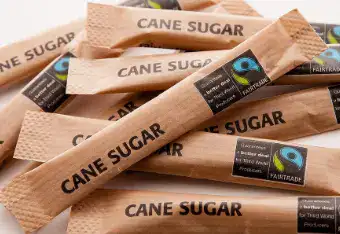 Slim stick packs (also called stick sachets) hold individual sugar portions (typically 3–10 g). They are long, narrow packets that tear open easily. Common in cafes and fast-food outlets, sugar sticks often dispense directly into a cup of coffee or tea. Multi-lane stick-packing machines can produce hundreds of these sticks per minute.
Bags
 Larger sugar bags range from retail (1–5 kg retail bags) up to bulk (25–50 kg bags). Retail bags are usually paper or laminated plastic with printed branding. Bulk or industrial sacks are heavy-duty (woven polypropylene or multiwall paper) designed for high-volume use in bakeries or food plants. These bags may be filled on open-mouth bagging lines with auger or weigh-belt fillers.
Jars and Boxes
 Less common for bulk sugar, but decorative jars, canisters, or boxes are used for specialty sugar cubes or flavored sugars. Rigid containers add perceived value for gift sets or gourmet markets, though they have higher material cost.
Bulk Containers
 For large-scale operations, sugar is sometimes packed in 500 kg–1,000 kg supersacks (big bags) or delivered in bulk tankers. Automated bag fillers (filling big sacks) and silo systems handle these volumes. While beyond typical retail packaging, industrial bulk packaging is critical for food processors.
Each packaging format balances attributes like barrier protection, shelf appeal, and cost. For example, powdered sugar may need stronger barrier film to prevent caking, while bulk white sugar is shelf-stable and needs cost-effective packaging. Packaging design must also consider hygiene (food-grade materials) and printing (brand or label information).
Applications of Sugar Packaging
Sugar packaging serves many industry segments:
Retail
Supermarkets and grocery stores stock sugar in various formats – standard white sugar in 1–5 kg bags or pouches, specialty sugars (brown, raw, crystal sugar) in premium pouches, and individual packets in multi-unit packs. Retail packaging emphasizes branding, nutritional labeling, and ease of storage (stackable pouches or tear-open bags).
Food and Beverage Processing
Bakeries, confectioners, beverage makers, and other food manufacturers purchase sugar in bulk. Packaging here prioritizes economy and protection. Common formats are large paper or plastic-lined bags (10–25 kg) and big plastic sacks. Sugar for processing may also be supplied in smaller portioned bags if needed on production lines. In plant operations, automated bagging lines and big-bag fillers ensure fast, hygienic bulk packaging.
HoReCa (Hotels, Restaurants, Catering)
The hospitality sector uses enormous quantities of portioned sugar. Single-serve sugar sachets and sticks are standard on tables and in rooms. Caterers also buy sugar in larger packs (10–25 kg) for cooking and baking. Packaging for HoReCa must be both guest-friendly (easy-open sachets, tear-off stick packs) and durable for high-speed machine use in coffee bars or buffet stations.
Corporate and Institutions
Offices, cafeterias, and institutions often use sugar in tea/coffee stations. They may prefer large dispensers or portion packs. Private-label bagged sugar for office supply companies is a niche.
Wholesale Distribution
Bulk sugar suppliers and distributors often offer private-label packaging for retailers or specialized formulations (organic, low glycemic index sugar). They leverage automated packaging lines to run different sizes and custom prints in high volume.
In all these applications, packaging must maintain sugar quality (dry, pest-free) and meet regulatory standards. Customized solutions – such as nitrogen flushing in packages to prevent clumping or modified prints – are sometimes used. Robust packaging lines are needed to handle the wide variety of formats and volumes demanded by the sugar market.
Packaging Machinery for Sugar
Modern sugar packaging relies on specialized machines for each format. Key equipment types include:
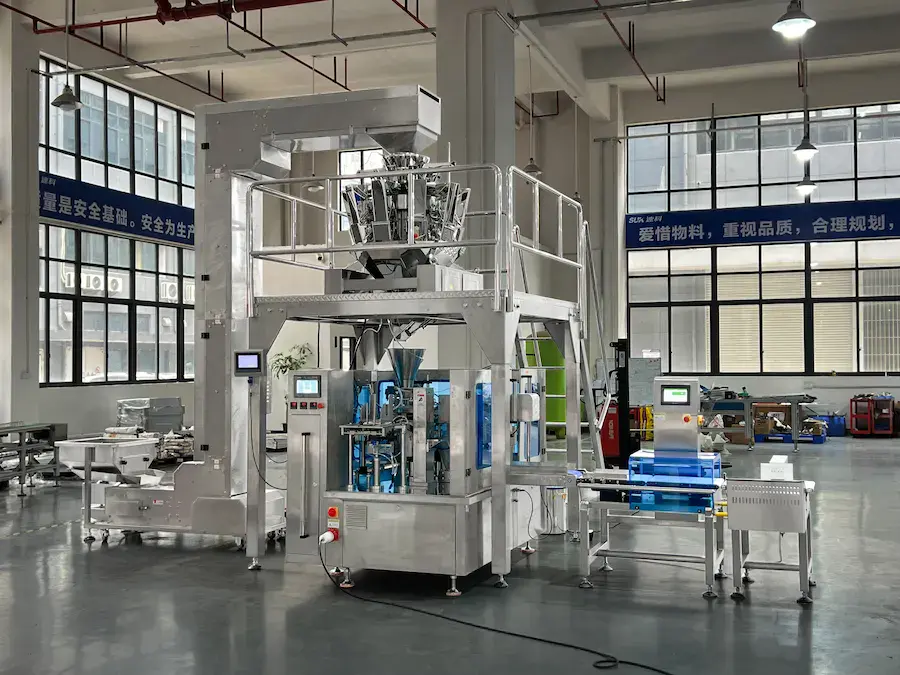
Vertical Form-Fill-Seal (VFFS) Machines
These machines create bags from film and fill them with measured sugar. A roll of film feeds into the VFFS, where a former shapes a tube. Multi-head weighers or volumetric fillers accurately dose the sugar into each tube. The bag is then heat-sealed and cut. VFFS systems (often servo-driven) are ideal for granular products. For sugar, VFFS machines can form flat pouches, gusset bags, pillow bags, or stand-up pouches. Advanced VFFS lines include features like film pull clamps to reduce film waste, automatic film tracking, and PLC control for stability. Typical output ranges from dozens to hundreds of bags per minute depending on bag size.
Sachet Packing Machines
These are essentially high-speed miniature VFFS machines optimized for small sachets. They can produce 3-side-seal sachets (open-end on one side, sealed on three) or 4-side-seal sachets (sealed on all edges, like a pillow pack). Sugar sachet machines often include multiple lanes of filling heads to boost throughput (e.g. five or more lanes operating in parallel). They handle granules via volumetric cup fillers or small auger fillers. Sachet machines can also integrate features like date coders, bar code printers, and foil labeling. Yundu’s sachet lines, for example, can run multiple lanes and reach speeds up to 30 small sachets per minute per lane.
Stick Pack Machines
Stick pack machines form long, thin packs by sealing a narrow film strip on three sides and filling before the final seal. Multi-lane stick packers can produce 2–12 sticks side-by-side. After filling, a special rotary or blade cutter separates them. These machines are known for very high throughput. For instance, Yundu’s stick-packing machines for liquid products operate at 200–350 sticks per minute (per lane). Granular stick machines are similar, using fill heads and pullers to package sugar in slender sticks. Sugar sticks require precise cutters and synchronized servo-driven pull belts to maintain uniform length.
Pre-made Pouch Fillers (Rotary or Linear)
Some operations use pre-made pouches (zippered doypacks or spouted bags) for sugar. In these cases, a rotary pouch filler is common. Pouches are loaded onto spindles, opened by blowing air or mechanical clamps, filled via a spout (with auger or cup filler), and sealed. Yundu and others offer rotary packaging machines that can handle multiple pouches per revolution, achieving high speeds. These are useful for brands that want premium packaging (like resealable stand-up pouches with coffee or specialty sugar).
Weighing and Bulk Filling Systems
For large bags and sacks, automated weighing systems are used. Multihead weighers can discharge weighed sugar into 25 kg bags, or gear-driven weigh belts can dispense large volumes. A vertical bagger (open-mouth bagger) often follows the weigher: the machine inflates a bag, the sugar is filled in, and then it’s stitched or heat-sealed shut. Yundu’s Weighing & Filling Machine (YD-200), for example, is designed for powder and granules; it features adjustable bag shape control and pressure sensors to prevent overfill.
HFFS (Horizontal Form-Fill-Seal) Machines
Less common for granules, HFFS machines are used when special bag shapes or spouted pouch styles are needed. They work horizontally and can make zipper pouches or fitments. For sugar cubes or lumps, HFFS flow-wrap units might wrap them individually or in bars (though this is rare in sugar, more common for items like tea or coffee bars).
Additional Equipment
Sugar packaging lines may include conveyors, metal detectors, checkweighers, date coders, and robots/cartoners to pack sachets into boxes. Also, environmental systems (aspirators or dust collectors) keep the line clean, since sugar dust can be sticky.
Overall, modern sugar packaging lines use automation at every step. Machines interlock feeding, weighing, bagging, and output to maximize throughput. Using servo motors, PLC controls, and stainless-steel contact parts, these systems ensure consistent bag quality and sanitary operation.
Advantages of Automated Sugar Packaging Machinery
Automating sugar packaging brings multiple benefits:
- High Speed and Throughput: Automated machines dramatically outpace manual packing. VFFS and stick pack systems can output thousands of units per hour. This high speed meets large production targets and reduces packaging bottlenecks.
- Weight Accuracy and Consistency: Multi-head scales and precise dosing technology ensure each bag or stick contains the correct sugar weight. This consistency minimizes giveaway (overfilling) and avoids underweight issues. For regulated food products, accurate labeling of sugar weight is essential.
- Improved Hygiene: Food-grade machines are typically constructed from 304 or 316 stainless steel, with smooth welds and easy-clean design. Automation means less human contact with the product. Enclosed filling zones and optional laminar air flow hoods further reduce contamination risk. Yundu machines, for example, use sanitary materials and have optional nitrogen flushing to protect sugar from moisture.
- Cost Efficiency: With machines handling repetitive tasks, labor requirements drop. Consistent fill accuracy reduces product loss and scrap film. Features like film clamp cutters avoid unused film edges, saving material. In the long run, higher uptime and fewer quality issues lower per-unit packaging costs.
- Flexibility: Modern machines can be quickly reconfigured for different packaging sizes or styles. Changeover might involve swapping doser parts or adjusting sealing jaws. Advanced lines include recipe-driven touchscreens so operators can select pre-set bag dimensions for quick switching between products (e.g. changing from 100 g to 250 g sugar packets).
- Integrated Control and Monitoring: PLC controls and HMI interfaces allow fine-tuning of machine parameters. Automated lines often include self-diagnosis and logging, making troubleshooting faster. Remote monitoring options help managers track efficiency. Yundu’s equipment, for example, can integrate print registration systems and digital displays for real-time production data.
- Enhanced Product Presentation: Uniform seals, neat cuts, and accurate printing give each sugar pack a professional look. Machines achieve cleaner seals (with serrated or hot-knife cutters) than is possible by hand. Consistent bag shape improves packing density and visual appeal on shelves.
- Safety and Compliance: Automation reduces operator fatigue and repetitive strain. Safety guards and interlocks on machines prevent accidents. Consistency in packaging helps meet food safety standards (GMP, HACCP, ISO). Hygienic design (IP65 controls, stainless surfaces) facilitates meeting regulatory hygiene codes.
In summary, automated sugar packaging machinery speeds up production while improving quality and reducing costs. These machines serve as the backbone of modern sugar processing plants and packhouses.
Yundu Filling Machines for Sugar Packaging
Guangzhou Yundu Machinery is a leading supplier of packaging equipment for the food industry, including sugar packaging solutions. Yundu’s product range covers nearly every type of sugar packaging machine, and their machines incorporate advanced features that address the needs of sugar processors. Key highlights of Yundu’s sugar packaging offerings include:
Vertical Form-Fill-Seal (VFFS) Solutions: Yundu’s VFFS machines (e.g. model YD-520) integrate multi-head weighers and servo drives to form and fill bags of granular sugar in one step. The PLC-controlled systems synchronize film feeding, bag forming, weighing, and sealing. Stainless steel construction and film clamps prevent bag breakage and waste. Typical speeds are 5–60 bags per minute (depending on size). Yundu also offers VFFS lines that can handle special shapes (zip-lock bags, quad-seal pouches) if needed. Their Granule VFFS Machine with Multihead Scale is specifically designed for products like sugar, with flexible dosing and quick-change bag width.
Sachet and Stick Pack Machines: For portion packs, Yundu provides high-speed sachet filling machines. These can run 3-sided or 4-sided seals and support multiple lanes of filling. Sugar sachet machines use volumetric cup fillers to handle granulated sugar smoothly. For stick packs, Yundu offers multi-lane stick-filling machines such as the YDT series. These units (e.g. YDT-480, YDT-680) package powder or liquid contents into narrow sticks at 200–350 sticks per minute. Even though the published “Liquid Stick Pack” is for fluids, the same technologies (servo pull belts, cutter assemblies) apply to granular sticks. Yundu’s sachet and stick-pack solutions include date-coding printers and can be configured for colored film or paper-based laminates.
Weighing & Filling Machines: Yundu’s YD-200 Weighing & Filling Machine is tailored for powders and granules including sugar. It uses precision weighing (digital load cells) to dispense exact quantities into bags or boxes. The machine offers adjustable bag shaping (gussets, flat-bottom) and a pressure-sensing device to avoid overfill. This unit is often paired with an automatic bagger and sealer to form an integrated sugar bagging line. For smaller bulk bags, Yundu’s combination scale lines can automatically fill, flatten, and seal sacks up to 50 kg, ensuring tight fill control and consistent throughput.
Pre-made Pouch Filling Lines: When sugar is supplied in pre-made pouches or cans, Yundu’s rotary filling machines come into play. Their Rotary Bag Packaging Machine can handle pre-made stand-up pouches (doypacks) of sugar. Pouches are fed, opened, filled with sugar via an auger, and sealed. Yundu also makes automatic canning lines that can fill pouches or jars. One of their systems can can 80 items per minute with high accuracy – though typically used for liquids like syrup or tomato paste, the same mechanics can adapt to granular filling.
Supporting Technologies: Yundu emphasizes high-quality components. They use well-known brand PLCs (like Siemens or Schneider) and servo motors to ensure reliable, precise operation. Machines feature user-friendly touchscreens and multi-language support. Under the hood, features such as film tension control, servo pull belts, and precision cutters make production stable. The machines are built of 304/316 stainless steel and meet food safety standards. Additionally, Yundu highlights environmental options: their machines can run recyclable films, support paper pouch packaging, and even flush inert gas (like nitrogen) into packs to protect contents.
Customization and After-sales: Recognizing that sugar packers have diverse needs, Yundu provides customization. This includes custom molds (for pouches), filling heads (for varying bag sizes), and machine configurations (e.g. number of fill lanes). They maintain a global inventory of parts and offer technical training. Yundu’s international network provides local service in 50+ countries, ensuring spare parts and support are available. Their guarantee often includes quick sample testing – they encourage customers to send sugar samples for performance trials in their showroom equipment.
Case-Specific Advantages: For sugar in particular, Yundu’s machines deliver clear advantages. Multi-head weighers accurately measure sugar granules (critical for low tare error). Servo film pullers make clean cuts on sachets and sticks (preventing tears or jams). PLCs coordinate filling and seal timing to avoid sugar bridging in the hopper. Moreover, Yundu machines often include features like “no-break bag” clamps to minimize broken bags when changing heavy rolls. By automating coding and batch printing, they ensure sugar packages carry lot and date information without manual labeling.
In essence, Yundu Filling Machines offer turnkey packaging lines for sugar processing companies. Whether a plant needs to pack 5 g sugar sachets or 25 kg industrial bags, Yundu can supply the appropriate machinery. Their portfolio—from vertical baggers to stick packers—demonstrates their expertise in handling free-flowing and powdery products like sugar. By choosing Yundu’s automated solutions, packaging professionals gain high throughput, consistent weight control, and robust hygiene—key factors in a competitive sugar packaging operation.
Sugar Packaging FAQ
Transparency is the cornerstone of our Yundu team. That’s why below, you can find the most common questions and answers we receive surrounding our sugar packaging.
Sugar packaging refers to the process of filling and sealing sugar into retail or industrial formats such as pouches, sachets, stick packs, bags, or bulk containers. Modern sugar packaging focuses on accuracy, hygiene, moisture protection, and cost-efficient automated machinery.
The most common sugar packaging types include pouches, paper bags, plastic bags, sachets, stick packs, jars, and large industrial sacks. Each format serves different applications such as retail shelves, HoReCa service, food manufacturing, or bulk distribution.
For retail packaging, VFFS (Vertical Form-Fill-Seal) machines and multi-head weighers are ideal. Sachet or stick pack machines work best for single-serve portions. For bulk sugar, open-mouth bagging machines or weighing and filling systems provide high efficiency and accuracy.
An automatic sugar packaging machine forms the bag from film, doses precise sugar quantities using weighers or augers, fills the bag, seals it, and cuts it—all in one continuous cycle. PLC controls ensure consistent weight, sealing quality, and high-speed output.
Automated sugar packaging improves fill accuracy, increases production speed, reduces labor costs, enhances hygiene, minimizes product loss, and ensures consistent bag appearance. Automation also supports high output and stable performance for large-scale operations.
Sachets are small rectangular packets sealed on 3 or 4 sides, ideal for controlled single servings. Stick packs are long, narrow packets that offer easier pouring and a more premium appearance—commonly used in cafés, airlines, and hotels.
Yes. Many brands now use paper, laminated paper, or recyclable film for sugar packaging. Modern packaging machines, including Yundu’s pouch and VFFS systems, support eco-friendly materials without compromising sealing strength or production speed.
Hotels, restaurants, cafés, airlines, offices, and catering companies rely heavily on portion-pack sugar sachets and stick packs for convenience and hygiene. These formats also support private-label branding and fast service.
Consider packaging type, production speed, bag size range, material compatibility, filling accuracy, machine footprint, and after-sales support. Manufacturers often send sugar samples to test the machine’s performance before purchase.
Yes. Yundu provides VFFS baggers, multi-head weighers, sachet machines, stick pack machines, premade-pouch fillers, and bulk weighing systems specifically designed for granular products like sugar. They offer customization, fast operation, and high accuracy for different packaging formats.