The Ultimate Guide to What is Sachet?

Table of Contents

Tear it, squeeze it, toss it. Whether it’s the ketchup packet next to your french fries, the sugar for your morning coffee, or the shampoo sample from a hotel, you interact with this marvel of modern packaging almost daily. It’s the sachet—a small, sealed, and incredibly versatile container that has quietly revolutionized how we consume, travel with, and sample products.The Ultimate Guide to Sachets From Ketchup Packets to High-Tech Packaging

But what exactly is a sachet? How did this humble packet become a cornerstone of global commerce? And in an age of growing environmental consciousness, what is its future?

While many know the sachet by sight, few understand its complexity, the technology behind its creation, or the strategic thinking that makes it a go-to choice for thousands of brands. This guide will change that. We’re tearing open the subject to give you the complete story. We’ll explore everything from its basic definition and diverse applications to a head-to-head comparison with its main rival, the stick pack. We’ll even take you inside the factory to understand the sachet machine that makes it all possible and tackle the critical issue of sustainability.

Get ready to go beyond the tear-off notch. This is the ultimate guide to the sachet.

What Is a Sachet? More Than Just a Small Bag

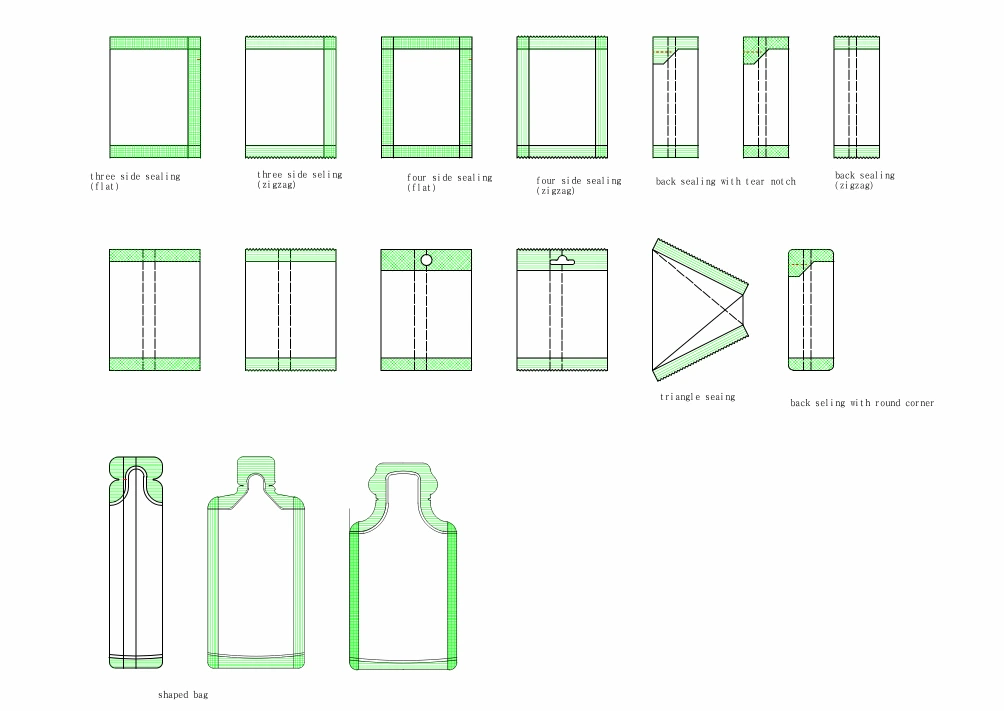
At its core, a sachet (pronounced /sæˈʃeɪ/) is a small, sealed, flexible bag made from paper, plastic, foil, or a combination of these materials, designed to contain a single serving of a product. The defining characteristic of a sachet is that it’s typically formed from flat, flexible material that is folded and sealed on three or four sides, creating a pouch-like container.

While the term might bring to mind the industrial packets we see today, its origins are far more quaint. The word “sachet” is French for “little bag.” Historically, these were small, porous cloth bags filled with dried herbs, potpourri, or scented powders, placed in closets and drawers to freshen linens—a use that continues to this day with scented sachets.

The modern, industrially produced sachet, however, is a product of 20th-century manufacturing ingenuity. The goal shifted from scent to preservation and convenience. By laminating different materials together—like a layer of aluminum foil for a light and oxygen barrier, sandwiched between layers of plastic for structure and sealability—manufacturers could create a durable, airtight, and cost-effective single-use container. This innovation unlocked a world of possibilities for packaging liquids, powders, granules, and gels.

The Wide World of Sachets: Types and Applications

The sachet’s adaptability is its greatest strength. Its applications span nearly every industry, making it one of the most ubiquitous forms of packaging on the planet.The Wide World of Sachets Types and Applications

Food & Beverage

This is where most consumers encounter sachets daily. Think of the classic ketchup packets and mustard portions at diners, the small packets of salt and pepper, or the sugar and creamer sachets at a coffee shop. They are perfect for condiments, instant coffee, tea bags, drink mixes, and nutritional supplements.

Cosmetics & Personal Care

The beauty industry relies heavily on sachets for product sampling and travel-sized items. Single-use packets of shampoo, conditioner, face masks, lotions, and foundation are an inexpensive way for brands to introduce new products to consumers or offer convenient options for on-the-go lifestyles.

Health & Pharmaceuticals

Precision and hygiene are paramount in medicine, making the sachet an ideal choice. Single-dose powdered medicines, antiseptic wipes, lubricating gels, and topical ointments are often packaged in sachets to ensure accurate dosage, prevent contamination, and maintain sterility until the moment of use.

Home & Fragrance

Staying true to its origins, the sachet bag is still a staple for home use. Scented sachets filled with lavender or cedar shavings are tucked into drawers and closets. Beyond fragrance, you’ll find sachets used for single-dose laundry detergents, dishwasher pods, and desiccant packs (like silica gel) designed to absorb moisture and protect electronics or other sensitive goods.

The Key Showdown: Sachet vs. Stick Pack Packaging

When considering single-serving flexible packaging, the sachet’s main competitor is the stick pack. A stick pack is a narrow, tube-shaped packet sealed at both ends, like those used for single-serving drink powders or granulated sugar. While they serve similar purposes, key differences make them suitable for different applications.

Here’s a head-to-head comparison:

Sachet vs. Stick Pack Packaging: Feature Comparison

Feature Sachet Stick Pack
Form Factor Flat, rectangular or square pouch sealed on 3 or 4 sides. Offers a wide surface area for branding. Long, narrow, tubular shape. Sleek and modern appearance.
Material Usage Generally requires more material per volume due to its wider seals and less efficient shape. More material-efficient, often using 10–40% less packaging material for the same product volume.
Cost-Effectiveness The machinery can be more versatile, but material costs per unit can be slightly higher. Lower material costs can lead to a lower per-unit cost. Machinery is highly specialized.
Ideal Use Cases Liquids, gels, creams, and flat items like wipes. Excellent for samples where brand visuals are key. Primarily for powders, granules, and some gels or liquids. Perfect for “on-the-go” dispensing into bottles.
Consumer Experience Familiar and easy to open. Can be difficult to dispense liquids cleanly without spillage. Designed for precise, directional pouring, making it ideal for adding product to a water bottle.

The Verdict: The choice between a sachet vs stick pack depends entirely on the product and marketing goals. If brand real estate and packaging viscous liquids are priorities, the sachet wins. If material efficiency and easy dispensing of powders are key, the stick pack is the superior choice.

The Heart of Production: A Deep Dive into the Sachet Machine

The mass production of sachets is made possible by a sophisticated piece of equipment: the sachet machine. These are typically a type of automated Form-Fill-Seal (FFS) machine that performs three tasks in one continuous motion:

  1. Form: The machine takes a large roll of flat packaging film (the material) and forms it into the shape of a sachet, sealing the sides and bottom.

  2. Fill: A precise amount of the product (liquid, powder, etc.) is dispensed from a hopper or filler into the newly formed, open-topped sachet.

  3. Seal: The machine then hermetically seals the top of the sachet, cutting it free from the continuous film. Advanced machines can also add features like tear notches or emboss lot codes during this final step.

There are two primary types of sachet machines:

  • Vertical Form-Fill-Seal (VFFS): As the name implies, the film travels vertically downwards. The product is dropped from above into the formed packet. This is the most common type for powders, granules, and some liquids.

  • Horizontal Form-Fill-Seal (HFFS): The film travels horizontally, and products are often placed or pushed into the packet. This is ideal for solid items, flat products like wet wipes, or applications that require more delicate handling.

For any business considering sachet packaging, choosing the right sachet machine is a critical investment. Key factors to consider include the type of product being packaged (its viscosity, particle size, etc.), required production speed (packets per minute), the type of packaging material being used, and, of course, the overall budget.

Sachet packing machine

Yundu’s DB series pre-made bag filling machines can meet most of the packaging needs on the market, whether it is granules, powders, liquids, sauces, coffee beans, candy, pet food, seeds, cannabis buds, capsules, etc., food and non-food weighing and bagging.

Materials & Sustainability: The Modern Sachet’s Dilemma

The sachet’s convenience comes at a cost, and its greatest challenge today is environmental sustainability.

Traditionally, sachets are made from multi-layer laminates. A typical structure might be a PET (polyester) outer layer for printing, a middle layer of aluminum foil (ALU) as a barrier against light and oxygen, and an inner layer of PE (polyethylene) for heat sealing. This construction is incredibly effective at preserving the product, but it’s a nightmare for recycling. The layers are nearly impossible to separate, meaning most sachets end up in landfills or as environmental litter.

This has created a powerful push for innovation in sachet packaging. The industry is actively working on several solutions:

  • Recyclable Mono-Material Sachets: The holy grail is to create sachets from a single material (a “mono-material”), like PE or PP (polypropylene), that can be easily recycled in existing streams. The challenge is re-engineering these single materials to provide the necessary barrier protection that laminates once did.

  • Compostable and Biodegradable Materials: For specific applications, sachets are being developed from plant-based materials (like PLA) or other biopolymers that can break down under specific industrial composting conditions.

  • Material Reduction: Redesigning sachets to be smaller and use thinner films, as well as promoting formats like the more efficient stick pack, can reduce overall material consumption.

The future of the sachet depends on solving this puzzle: how to maintain the convenience and protective qualities that made it so popular while eliminating its negative environmental footprint.

Conclusion: The Small Packet with a Big Impact

From its humble beginnings as a scented cloth bag to its current status as a linchpin of global product distribution, the sachet has proven to be a master of adaptation. It has put products into the hands of billions, enabled brands to launch new ideas, and provided unparalleled convenience for the modern consumer.

The journey, however, is far from over. As the sachet faces the critical challenge of sustainability, it is once again being forced to innovate. The next generation of sachets will need to be smarter, greener, and designed for a circular economy. The small packet that changed the world is now being changed by it—a testament to its enduring relevance and a challenge for the engineers and brands who rely on it. Its story is a perfect microcosm of modern industry: a constant negotiation between convenience, cost, and conscience.

What is a sachet? FAQ

Do you have any questions about our sachet packaging machine? Please find the answer below and Yundu will answer your question.

While both are forms of flexible packaging, the main difference often lies in structure and features. A “sachet” is typically a smaller, simpler, 3- or 4-side-seal packet made from a single web of material. A “pouch” (specifically a stand-up pouch) is often a more complex construction, with a gusseted bottom that allows it to stand upright on a shelf and features like resealable zippers or spouts.

Traditionally, no. Most sachets are made from non-recyclable multi-layer plastics and foil. However, the industry is rapidly innovating. New recyclable, mono-material sachets are becoming more common, and some brands are experimenting with compostable options. The eco-friendliness of a sachet now depends heavily on the specific materials used by the brand.

When investing in a sachet machine, consider these key factors:

  • Product Compatibility: Can the machine handle the viscosity of your liquid or the particle size of your powder?

  • Production Speed: How many sachets per minute do you need to produce to meet demand?

  • Material Compatibility: Can the machine work with the specific packaging film you intend to use (e.g., standard laminate, recyclable mono-material)?

  • Flexibility: Do you need a machine that can handle multiple sachet sizes or product types?

  • Reliability and Support: Look for a reputable manufacturer that offers good customer service, spare parts, and technical support.

Aluminum foil is used as a high-performance barrier layer. It is exceptionally effective at blocking moisture, oxygen, UV light, and odors from affecting the product inside. This superior protection is crucial for preserving the freshness, potency, and shelf life of sensitive contents like coffee, powdered medicines, and many food products, ensuring they reach the consumer in perfect condition.

A “mono-material” sachet is made from a single type of plastic, such as polyethylene (PE) or polypropylene (PP). This is critical for recycling because traditional sachets laminate different materials (like plastic, paper, and foil) together, which standard recycling facilities cannot separate. By using a single material, the entire packet can be processed in one recycling stream, making it a far more sustainable and circular packaging solution.

Yes, absolutely. Sachets intended for food or medicine are subject to strict regulations. In the United States, the packaging materials must be approved by the FDA (Food and Drug Administration) and be “food-grade,” ensuring no harmful chemicals can leach into the contents. Furthermore, they are often produced under stringent hygienic conditions, following Good Manufacturing Practices (GMP) to guarantee safety and prevent contamination.

The primary reasons are cost and logistics. Sachets are significantly cheaper to produce per unit than miniature bottles or jars. They are also flat and extremely lightweight, which drastically reduces storage and shipping costs. This efficiency allows brands to distribute samples on a massive scale—as magazine inserts, e-commerce add-ins, or event giveaways—getting their product into far more potential customers’ hands for the same budget.

Share The Post Now:
Picture of Hey there, I’m Daisy

Hey there, I’m Daisy

I’m the Sales manager of Yundu. We have been helping manufacturing industries increase their productivity and capacity with our advanced filling machines for over 20 years.
Have questions? Reach out to us, and we will provide you with a perfect solution.

Related Articles

Get Instant Quote

If you’d prefer, a representative from Yundu can contact you directly. Please provide the information below and a member of our sales team will contact you shortly. * fields are required.