 English
  Arabic
  Indonesian
  Vietnamese
  Malay
Malay  Thai
Thai  Korean
  Russian
  French
  Italian
  Japanese
  Portuguese
  Turkish
  Spanish
 Introduction
Bottling machines are essential equipment in liquid, cream, and tablet packaging lines. They automate the process of filling products into bottles (hence the term bottle filling machine), significantly increasing production speed, accuracy, and hygiene compared to manual bottling. In industries ranging from beverages and food to cosmetics and pharmaceuticals, efficient bottling equipment ensures consistent product quality and reduces labor costs.
These machines come in many forms and scales. For fluid products like water, juice, or oil, a liquid filling machine (or bottle filler) dispenses the product into containers precisely. Viscous products such as lotions or honey may use specialized cream filling machines or honey bottling machines with pumps designed for thicker liquids. Solid-dose products like pills and capsules require tablet counting and bottling systems to accurately count and fill tablets into bottles. Whether you are a small startup using a manual bottle filling machine or a large beverage plant running a high-speed automatic bottle filling machine, the goal is the same: to reliably fill and package your product.

A complete bottling line typically integrates multiple components to handle each step of the process. For example, an automatic water bottling line might include a bottle unscrambler to feed empty bottles, a bottle rinser to clean them, a water bottle filling machine to dispense water, an automatic capping machine (bottle capper) to apply caps, an induction sealing machine (for tamper-evident seals), and an automatic bottle labeling machine to apply branding or product labels. Specialized industries use dedicated equipment – a winery, for instance, might employ a wine bottling machine that fills bottles, a cork inserter or wine bottle sealer to cork them, and a wine bottle labeler for labeling. All these components work together to form a cohesive packaging system.
In this report, we will break down 9 common parts found in liquid, cream, and tablet bottling machines and explain how they work. Understanding these key components and working principles will help you optimize your production line and choose the right equipment. We’ll also provide tips on selecting quality machines and highlight some trusted brands (like Yundu, Vevor, and Kimtem) that offer reliable bottling machines for sale.
Common Parts Across All Bottling Machines
Regardless of machine type, certain core components are found in nearly all bottling machines. These universal parts keep the production line running smoothly and ensure each bottle is filled accurately:
Conveyor System
Every bottling system uses a conveyor system to transport containers through the different stations (filling, capping, labeling, etc.). The conveyor steadily moves bottles along, positioning each one under the filler or capper at the right time. A smooth, stable conveyor belt (or chain conveyor) is essential for maintaining efficiency and preventing bottlenecks. It ensures bottles don’t tip over or jam, which is critical for high-speed operations like a water filling machine or a tablet counting line. Conveyors can be adjusted for different bottle sizes and speeds, synchronizing all parts of the line from the bottle unscrambler at the start to the bottle packing machine at the end.

Control Panel
The control panel is the command center of any bottling machine. It typically features buttons, switches, or a touchscreen interface that lets the operator set up and monitor the process. Through the control panel, one can adjust parameters such as fill volume, filling speed, conveyor speed, and capping torque. This is essentially the machine’s “brain” – coordinating the timing between the filler, bottle capper, and other modules. Modern bottling equipment often includes digital controls and PLC (programmable logic controllers) for precise automation. Emergency stop buttons are provided to immediately halt operation if something goes wrong, ensuring safety. A well-designed control panel makes the machine user-friendly and allows quick changeovers between different products or bottle sizes.

Sensors and Detectors
Bottling lines rely on various sensors and detectors to maintain accuracy and safety. Photoelectric sensors detect the presence and position of each bottle – the filling nozzle won’t dispense unless a bottle is correctly in place. Other sensors track fill levels or count products. In a liquid or oil filling machine, sensors might verify that the correct volume has been dispensed or that no bottle is missed on the conveyor. In a tablet counter, optical sensors serve as the counting mechanism, ensuring the right number of tablets drop into each bottle. Detectors can also identify misaligned or fallen bottles, missing caps, or jammed labels. By communicating with the control system, these sensors help prevent spills and product wastage. Regular cleaning and maintenance of sensors is important, as dust or residue (for example, from powdered tablets or sticky syrup) can impede their function over time.
Core Components for Liquid and Cream Bottling Machines
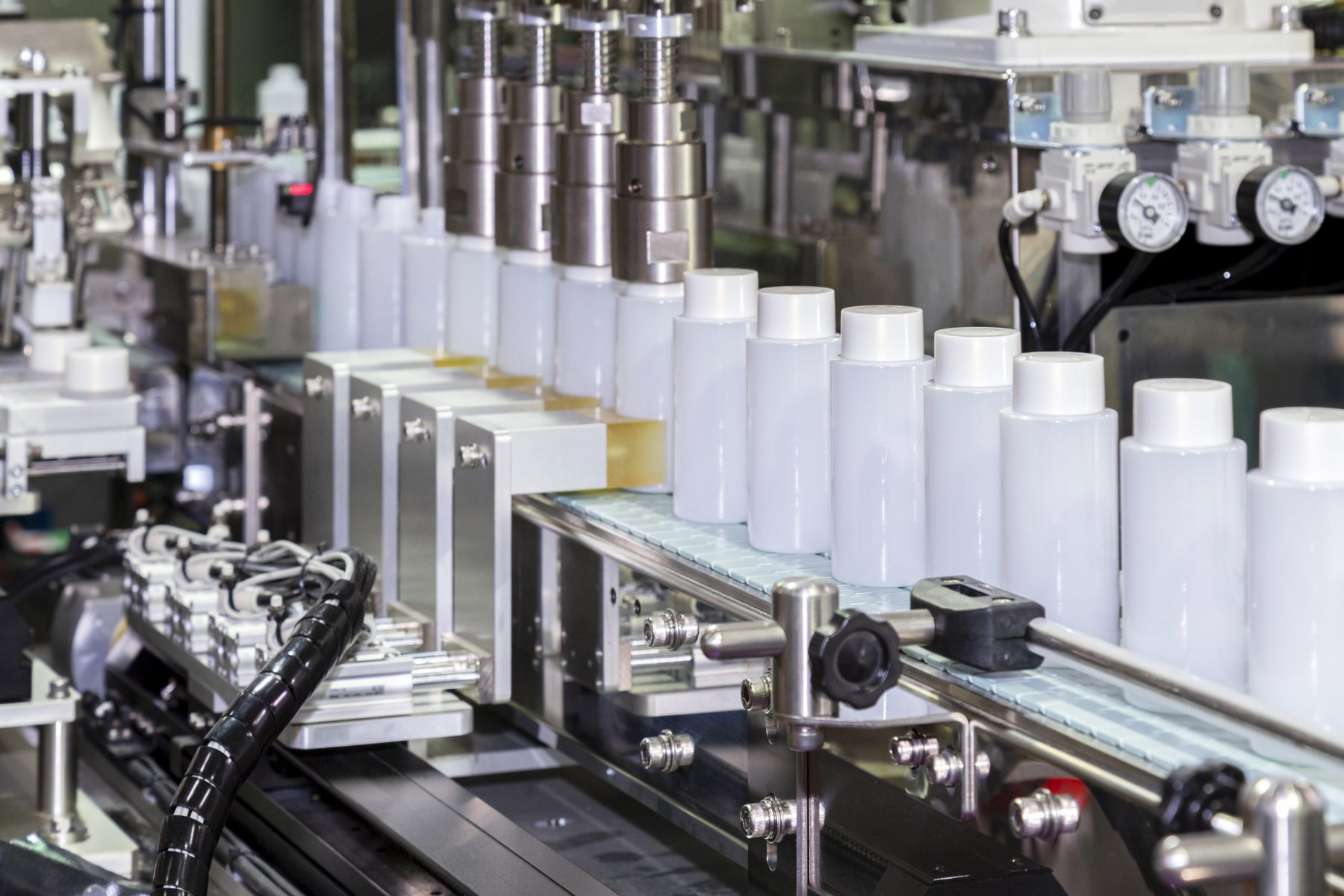
Liquid and cream bottling machines share several key components that handle the filling of fluids. These parts are tailored to manage products of different viscosities – from thin beverages to thick creams or gels:
Filling Nozzles
Filling nozzles are the points where product exits the machine and enters the bottle. They control the flow of liquid or cream into the container. Nozzle design can vary based on the product: a liquid filling machine for water, beer, or other thin liquids typically uses relatively small-diameter nozzles for a smooth, controlled flow. In contrast, a cream filler (for lotion, paste, or honey) will have a larger nozzle opening to accommodate the thicker viscosity. Many nozzles feature an anti-drip mechanism that prevents leftover product from dripping between fills – keeping the operation clean and minimizing waste. The number of nozzles also differs by machine size: a tabletop small scale bottle filling machine might have only one nozzle, whereas an industrial multi-head filler in a water bottling system could use 8, 12, or more nozzles working in unison. Choosing the right nozzle type and size for your product (based on viscosity and bottle opening) is crucial to ensure accurate filling without splashing or clogging.

Pumps and Valves
Behind the scenes, pumps and valves work together to move the product from the supply tank to the filling nozzles. The pump provides the force to transport the liquid or cream, while valves open and close at precise moments to dispense the correct amount into each bottle. Different filling machines employ different pump types depending on the product characteristics. For example, a peristaltic pump or gear pump is often used in an automatic liquid filling machine for thinner liquids like water, juices, or disinfectants – these pumps offer gentle, sanitary transfer for liquids. For thicker substances (cream, shampoo, syrup, or oil), a piston pump is commonly used because it can handle viscous fluids and deliver very accurate volumes. In a piston-based bottle filler, the piston draws in a fixed volume of product and then pushes it out through the nozzle, ensuring each bottle gets an equal fill. Meanwhile, the valves (which may be solenoid or pneumatic valves) act as gates that release product only when a bottle is in place and close promptly to cut off flow. Keeping pumps and valves well-maintained (cleaned, lubricated, and replaced when worn) is important – a worn valve could leak or allow inconsistent fills, and a pump losing pressure could slow down the filling cycle.

Seals and Gaskets
In any filling machine, seals and gaskets are the unsung heroes that prevent leaks and maintain pressure. These are usually rubber or polymer components placed at critical junctions: around pump pistons, inside valve assemblies, at pipe connections, and around nozzle fittings. Their job is to keep the liquid or cream from seeping out of joints and to ensure the filling system can build up the necessary pressure or vacuum. Because they come into direct contact with the product, seals and gaskets must be made of materials that are both durable and compatible with the product. Common materials include food-grade silicone, PTFE (Teflon), and EPDM rubber. Silicone gaskets are often used in food and pharmaceutical bottling machines because they handle temperature changes well and are non-reactive. PTFE is extremely chemical-resistant, making it suitable for machines filling aggressive chemicals or solvents. EPDM is a tough rubber that works well for water-based and oil-based products (it’s often found in beverage and oil filling machines). Over time, seals can wear out or become brittle, which can lead to drips or contamination if not addressed. Regular inspection and replacement of these parts is part of good maintenance. Using high-quality gasket materials also helps maintain hygiene by keeping outside air or contaminants from entering the product pathway during filling.
Tablet and Capsule Bottling Machine Parts
When bottling solid doses like pills, tablets, or capsules, the machinery must handle counting and dispensing rather than pumping liquid. Tablet/capsule bottling machines have unique components to sort and count solids accurately before dropping them into bottles. Three important parts of these systems include:
Feed Hopper and Gate
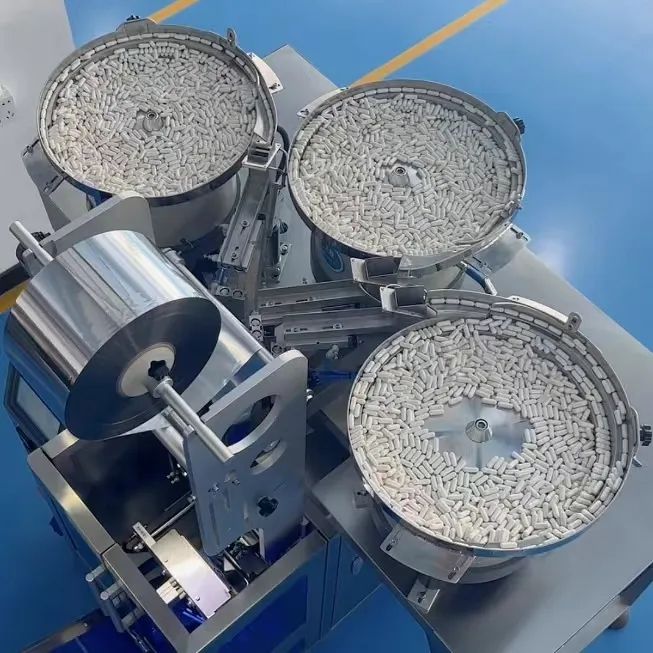
Tablet counting machines start with a hopper – a funnel-shaped container that holds the bulk tablets or capsules. At the bottom of the hopper is a feed gate mechanism that controls the flow of tablets out of the hopper. By adjusting the gate (raising or lowering the opening), the machine regulates how many tablets exit at a time. If the gate opens too far, an excess of tablets could flood the system at once, leading to jams or miscounts. If it opens too little, tablets might trickle too slowly and slow down production. The feed gate ensures a consistent, manageable stream of tablets moving forward. Operators can tweak this gate to accommodate different tablet sizes or to fine-tune the feed rate.
Vibratory Feeder Channels
After passing the feed gate, tablets land onto vibratory feeder channels (also called vibratory plates or tracks). These plates gently vibrate to spread out the tablets into single-file lines. The vibration causes tablets to move forward in a controlled manner. By having multiple channels side by side, a high-speed tablet counter can line up many tablets simultaneously for counting. The key purpose here is to eliminate clumps and prevent tablets from overlapping each other. Each channel guides a stream of tablets toward the counting area, ensuring that tablets are sufficiently spaced. This way, when they pass through the counting sensor, the machine can accurately register each individual tablet. Proper vibration settings will depend on tablet shape and size; for example, capsules might slide more easily than flat tablets, so the machine can adjust frequency to achieve smooth flow.
Counting Sensors and Filling Funnel
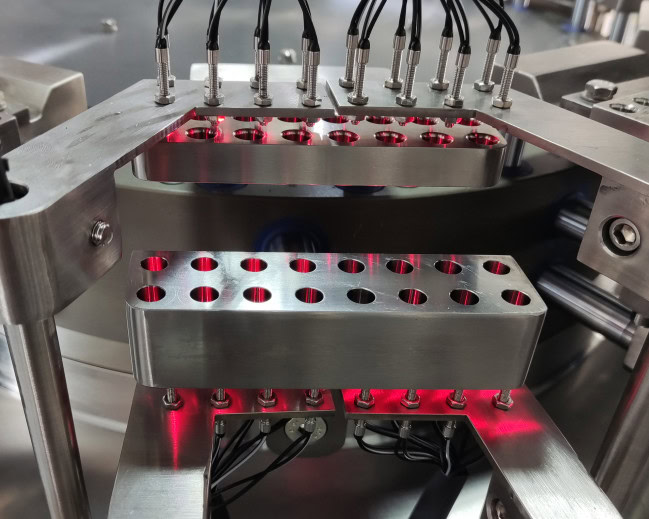
Once the tablets are singulated on the channels, they flow through the counting and filling mechanism. This typically consists of an optical sensor (or sensor array) and a funnel or chute aligned with the bottle below. The counting sensor is usually an infrared beam or camera that counts each tablet as it falls by detecting when the beam is interrupted. The machine’s control system has a preset count (e.g., 100 tablets per bottle) and will stop or divert tablets once that number has dropped into the bottle. The counted tablets fall through a filling funnel (also called a filling head) which is positioned directly above the bottle’s opening. The funnel ensures all tablets land inside the bottle without bouncing out or getting stuck. Funnels are often made of stainless steel or food-grade plastic and come in various diameters to fit different bottle neck sizes. By swapping out the funnel, the machine can accommodate a range of bottle types. In summary, this counting and filling stage is analogous to the nozzle in a liquid filler – but instead of measuring volume, it’s measuring count. High-quality tablet bottling machines use precise sensor systems to avoid miscounts, and many include reject mechanisms to discard any bottle that doesn’t receive the exact quota of tablets.
Working Principles of Each Machine Type
Now that we’ve identified the main components, let’s outline how these machines operate in practice. The workflow for liquid/cream bottling versus tablet bottling has some differences, which we’ll detail below.
Liquid and Cream Bottling Machines – Step-by-Step Process
A typical liquid or cream bottling line works through a series of coordinated steps to move empty containers in and send filled, sealed containers out. Here is an overview of the process:
Bottle Feeding & Preparation: Empty bottles are fed into the line, either manually or using an automatic bottle unscrambler (which orients and positions bottles onto the conveyor). In beverage and water bottling plants, bottles often go through a bottle rinser that cleans them with filtered water or sterile air to remove any dust or particles. (In some modern beverage factories, bottles are made on-site: a PET bottle blowing machine (often called a PET blowing machine) forms plastic bottles from preforms, and those bottles are immediately rinsed and sent to the filler. Such integrated setups are commonly part of a mineral water machine, colloquially called a bottle water machine, indicating a turnkey system for bottled water production.)
Filling: Bottles enter the filling station, where the filling machine dispenses the product into each bottle. Depending on the design, bottles may pause under a set of nozzles or move continuously on a rotating filler. Pumps and valves release a measured amount of liquid or cream through the nozzles into each bottle. For example, an automatic water filling machine might use gravity or overflow filling to rapidly fill bottles to a set level, whereas a piston filler for lotion will inject a precise volume into each container. (In industry terms, a water bottling machine generally refers to a system optimized for water and other beverages, often with multi-head fillers for high speed.) Sensors ensure that each bottle is present and positioned correctly; if a bottle is missing, the machine skips that fill to avoid spillage. Once filled to the correct volume, bottles advance to the next stage.
Capping: After filling, each bottle is sealed with a cap or lid. A dedicated capping station uses an automatic capping machine to apply and tighten caps. Caps are typically sorted and fed into the capping machine via a feeder bowl or chute. As bottles pass through, a cap is placed on each bottle and tightened (for screw caps) or pressed on (for caps like snap-ons). For instance, an automatic bottle capping machine may use a spinning chuck or rollers to screw caps onto beverage bottles, while a press capper might push on plastic snap caps for containers like milk jugs. The capper’s torque settings ensure caps are snug but not overtightened. If a cap is missing or not applied correctly, sensors will detect it and reject that bottle downstream.
Induction Sealing: If the product requires a tamper-evident seal or improved shelf life, the capped bottles go through an induction sealing process. An induction sealing machine – a type of bottle sealing machine or bottle sealer – uses electromagnetic induction to bond a foil seal onto the mouth of the bottle (inside the cap). Bottles pass under an induction coil, which rapidly heats the foil liner inside the cap, sealing it to the bottle’s rim. This creates an airtight, tamper-evident seal under the cap. Induction sealing is common for products like juices, sauces, pharmaceuticals, and any other bottled goods where tamper evidence and freshness are priorities. Bottles that don’t have an induction liner (for example, some water bottles or carbonated drinks use only the cap) skip this step. By the end of this stage, each bottle is fully closed and sealed.
Labeling and Coding: Once bottles are sealed, they move to the labeling station. Here, an automatic bottle labeling machine applies labels to each bottle. There are various types of labelers: a round bottle labeling machine wraps a single sticker label around cylindrical bottles, whereas a front-and-back labeler might apply two separate labels to flat surfaces of a jar (a label machine for jars with dual applicators is used for that purpose). For example, a jar of sauce might get labels on the front and back, which requires precise alignment. In many cases, the labels are supplied on a roll and a mechanism peels and sticks each label as bottles pass by. A sensor triggers the label application so that it’s placed correctly on each bottle. If the product is a wine or craft beer, a specialty wine bottle labeler might be used to handle unique label shapes or multiple labels on one bottle. After labeling, bottles often go through a date/batch coding step. This can be integrated into the labeler or done right after. An inkjet printer or laser bottle engraving machine will mark each bottle or label with a lot number, expiration date, or other identifier for traceability. By the end of this step, bottles are branded and ready for distribution.
Packing: In the final step, the finished bottles are prepared for shipment. Bottles may accumulate on a packing table or conveyor. An automated bottle packing machine can group bottles and pack them into boxes or shrink-wrap them into trays. For instance, water bottles might be shrink-wrapped in packs of 24, or pharmaceutical bottles might be placed into cartons with insert leaflets. If packing is manual, operators will collect bottles and pack them accordingly. In high-speed lines, robotic case packers or cartoners handle this work. Once packed, the bottles are sealed in cases and moved to the warehouse. At this point, the bottling process is complete – products have been filled, sealed, labeled, and packed.

(Note: The exact workflow can vary for specific products. For example, a wine bottling machine would include a corking device (and possibly a capsule applicator for the foil overcap), and might not use induction sealing. Similarly, a honey bottling machine might require a heated hopper to keep the honey fluid during filling. Nonetheless, the general sequence – prepare bottles, fill, cap, seal, label, and pack – remains consistent.)
Tablet and Capsule Bottling Machines – Step-by-Step Process
Bottling tablets or capsules follows a similar overall path (bottle in, bottle out), but the filling step is quite different due to the need for counting. Below is how a typical tablet bottling machine operates:
Bottle Feeding: Empty bottles are introduced to the line either by hand or via a bottle unscrambler that can sort smaller bottles. The bottles are aligned and conveyed to the filling station. Often, multiple lanes of bottles are staged so that while one bottle is being filled, another can be moving into place, ensuring continuous operation.
Counting and Filling: At the tablet filling station, the machine counts tablets into each bottle. As described earlier, tablets flow from the hopper through vibratory feeder channels and past counting sensors. An automatic tablet counter (sensor system) keeps track of how many tablets fall into each bottle. For example, if each bottle should contain 30 pills, the machine counts 30 and then temporarily stops the flow for that bottle (either by pausing the vibratory feed or diverting tablets to a different path) allowing it to move forward. The tablets drop through funnels into the bottles. High-speed machines might fill multiple bottles in parallel to increase throughput. During this process, there may be mechanisms to handle broken tablets or excess count – any extra tablets can be recirculated or directed to a reject bin to ensure each bottle has exactly the intended quantity. Once a bottle has its full count, it advances to the next station and a new empty bottle comes in to be filled.
Capping: Filled bottles of tablets are then capped just like liquid bottles. A capping machine applies caps (often child-resistant caps in the case of pharmaceuticals). The caps are sorted and placed on each bottle, then tightened. Consistent torque is especially important here to ensure the child-proof caps function correctly. Some tablet lines also insert a cotton or desiccant packet into the bottle before capping (to protect the tablets from moisture and rattling); this would be an extra station just before capping. After capping, each bottle is securely closed.
Induction Sealing: Almost all tablet and capsule bottles for consumer products have a foil seal under the cap for safety. So, after capping, bottles pass under an induction sealer just as described in the liquid process. The induction sealing machine quickly seals a foil liner to the top of each bottle, beneath the cap. Later, when a customer opens it, they have to peel off this foil – indicating the product wasn’t tampered with. This step is crucial in pharma to maintain product integrity and provide evidence of tampering.
Labeling: Next, bottles move to labeling. A sticker labeling machine (usually configured for round bottles) applies the product label, which includes information like dosage instructions, ingredients, and expiration dates. Accuracy in placement is key for regulatory compliance, so these machines often have verification systems to ensure each bottle is properly labeled. If needed, an inline printer adds variable information (like lot codes or serial numbers) to each label during this step.
Inspection & Packing: Pharmaceutical bottling lines may include an additional inspection stage. For example, a checkweigher might verify the weight of each bottle to ensure the count is correct (an extra assurance beyond the electronic count). There could also be vision systems checking that each bottle has a cap, seal, and label. Bottles that pass inspection are then packed for shipment. Automatic case packing equipment can load the bottles into shipping cartons, or this can be done manually for smaller operations. Once packed, the bottles are sealed in cases and the batch can be sent to distribution.

Both liquid/cream and tablet bottling processes aim to maximize efficiency while ensuring accuracy and product safety. Understanding these workflows helps in choosing the right machinery and troubleshooting any bottleneck in production.
Tips for Choosing the Right Machine and Parts
When selecting bottling equipment or replacement parts, keep the following tips in mind to ensure you make the best choice:
Match the Machine to Your Product and Production Needs: Choose a machine designed for your specific product (liquid, cream, or solid) and throughput. Each bottling machine is built for certain container sizes and product types – for example, a machine for carbonated beverages will differ from one for creams. Consider also your required output. A small scale water bottling machine might suffice for a startup craft operation, whereas a large factory will need an inline automatic filler with multiple heads. It’s often wise to select a machine that can handle slightly more than your current needs, so you have room to grow without immediately needing an upgrade.
Consider Automation Level (Manual vs. Automatic): Bottling machines range from hand-operated devices to full automation. If your production is very limited, a manual or semi automatic labeling machine and filler can save money. For instance, a tabletop manual liquid filling machine and a handheld capper might work for a few hundred units a day. However, as demand grows, investing in an automated system becomes crucial. Automatic machines greatly increase consistency and reduce labor. Evaluate if the equipment can be upgraded – some start with one or two filling heads and allow adding more later. Think about whether you might need to scale up from semi-automatic to fully automatic down the line.
Quality of Materials and Durability: Pay attention to build quality and materials. Machines with stainless steel frames and 316L stainless product contact parts will last longer in food/pharma environments than those made with cheaper metals. High-quality bottling machines often cost more upfront but run more reliably and have lower maintenance issues. Look for features like good seals (to prevent leaks), robust pumps, and well-made nozzles. If you’re filling abrasive or corrosive products, ensure the machine is designed for that (e.g., ceramic pumps or Teflon-coated parts for acids). In short, invest in equipment that is known for durability – it will save money in the long run by minimizing downtime.
Manufacturer Reputation and Support: Finally, buy from a trusted supplier. When you see a bottling machine for sale, research the manufacturer’s reputation. Reliable brands will offer warranties, training resources, and readily available spare parts. It’s important to have access to technical support in case something goes wrong. For example, if a sensor fails or you need a new filling machine gasket, you should be able to get replacements quickly. Check reviews or case studies of the supplier’s machines in action. It’s often beneficial to choose a company that specializes in the types of equipment you need (e.g., a company known for its bottle capper and labeler designs if those are critical to you). Good after-sales support and customer service can be as valuable as the machine’s specs.