Introduction
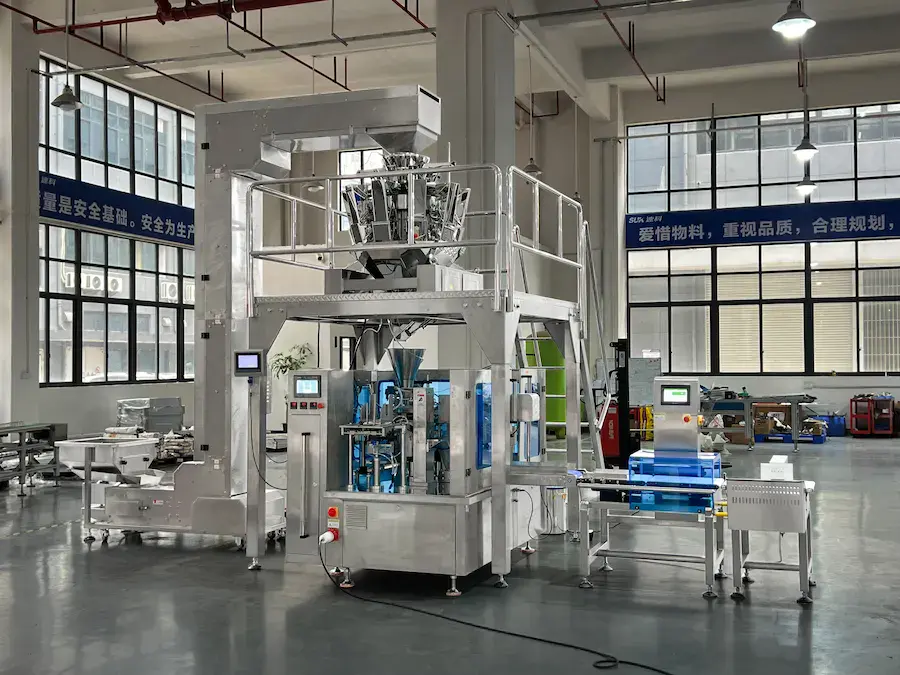
A bagging line (or bagging system) is an integrated packaging assembly line that automatically fills bags with products such as powders, granules, pellets, or other dry bulk materials, and then seals and conveys the filled bags for shipment. In practice, a bagging line includes feeders, conveyors, weighing scales, bagging machines, and often palletizers. For example, Loynds describes the fully automated bagging process as “forming the bag, closing if required, filling it… sealing, then dropping the product”. By automating these steps (weighing, filling, and sealing), manufacturers achieve higher throughput and consistency: as one packaging supplier notes, automation can “increase bagging speed and production rates” while improving accuracy and reducing labor and waste.
Automated bagging lines are used across many industries – from agriculture (fertilizer, seed, animal feed) to construction (cement, minerals) to chemicals and food. They handle a wide variety of bag types (open-mouth, valve, FFS) and sizes. In essence, a bagging line transforms bulk powder or granule production into pallet-ready bagged products by coordinating multiple machines in one workflow.
What is a Bagging Line?
A bagging line is a complete packaging line for bags. It can be semi-automatic or fully automated: feed hoppers meter product into weigh scales, which then dispense portions into bags on a bagging machine. Bags may be pre-made or formed on-the-fly. In a vertical form-fill-seal (VFFS) line, for example, the machine automatically forms a plastic pouch from roll film, then drops each weighed portion through a forming tube into the newly formed bag. In a traditional open-mouth line, pre-made woven or paper sacks are placed on a fill spout and the product is loaded. Once a bag is filled to its target weight, the bag is closed (sewn or heat-sealed) and released. As Loynds explains, the entire process “consists of forming the bag, closing if required, filling it… sealing, then dropping the product”. In other words, a bagging line synchronizes feeders, scales, bag filling heads, and bag closures so that bulk material becomes finished bagged packages without manual handling. This is often called an automated bagging line when all steps are controlled by PLCs and servo drives for high-speed operation.

How Does a Bagging Line Work?
A typical automated bagging line operates in a series of steps:
Feed/Weighing
Bulk product (powder or granules) is delivered to an in-feed hopper by conveyors or elevators. The hopper feeds a weighing system – such as a multi-head weigher or a gross/net weigh scale. For example, in a VFFS line the hopper feeds a multi-head weigher that portion-controls each bag fill. In heavy-duty open-mouth baggers, either a gross-weigh system measures the bag as it fills, or a net-weigh system pre-weighs the product in a hopper and then dumps it into the bag. (Net-weigh systems are faster because the operator can load a new bag while the next portion is being weighed.)
Bag Placement & Filling
A new bag is positioned on the fill spout. This can be done automatically by a bag placer or manually by an operator (often in semi-automatic lines). Once a bag is in place, the measured portion is released. The product flows through the spout into the bag. For instance, Loynds notes that after weighing, the product is “dropped down the forming tube on the automatic bagging machine” and the bag is sealed. In an open-mouth valve-bag system, the spout fits into the bag’s valve and the bag closes itself as it fills.
Bag Sealing/Closing
When the target weight is reached, the bag is closed. Different methods are used: cloth or paper bags are sewn shut by a bag sewing machine; plastic valve bags simply clamp off; heat sealers or band sealers may be used on plastic or laminated bags. As noted above, Loynds says the bagging process includes “closing if required, filling it, [and] sealing”.
Discharge & Quality Control
Once filled and sealed, the bag is released onto a conveyor or take-away system. Many lines include quality checks at this stage. Automatic checkweighers can scan each bag (up to ~50 bags/min) to verify it is within weight tolerance, rejecting any under- or overweight packages. In-line metal detectors can scan for metal contaminants. Inkjet printers or labelers often mark the bag with batch codes or dates.
Palletizing
Filled bags are conveyed to the palletizing station. Here, robotic or gantry-style palletizers automatically stack the bags onto pallets. This removes the need for manual stacking and further speeds up the end-of-line process.
Each step is coordinated by a central PLC or control system. Modern machines use servo motors and electronic controls for fast, precise handling. For example, Yundu highlights that its automatic bagging machines employ high-quality servo drives and PLCs to boost efficiency and accuracy.
Types of Bagging Lines for Powders and Granules
Bagging lines are tailored to the product and bag format needed. Common types include:
Open-Mouth (Pre-Made Bag) Lines
These use pre-made sacks or polybags. The machine has a large spout that fills bags held around it. Open-mouth baggers can handle heavy-duty fabrics or paper (often 20–110 lb / 9–50 kg bags) and typically operate up to ~24 bags per minute. Net-weigh or gross-weigh scales control the fill amount. These lines are widely used for coarse powders and granules (e.g. grains, feed, cement). Manufacturers note they offer solutions for “open-mouth… and big bags” in the same line.
Valve Bag Fillers
For fine powders and granular fertilizers, self-closing valve bags are common. A valve bag filler (spout bagger) uses an enclosed spout that fits inside the bag’s built-in “valve,” eliminating the need for a separate closing step. Valve bag machines (auger or air-type) can precisely dose powders with minimal dust. Tinsley notes these fillers can achieve up to 12 bags/min (720 bags/hr) with bag weights of 9–50 kg. Examples include fertilizer, chemical powders, or abrasive materials.
Form-Fill-Seal (FFS) Machines
FFS lines create bags from roll stock film. Vertical FFS (VFFS) baggers form a pouch from flat film and seal it after filling. These are ideal for smaller consumer-size bags or food/grain packaging. A multi-head weigher above the FFS machine can feed measured portions into each formed bag. VFFS lines can operate at very high speeds (some over 100 bags/min) for small bags of snacks, seeds, or seasonings.
FIBC (Big-Bag) Filling Lines
For very large bulk packaging (500–2000+ kg bags), big-bag or FIBC fillers are used. The product is typically batch-weighed on a scale, then released via a large fill pipe into a fabric bulk bag attached below. These industrial systems can move tens of tons per hour. For example, one high-speed big-bag combi machine can fill 120 bags of 600 kg each (72 tons) per hour.
Hybrid/Combo Systems
Some plants use systems that can switch between bag sizes (e.g. filling either 25–50 kg bags or 1000 kg big bags) by changing spouts, as in the EMT combination bagger.
In summary, vendors emphasize flexibility: their bagging lines cover “open-mouth, valve, FFS and big bags” to handle almost any dry bulk product. The choice depends on product flow, bag type, and production rate required.
Applications in Fertilizer and Industrial Packaging
Bagging lines are essential for fertilizers and many industrial bulk products. Manufacturers of fertilizer use automated valve-bag filling lines to handle large throughput. In one example, a single operator manages three valve-bag fillers filling 50-lb (22.7 kg) fertilizer bags at about 15–18 bags per minute. Granular fertilizer is first mixed and discharged by a bucket elevator into a hopper above the fillers. Each filler uses low-pressure air to precisely load each bag; once full to the 50 lb setpoint, the bag automatically “tips-and-drops” onto a discharge conveyor. This process (shown below) efficiently turns bulk fertilizer into pallet-ready sacks with minimal labor.
Granular fertilizer being automatically filled into 50 lb valve bags. In this system, the fertilizer is gravity-fed into valve-fillers that dose each bag to the target weight, then drop it onto a conveyor.
Beyond fertilizers, automated bagging lines are used in industries such as chemicals, building materials, and agriculture. For example, open-mouth baggers fill cement, sand, and mineral products in construction; Tinsley notes these machines handle aggregates, chemicals, and fertilizers in weights up to 50 kg. In agrifood, lines package animal feed, grains, and seeds; multihead weighers and FFS systems package pet food or seed to precise weight. Industrial chemicals (powdered detergents, resins, etc.) also use bagging lines with dust control and code printing. As Payper explains, their baggers can package “any type of dry bulk products, including granules, pellets, fine or coarse powders, fibers or flakes”, illustrating the wide-ranging applications.
Key application areas include:
Agriculture & Fertilizers: Pelletized feed and grain lines often use simpler gross-weigh sack fillers, while fine fertilizer powders require valve-bag or FFS systems with dust extraction.
Mining & Construction: Cement, concrete additives, and minerals are packed on heavy-duty open-mouth baggers, often at 20–24 bags/min.
Chemical & Food Industries: Food ingredients (flour, sugar, spices) and pet food use hygienic bagging lines. (Hygienic design and easy-clean features are critical when handling powders for food use.)
Miscellaneous Bulk Goods: Examples include fertilizers (shown above), landscaping materials, plastics pellets, and other industrial powders.
In all cases, the goal is to convert bulk material into uniform, traceable bags. Bagging lines provide accuracy, speed, and containment that manual methods cannot match.
Key Components of an Automated Bagging Line
Automated bagging systems consist of many coordinated components. Typical elements include:
Bulk Feeders and Hoppers: Day-bin hoppers or bulk-bag dischargers hold the product. These feed material by gravity or vibratory/auger feeders into the weighing system.
Weighing Scale: A multi-head weigher or net/gross weighing scale measures each bag’s fill weight. Net-weigh scales accumulate product in an internal hopper before dumping into a bag (doubling throughput), whereas gross-weigh scales fill the bag directly as they weigh.
Bag Magazine/Placer: Pre-made bagging lines often include a bag magazine or robotic placer that automatically picks empty bags (or form-fill units for film) and attaches them to the fill spout.
Bag Clamps and Spouts: Pneumatic clamps (like “bird-beak” clamps) hold each bag on the spout during filling. Dust-tight spouts or optional over-the-spout enclosures minimize airborne material.
Sealing/Closing Unit: After filling, the bag top is closed. Cloth and paper bags use sewing machines; plastic or laminated bags may use heat sealers or band sealers. Valve bags seal themselves automatically when removed.
Conveyors and Transport: Filled bags are transferred by conveyors. Some lines use height-adjustable take-away conveyors to move bags to palletizers or secondary equipment.
Dust Collection and Sanitation: Many baggers include dust hoods or aspiration ports to capture fugitive material. All product-contact parts are often stainless steel for easy cleaning, meeting hygienic design standards.
Control System: A PLC and HMI interface coordinate all functions (weighing, filling, indexing bags, etc.). Modern baggers use servo motors and intelligent controls for precise motion and speed.
Quality Control: Inline checkweighers and metal detectors inspect each bag. Code printers apply lot/batch and date information to each bag.
Palletizers: Finally, robotic or gantry palletizers stack filled bags on pallets. These can operate 24/7, removing manual bag stacking (Tinsley notes automatic palletizers eliminate heavy-labor tasks).
Typical bagging lines may also include accessories like bulk-bag splitters, bag detectors, bag-top formers, and slip sheet applicators. The exact configuration depends on the product and packaging requirements.
Choosing the Right Bagging Line for Your Production Needs
Selecting an effective bagging line involves matching the equipment to your product, volume, and facility. Key factors to consider include:
Production Rate: Determine how many bags per minute (or per hour) you need. Semi-automated lines can run around 10–14 bags/min for 25–50 kg sacks, while fully automated multi-head lines can exceed that. (AR McKay notes that manual bagging rarely exceeds ~10 bags/min for 50 lb bags.) If future growth is expected, plan for scalable automation up front.
Product Characteristics: Consider material flow and dust. Free-flowing granules (e.g. large pellets) can gravity-feed easily, but cohesive powders may need an auger filler or vibratory feeder to prevent bridging. Highly dusty or hazardous powders may require sealed enclosures and dust collection. Also account for product sensitivity: if contamination is a concern, choose a line with hygienic design and easy cleanability.
Bag Type and Weight: Specify the bag style (open-mouth, valve, FFS film, bulk bag) and weight range. The machine must match. For example, valve fillers are ideal for very fine powders and valve-type paper bags, whereas open-mouth baggers suit larger woven sacks. Also decide bag material (paper vs polypropylene vs film) as this affects sealing method.
Changeovers and Flexibility: If you package multiple products or bag sizes, look for modular machines that allow quick changeover of parts (weigh hoppers, spouts, bag clamps). Easy-clean, tool-less designs minimize downtime between batches.
Space and Infrastructure: Fully automated lines often require significant vertical and linear space. AR McKay highlights that an automated bagger’s outlet might sit ~13 ft high, versus ~6.7 ft for a basic manual line. Ensure your facility has the ceiling height and floor space for the chosen system and any palletizing.
Budget and ROI: Automated lines have higher initial cost than manual baggers, but they pay off with lower labor and higher throughput. Tinsley notes that automation “reduces labor costs, human error, and fatigue”. Calculate total cost of ownership: include installation, utilities, training, and maintenance.
Support and Service: Work with established vendors who offer robust support and spare parts. Check references and track record. Reliable manufacturers (see below) often provide site surveys and custom engineering.
Regulatory and Quality Requirements: If exporting to regulated markets, ensure the line can print required barcodes or meet weight accuracy standards. Food or pharmaceutical packaging lines must comply with hygiene standards (stainless construction, dust control, CIP capability).
In summary, match the bagging line to your product’s flowability, required speed, and bag format. Consider long-term needs: a line that can be reconfigured or expanded will give better ROI. Careful planning and supplier consultation ensure you select the right system for your production goals.
Reliable Manufacturers – Mention Yundu
Choosing a supplier is as important as choosing the machine. Leading bagging-line manufacturers around the world offer complete solutions. For example, Guangzhou Yundu Machinery Technology is a Chinese OEM known for industrial packaging equipment. Their YD-600 Automatic Bagging Machine is a high-speed, high-precision bagger, with ±1.5g weighing accuracy and up to 120 bags per minute capability. Yundu’s machines use advanced servo drives and integrated controls for efficient operation.
Other reputable suppliers include Payper (Italy) and Tinsley Equipment (USA), both of which specialize in custom bagging lines. Payper explicitly advertises solutions handling “open-mouth, valve, FFS and big bags” for any dry bulk product. Tinsley offers a range of bagging machines (open-mouth, valve fillers, FFS) and highlights their automated checkweighers and palletizers. Loynds (UK) and Arakawa (Japan) are examples of other global providers, each with decades of industry experience.
When evaluating manufacturers, look for companies that can engineer a line to your spec and provide after-sales support. Websites like yundufillingmachine.com list their product lines and solutions. Inquiries and quotations can clarify how each vendor’s technology matches your materials and bags. Ultimately, a trusted supplier will guide you through system selection, customization, installation, and commissioning.
Conclusion
A bagging line is a key element in modern bulk goods production, turning powders and granules into ready-to-ship bags efficiently. This guide has defined what a bagging line is, explained its working principle, and detailed the common types used for powder and granule packaging. We’ve also highlighted real-world applications (such as fertilizer bagging) and the major components of an automated line. For buyers, remember to assess your product flow characteristics, required throughput, and desired level of automation before selecting a system. Consider cleanability and regulatory needs if you handle food or sensitive chemicals. Finally, partner with experienced manufacturers – for example, Yundu Filling Machine (yundufillingmachine.com) offers automated bagging solutions with high accuracy and speed – and get detailed proposals.
By aligning the right bagging line to your production requirements, you can achieve faster packaging, better quality control, and lower labor costs. Whether packaging fertilizer, feed, chemicals, or food ingredients, a well-designed bagging line will streamline your operation and boost productivity. (For more information on bagging lines and machinery, see industry resources or contact manufacturers like Yundu, Payper, or Tinsley for expert guidance.)
Sources: Definitions and process details from Loynds, Tinsley Equipment and Payper brochures, and case examples from fertilizer bagging systems and equipment suppliers. (Manufacturer product info from Yundu.)