 English
  Arabic
  Indonesian
  Vietnamese
  Malay
Malay  Thai
Thai  Korean
  Russian
  French
  Italian
  Japanese
  Portuguese
  Turkish
  Spanish
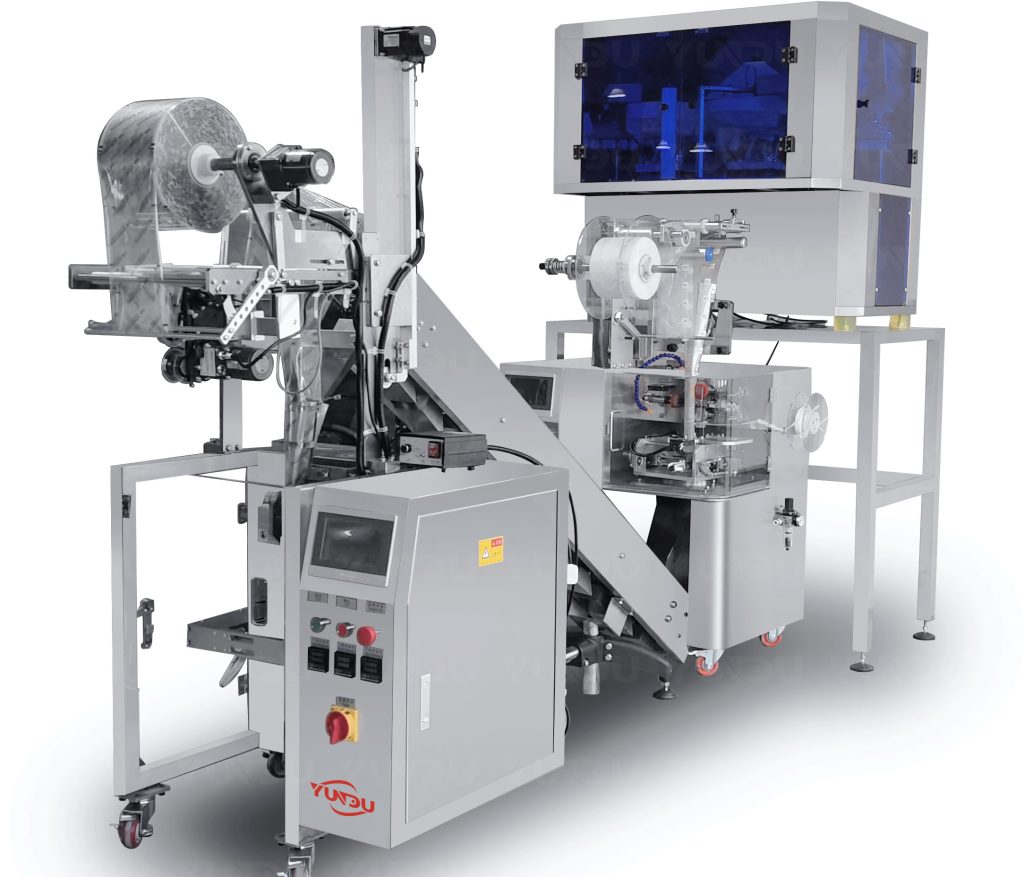
 Automating tea bag and pouch filling is essential for modern tea producers. A tea packaging machine automates tasks like measuring, bag-making, filling and sealing, greatly boosting output over manual methods. For example, a high-speed automatic tea bag packer can produce over 3,600 tea bags per hour, reducing labor costs and ensuring consistent portioning. These machines also improve hygiene (food‑grade stainless steel construction) and presentation, yielding uniform, attractive packages that appeal to consumers. Seasoned manufacturers – such as Utien Pack Co. (Hangzhou, founded 1994) – focus on automated food packaging solutions and hold ISO9000 certification. Utien’s expertise (50+ international patents, exports to 50+ countries) and other leading brands give tea producers confidence in machine quality. Yundu Filling Machine similarly offers specialized pyramid tea bag and pouch packing systems for a range of production scales.

Types of Tea Packaging Machines
Tea packaging equipment comes in three broad categories, matching different production needs:
Automatic Tea Bag and Sachet Machines: Fully automatic systems form bags, weigh and dispense tea, and seal the packages with minimal human intervention. These typically use PLC control and servo motors for precision. For example, a pyramid tea bag machine can switch between flat and triangular (3D) sachets and uses ultrasonic sealing for a neat finish. Such machines handle single or multiple lanes (e.g. 4-lane pyramid machines) and can meet large output demands. Many units produce 30–50 packs/minute (depending on bag size), or thousands of bags per hour. They support various bag styles (pyramid, flat, stick packs) and materials (non-woven, nylon, biodegradable fibers). These “automatic tea bag packing machines” are ideal for large factories and high-volume lines, though they command higher investment.
Semi-Automatic Tea Packaging Machines: These machines automate weighing and filling but require some manual steps (e.g. placing empty bags or starting each cycle). Throughput is moderate, and they cost less than full-automation. Semi-auto tea packers suit growing businesses that need better speed and accuracy without a large capital outlay. They may use volumetric fillers or auger systems for dosing tea. Output might be a few hundred to a thousand bags per hour, depending on operator pace. Semi-auto models often retail in the low-thousands of dollars – typically a few thousand USD for compact systems.
Manual Tea Packing Solutions: For very small scale or artisanal operations, simple equipment suffices. This might include precision scales or mini dosing funnels plus a hand-held heat sealer or impulse sealer. Manual machines cost a few hundred dollars and yield low throughput (tens of bags per hour). These are sometimes called “small tea packing machines” or tabletop packaging tools. Entry-level automatic machines for lab or pilot use can start around $500–$1,000, but higher-speed systems quickly cost more.
Key Factors in Choosing a Tea Packaging Machine
When selecting tea packaging equipment, businesses should consider:
Production Volume & Speed: Estimate daily or hourly output needs. Automatic machines (with multi-head scales or augers) can meet very high targets (thousands of bags/hour), while semi-auto or manual machines suit lower volume. Choose a machine whose capacity comfortably exceeds your peak requirement.
Package Format: Determine bag style and pouch type. Options include single-dose sachets (pillow packs), pyramid filter bags, stick packs, or hanging kraft tea bags. Some machines (like pyramid tea bag packers) can switch between flat and 3D bags. Check if you need inner bags (filter tea sachets) plus outer foil pouches. Each format may require different tooling or additional equipment (e.g. tag/string attachments).
Product Characteristics: Tea form (whole leaves, broken leaf, dust, powder, herbal blends) affects machine choice. Free-flowing powders vs. fibrous leaves may use different filling mechanisms (vibrating cup fillers, auger fillers, or gravimetric scales). Bulk density and moisture content can influence accuracy.
Automation Level & Integration: Decide how much manual work is acceptable. Fully automated systems integrate bag feeding, printing or coding, and sealing in one flow. For example, vertical form-fill-seal (VFFS) machines “streamline the entire packaging process – from bag making and dosing to filling, sealing and cutting – all in one seamless operation”. Investing in a complete line (with conveyors, labelers, checkweighers, etc.) saves labor and reduces errors.
Hygiene and Build Quality: Ensure food-contact parts are stainless steel, meet sanitary design standards, and have relevant certifications (CE, ISO, etc.). Utien Pack and other reputable makers build to ISO9000 standards, important for exporters and regulated markets.
Budget and ROI: Balance upfront cost against labor savings and throughput gains. Simple machines under $1,000 may serve startups, whereas advanced multi-lane lines cost tens of thousands. Calculate payback time: high-speed machines can justify their price by dramatically cutting per-unit packaging cost.
Support and Service: Prefer vendors with good technical support and spare-part availability. Check for warranties and user training. Established brands (Utien, Yundu, All-Fill, etc.) often provide more reliable service networks.
By prioritizing these factors, decision-makers can select a tea packaging machine (automatic, semi-auto or manual) that fits their product line and growth plans.

Step-by-Step Tea Packaging Process
A modern tea packaging line typically follows these steps:
Weighing/Dosing: Tea leaves or powder are measured to a precise weight. High-end machines use multi-head weighers or volumetric fillers for accuracy.
Inner Bag Formation & Filling (if applicable): If using filter sachets (string or pyramid bags), the machine cuts and forms the inner tea bag from filter paper. The measured tea dose is dropped into this bag, and the bag is sealed (often ultrasonically).
Outer Bag or Pouch Filling: Many producers place each sealed tea sachet into an outer foil pouch. A form-fill-seal (VFFS) machine creates the pouch from a roll of film, inserts the tea sachet, adds any desiccant if needed, and fills any empty space (sometimes with inert gas).
Sealing and Cutting: The pouch is heat-sealed on all sides. Some machines also perforate or tear strip. (According to Yundu, VFFS machines handle bag making, filling, sealing, and cutting in one continuous cycle.)
Labeling and Coding: Filled pouches move along a conveyor to labeling machines (for branding or nutritional info) and printers (batch codes/expiry dates). These steps can be inline.
Quality Control: Checkweighers verify net weight and reject any under/overfilled bags. Metal detectors or vision systems can be added for safety. For example, All-Fill auger filler lines can integrate checkweighers and labelers as complementary equipment.
Boxing and Palletizing: Finally, the sealed tea pouches are grouped into cartons or cases (manually or with a cartoner), then stacked on pallets for shipping.
Each step can be automated or manual. Fully automated lines combine multiple steps to minimize handling. Semi-automatic setups may require an operator to add empty bags or transfer products between stations. Simpler manual lines might involve weighing by hand and using an impulse sealer to close bags.