 English
  Arabic
  Indonesian
  Vietnamese
  Malay
Malay  Thai
Thai  Korean
  Russian
  French
  Italian
  Japanese
  Portuguese
  Turkish
  Spanish
 The packaging industry undergoes continuous transformation, driven by consumer demand for convenience, portability, and precise dosing. At the heart of this evolution lies the small-sachet packaging machine. These robust, efficient systems serve as the backbone for companies operating in the food, pharmaceutical, and chemical industries. Manufacturers rely heavily on these machines to automate the measurement and encapsulation of powders, granules, and liquids into perfectly sized, commercially viable packets.
Investing in the right small-sachet packaging machine transforms production lines, slashes labor costs, and significantly elevates product presentation. This comprehensive blog post explores the fundamental aspects of small pouch packaging. We will dive deep into the diverse bag styles available, analyze how machine types influence production speed, clarify industry terminology, evaluate the installation process, and provide a masterclass on navigating the purchasing journey. Additionally, we will examine specific equipment capabilities to provide a tangible reference for your next machinery acquisition.
Are Vertical Packaging Machines Also Called Stick Packaging Machines?
Industry newcomers often confuse the terminology surrounding packaging machinery. A common question arises: is a vertical packaging machine exactly the same thing as a stick packaging machine? The short answer is no, although they belong to the same broader family of packaging equipment.
A vertical packaging machine, formally known in the industry as a Vertical Form Fill Seal (VFFS) machine, represents a broad category. These machines form a bag out of a flat roll of film, fill it with the product from above, and then seal it. VFFS machines handle a vast array of bag sizes and styles, ranging from tiny single-serve condiment packets to massive bags of pet food.
Conversely, a stick packaging machine is a highly specialized sub-category of the vertical packaging machine family. Engineers design stick pack machines specifically to produce long, narrow, tubular packets—commonly referred to as “stick packs.” Consumers frequently see stick packs used for instant coffee, sugar, drink mixes, and single-dose pharmaceuticals. While all stick packaging machines operate vertically, not all vertical packaging machines produce stick packs. Stick machines often feature multi-lane configurations, allowing them to form, fill, and seal several narrow stick packs simultaneously from a single, wide roll of film that the machine slits into multiple distinct lanes.
Therefore, when you request a small-sachet packaging machine, you must clarify whether you need a standard vertical machine for wider, traditional sachets, or a dedicated multi-lane stick machine for narrow tubes.
The 8 Common Bag Types in Small-Sachet Packaging
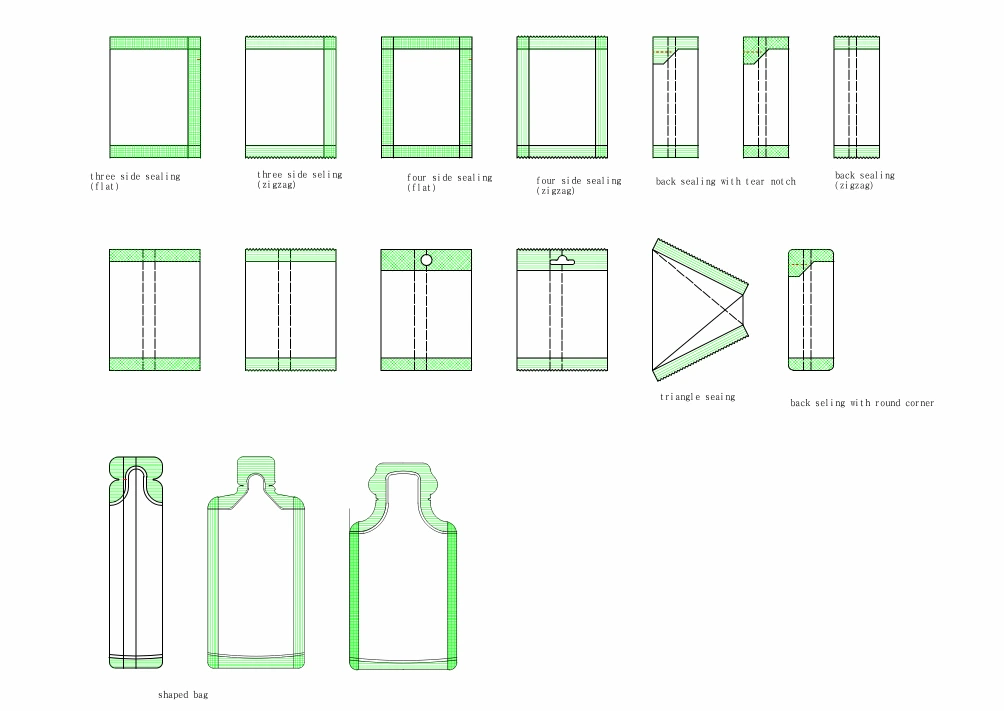
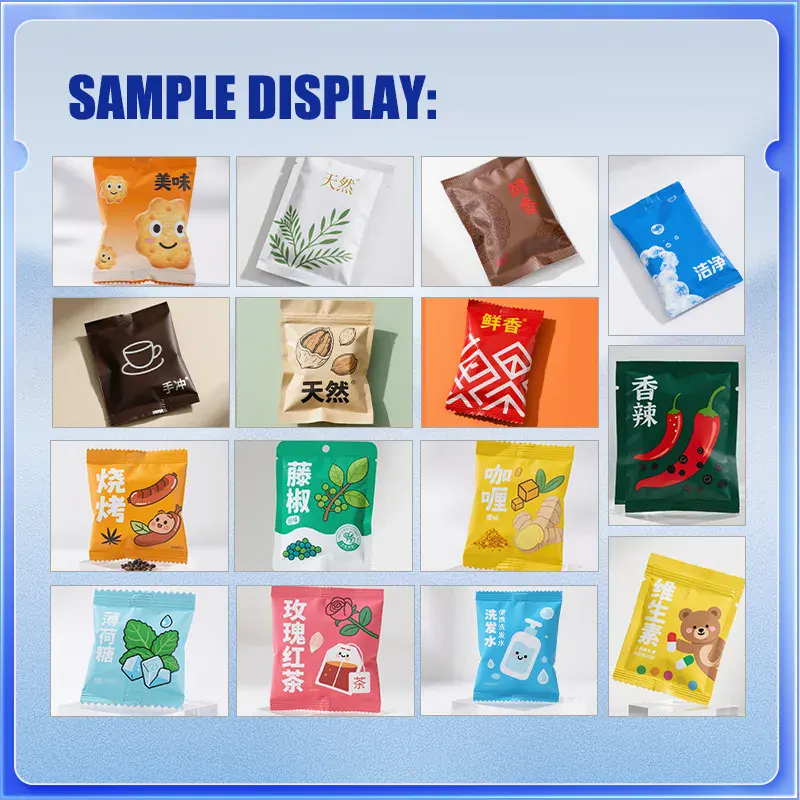
The visual presentation and functionality of a sachet profoundly influence brand perception and user experience. Modern small-sachet packaging machines offer remarkable versatility in bag formation. Manufacturers can choose from a wide array of bag styles. Let us meticulously examine the eight most common sachet bag types.
1. Three-Side Sealing (Flat)
The flat three-side seal remains one of the most ubiquitous and cost-effective bag styles in the packaging sector. The machine folds the film in half and seals the two sides and the top (or bottom), leaving one folded edge unsealed. This creates a clean, simple square or rectangular pouch. It offers an excellent surface area for branding and requires relatively simple machine mechanics to produce.
2. Three-Side Sealing (Zigzag)
This variation functions exactly like the flat three-side seal but incorporates a zigzag pattern on the sealing edges. The zigzag cut serves a crucial functional purpose: it provides a continuous, easy-tear edge. Consumers do not need to search for a specific tear notch; they can simply rip the packet open from any point along the zigzag border. This style heavily populates the cosmetic sample and condiment industries.
3. Four-Side Sealing (Flat)
For products requiring maximum seal integrity and a premium aesthetic, the four-side seal excels. The machine utilizes two separate webs of film (or splits one wide web) and applies a seal to all four exterior edges of the sachet. This style creates a perfectly symmetrical packet that looks highly professional. Pharmaceutical companies frequently utilize four-side seals for medical powders and transdermal patches because the uniform sealing guarantees excellent barrier protection against moisture and oxygen.
4. Four-Side Sealing (Zigzag)
Combining the premium look of the four-side seal with the consumer convenience of the zigzag edge, this bag type delivers the best of both worlds. The zigzag edges allow effortless opening, while the four distinct seals ensure robust product protection. High-end nutritional supplements and specialized chemical powders often employ this format.
5. Back Sealing with Tear Notch
Also known as a center seal or pillow pouch, the back-sealed sachet is the quintessential product of standard vertical packaging machines. The machine wraps the film around a forming tube, seals it down the center back, and then seals the top and bottom. Adding a distinct “tear notch”—a small pre-cut slit on the side—allows the consumer to open the durable package effortlessly. This bag type dominates the snack food and bulk powder markets.
6. Back Sealing (Zigzag)
This style utilizes the standard pillow pouch (back seal) formation but finishes the top and bottom horizontal seals with a zigzag cut. This eliminates the need for a precise tear notch, allowing the user to rip the top off easily. It provides a slightly more rugged appearance and is highly common in hardware packaging or single-use industrial chemical powders.
7. Triangle Sealing
Triangle sachets immediately capture consumer attention due to their unique, geometric shape. The machine manipulates the film and the sealing jaws at alternating angles to create a distinctive three-dimensional tetrahedron or a flat triangle. Tea companies and specialty candy manufacturers favor triangle bags because they stand out brilliantly on retail shelves and offer an elevated unboxing experience.
8. Shaped Bags
Shaped bags represent the pinnacle of customized packaging. Engineers equip the packaging machine with specialized die-cut sealing jaws that punch the sachet into specific silhouettes—such as a bottle shape, an hourglass, or a brand mascot. Liquid cosmetics, energy gels, and premium dietary supplements utilize shaped bags heavily. While visually striking, shaped bags require precise machine calibration and often generate slightly more film waste than standard geometric bags.
The Impact of Bag Styles on Machine Production Speed
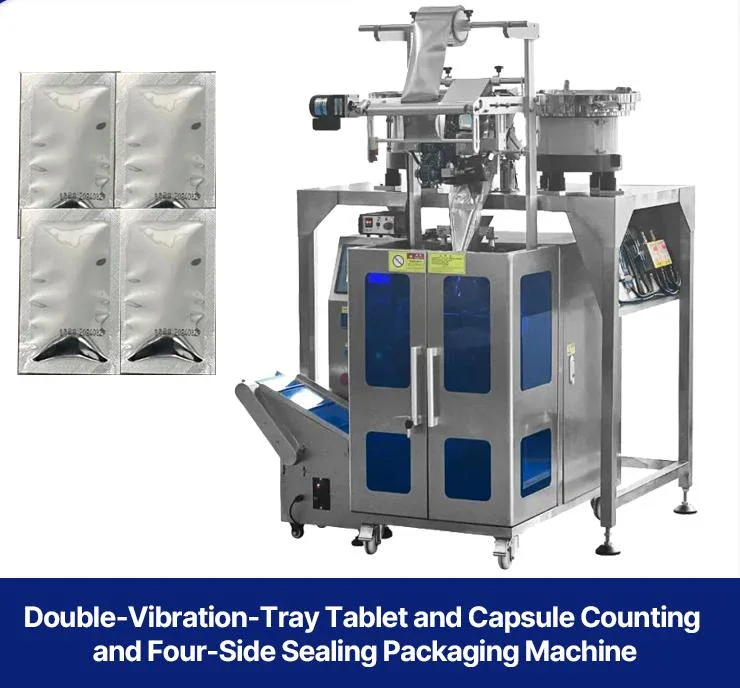
When planning a production line, facility managers must understand that bag style directly impacts machine output speed. A small-sachet packaging machine will not run at the same speed for every bag configuration.
Simple bag styles, such as the standard back seal (pillow pouch) or the basic three-side seal, facilitate the highest production speeds. The mechanical actions required to fold, fill, and apply straight, continuous heat seals are minimal and highly streamlined. Consequently, a machine running these simple bags can easily achieve rapid cycle times.
Conversely, complex bag styles inevitably reduce production velocity. Four-side sealing requires the machine to align two separate film webs precisely and apply heat to a larger total surface area, demanding slightly longer dwell times for the heating jaws. Shaped bags introduce the most significant speed reductions. The intricate die-cutting process requires immense precision. The machine must pause momentarily to ensure the shaped cut aligns perfectly with the printed graphics on the film. Additionally, clearing the excess film trim from shaped bags adds a mechanical step that slows the overall cycle.
Therefore, manufacturers must balance their desire for complex, eye-catching bag styles with their required production quotas.
Is the Installation of This Type of Packaging Machine Easy?
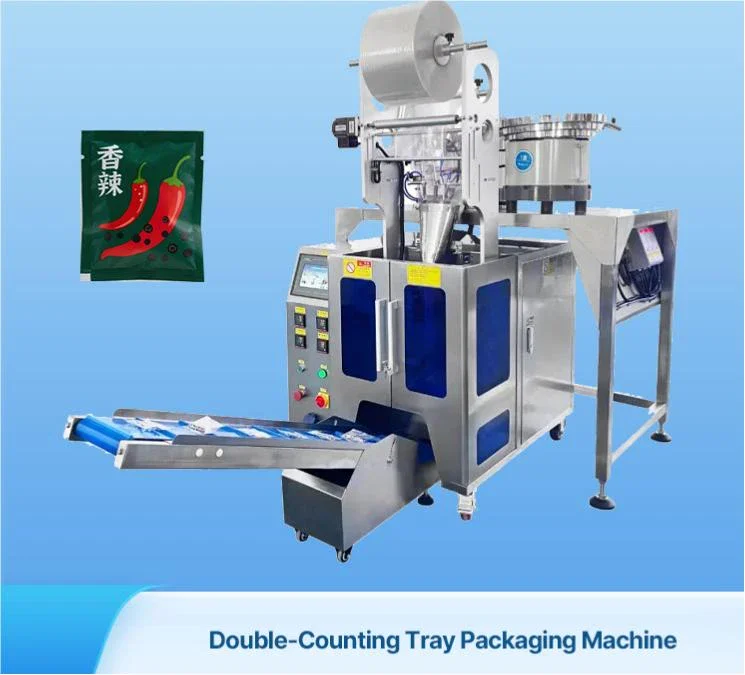
Modern engineering has significantly simplified the installation of small-sachet packaging machines. Historically, setting up industrial packaging equipment required a team of specialized technicians and days of calibration. Today, manufacturers design these machines with a “plug-and-play” philosophy.
Installation generally proves straightforward for standard machines. The equipment usually arrives fully assembled and pre-tested from the factory. The end-user must carefully uncrate the machine, position it on a level factory floor, and lock the caster wheels. Connecting the utilities is the next critical step. Most small-sachet packaging machines require a standard industrial power supply (e.g., 220V 50HZ 1P) and, in some cases, a connection to an air compressor to drive pneumatic components like date printers or specific cutting jaws.
Once powered on, the intuitive touch-screen interfaces (PLCs) guide the operator through film threading and parameter input. While basic installation is easy, operators must still undergo proper training to understand the independent intelligent temperature controls, adjust the stepper motor for film pulling, and maintain the sealing jaws. A well-designed machine simplifies the mechanical setup, allowing production to commence rapidly.
The Ultimate Purchasing Guide: How to Buy a Small-Sachet Packaging Machine
Procuring capital equipment requires a strategic, step-by-step approach. Customers looking to purchase a small-sachet packaging machine should follow a structured procurement methodology to ensure they acquire the perfect solution for their production needs.
Step 1: Determine Your Core Specifications
Before contacting any manufacturer, clearly define your project parameters. You must determine the exact bag type you desire (referencing the 8 styles discussed above). Next, calculate your required production speed (e.g., 40 bags per minute). Most importantly, classify your filling material. Packaging free-flowing powders, sticky granules, or viscous liquids requires entirely different dosing mechanisms. Powders typically require an auger (screw) filler, while liquids need a piston pump.
Step 2: Engage a Reputable Supplier
With your specifications documented, reach out to an established supplier. For instance, you can contact manufacturers like Yundu by visiting their official website at https://yundufillingmachine.com/. Present your precise demands regarding bag type, speed, and material. A professional supplier will analyze your requirements and recommend the most suitable machine model.
Step 3: Select Necessary Auxiliary Equipment
A packaging machine rarely operates in isolation. To build a robust production line, you must determine which auxiliary machines you need. Common additions include:
- Check Weighers: To guarantee every packet meets the precise advertised weight, rejecting under or overweight sachets.
- Metal Detectors: A critical safety component in the food and medical industries to ensure no metal contaminants enter the final product.
- Conveyor Belts: To automatically transport the finished sachets away from the packaging machine to the final cartoning or boxing area.
Step 4: Request a Comprehensive Quote and Arrange Shipping
Once you finalize the main machine and the auxiliary components, the supplier will generate a formal quotation. This quote should detail the machinery costs, spare parts, and warranty terms. Following the commercial agreement, you must arrange logistics. Suppliers frequently ship machines from manufacturing hubs in China to global destinations. You can choose sea freight for cost-effective, bulk transport (ideal for heavy equipment), or air freight if you require expedited delivery to launch a product immediately.
Case Study: Analyzing the DCF-300 Packaging Machine
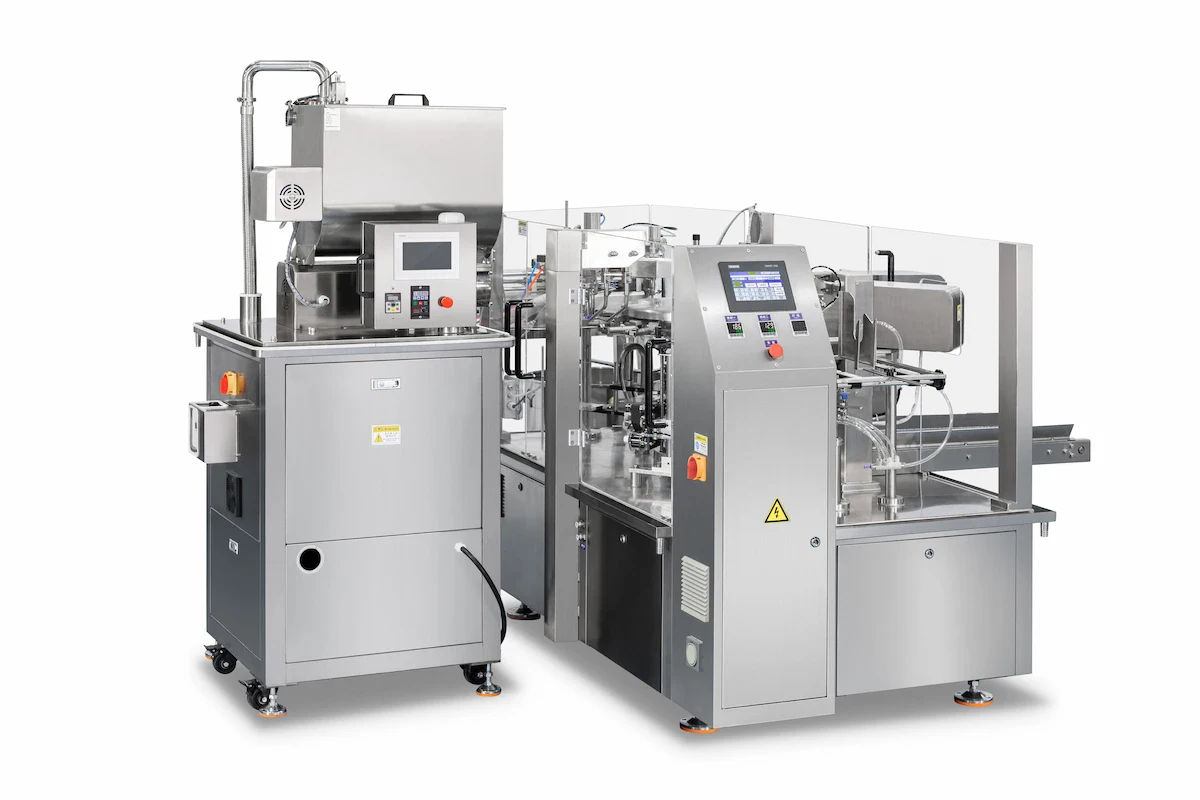
To ground these concepts in reality, let us examine a specific piece of equipment designed for powder materials. Below is a detailed breakdown of a typical high-performance unit, specifically the DCF-300 automatic powder packaging machine.
Engineers purposely designed this machine to handle powder materials across the food, pharmaceutical, and chemical sectors. It fully automates the entire process: bag-making, measuring, filling, sealing, cutting, and counting. It utilizes a computer-controlled stepper motor for precise film pulling, allowing for immediate bag length adjustments without wasting film. Furthermore, its independent intelligent temperature control ensures perfect seals across diverse packaging materials, including PET/PE, Paper/PE, and PET/AL/PE.
Project Category | Detailed Specifications |
Machine Description | Fully Automatic Powder Packaging Machine |
Model | DCF-300 |
Supported Bag Types | Three-side seal, Four-side seal, Back seal |
Measuring Method | Auger (Screw) Filler |
Packaging Speed | 35-50 bags/minute (Variable frequency adjustable) |
Bag Dimensions | Width: 10-140 mm | Length: 30-150 mm |
Sealing Patterns | Horizontal: Diagonal mesh with easy tear or straight mesh |
Cutting Mechanism | Zigzag (serrated) cutter or flat cutter with easy tear notch |
Power & Voltage | 1600W | 220V 50HZ 1P |
Weight & Dimensions | 280 KG | 930 x 730 x 1880 mm (L x W x H) |
Material Construction | 304 Stainless Steel (Contact parts) |
Standard Inclusions and Vulnerable Parts
A comprehensive equipment package ensures immediate operability. The DCF-300 includes: one ribbon printer, one auger screw set, one bag former, one photoelectric sensor, one inverter, and one vibrator. Furthermore, operators must maintain standard consumable parts. The machine kit supplies 2 rubber sleeves, 1 solid-state relay, 4 heating tubes, 2 thermocouples, 1 proximity switch, 1 set of fuses, and 1 exhaust sponge to guarantee long-term uninterrupted production.