 English
  Arabic
  Indonesian
  Vietnamese
  Malay
Malay  Thai
Thai  Korean
  Russian
  French
  Italian
  Japanese
  Portuguese
  Turkish
  Spanish
 What Is a Rotary Pre-Made Pouch (Bagging) Machine?
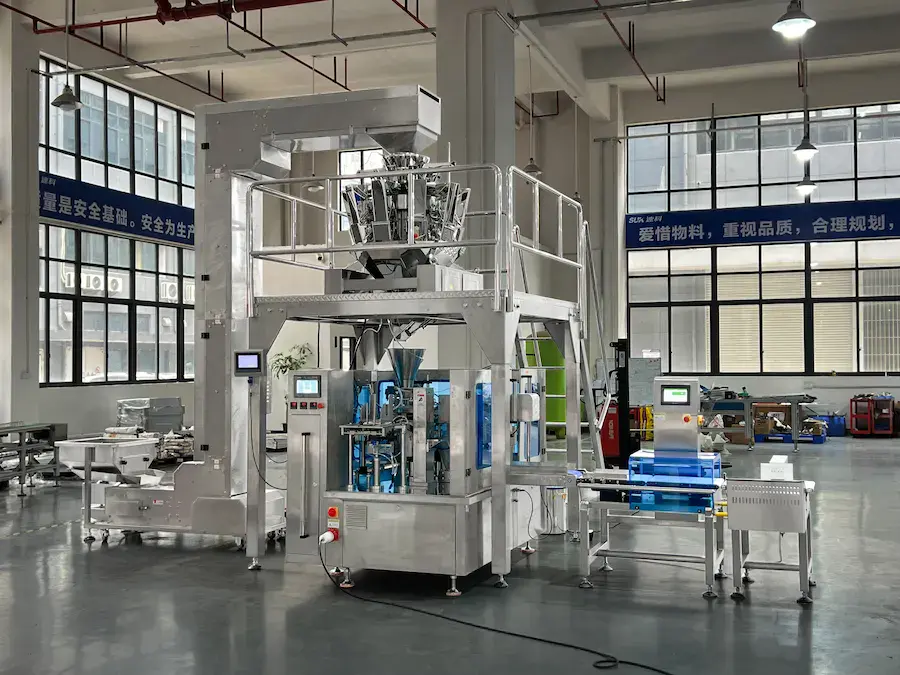
Rotary bagging machines (also called pre-made pouch packaging machines) are automated systems that pick up pre-formed bags and, in one continuous cycle, open each bag, fill it with product, and then seal it. These machines use a circular (rotary) indexing table with multiple stations (often 4–12 stations) that coordinate bag handling, filling, and sealing. In simple terms, a bag is fed into an opening station, conveyed to a filling station, and then moved to a sealing station, all in a rotating sequence.
This design yields high throughput – for example, many rotary baggers run at 50–100 bags per minute or more. Compared to vertical form-fill-seal machines (which form bags from film), rotary bagging machines are ideal when you have premade pouches (e.g. flat bags, doypacks, stand-up pouches, gusseted bags, zipper bags, or side-spout pouches).
 The machine ensures each bag is squarely opened (often using air blasts or mechanical jaws), accurately filled via dosing devices (weighers, volumetric fillers, augers, etc.), and then heat-sealed or zip-locked with consistent quality.

A rotary bagging machine (like the Yundu model) uses multiple rotating stations to open a pre-made pouch, fill it with product, and then seal it. Because these machines are fully automatic, they greatly increase packaging speed and hygiene while reducing labor. Key features include adjustable bag magazines (to hold a stack of bags), automatic bag openers (e.g. vacuum cups or needles), metering fillers suited to the product type, and precision sealing jaws. Major machine parts are usually stainless steel for food-grade hygiene, and international components (e.g. Panasonic PLCs, servo drives) ensure reliability. Many rotary baggers meet CE standards and UL requirements for safety.
Products Suited for Rotary Bagging Machines

Rotary bagging machines handle a wide variety of products – from dry powders to solid pieces – as long as they flow reasonably well. In general, any free-flowing solid, granule, or powder can be bagged. Here are some examples of products commonly packaged in pre-made pouches with rotary machines:

- Coffee Beans & Powder (Coffee Bean Packaging Machine):Whole coffee beans, ground coffee, or instant coffee powder are classic applications. Stand-up coffee bags (often with a degassing valve) and flat sachets can be filled at high speed. For instance, Yundu’s pouch fillers list coffee beans as a primary material, and many baggers on the market specifically highlight coffee bean packaging.
- Grains, Seeds & Legumes (e.g. Soybeans):Dry grains, rice, nuts, seeds, and beans (like soybeans) pack easily. The same machines that handle coffee beans typically handle other seeds/nuts. These products are often filled by weight (using multi-head weighers or auger fillers) into bag styles like flat-bottom or gusseted bags.
- Pet Food & Dog Food (Fully Automatic Dog Food Bagging Machine):Dry pet foods (kibble, dog/cat treats, jerky, etc.) are prime candidates. In pet food lines, stand-up pouches with zippers or multi-seal gusset bags are common. For example, packaging solutions like the Swifty Bagger can automatically weigh and fill an assortment of pet products into stand-up zipper pouches and quad-seal doy packs. These machines accommodate bulky, high-volume fills (often several pounds per bag). (Yundu’s systems likewise support pet food; they emphasize “high-speed automated” filling for food products.)
- Candy & Snack Foods (Candy Bagging Machine):Items like candy pieces, nuts, chips, biscuits, or small snacks are easily handled. Such products are normally metered by weighers or bulk cup fillers into pillow packs, flat bags, or stand-up bags. For example, rotary baggers often list “candy, nuts, baked goods” among their capabilities. In the candy industry, machines may run a bit slower (to carefully handle delicate pieces), but they still automate bag opening, filling, and sealing.
- Laundry & Detergent (Laundry Powder Bagging Machine):Powdered detergents and laundry soaps are classic powder products for pouch packaging. Pre-made bags like back-seal bags, doypacks, or gusseted bags (with or without zip closures) are filled with precise doses of powder. Packaging equipment for detergents is designed to be dust-tight and clean, using servo-driven augers and enclosed conveyors. For instance, one manufacturer describes a detergent packing machine that “precisely, dust-free[ly]” fills powders into back-seal, gusseted, or doypack pouches. (Yundu machines can integrate screw or auger fillers for powders, meeting these same needs.)
- Laundry Pods (Laundry Pod Bagging Machine):While laundry pods are often sold in jars or film tubes, small-format pouching is also possible. Very gentle feeding is required so the pods (which contain liquids or gels) aren’t damaged or ruptured. Special pocket-format baggers or blister packing machines can package pods; however, some turnkey lines insert pods into preformed trays or pouches automatically. (Yundu’s broad product range suggests they could tailor a solution for such delicate items.)
- Confectionery & Chocolate (Chocolate Bagging Machine):Chocolate bars, chips, or snack pieces are typically wrapped, but items like chocolate-covered nuts or cocoa nibs can be bagged. The machine handles the bulk filling; often, a rotational shaker helps level out heavier pieces. Some baggers explicitly mention packaging “candy, chocolate, nuts, dried goods” by combining a weigher and a rotary bagger.
- Other Powders & Materials:Beyond these, any powder (flour, spices, fertilizers, etc.) or granular product can use a bagger. Yundu notes their machines can handle “solids, particles, powders, liquids, sauces and other materials” by selecting the appropriate filling device. For liquids or sauces, additional modifications (like ultrasonic sealing for liquids or specialized filling nozzles) would be used.
Example: A bagging line might include a feeder/weigher and a rotary pouch filler like this. It automatically feeds pre-made zipper pouches from the magazine, shakes them open, fills measured product, and seals each pouch. This image shows typical metering and sealing stations (in a lab/demo setup). Such machines are used for pet treats, powders, grains, and more. Sources: Rotary baggers support diverse products – e.g. powder detergents in doypacks and coffees/nuts in gusset or zipper bags.
Bag and Pouch Types
Rotary bagging machines are highly versatile in bag style. They can run virtually any pre-made pouch shape, including:
- Flat/Pillow Bags:Simple pillow-shaped pouches (3-seal bags) are common for snacks or powders.
- Stand-Up Pouches (SUP):Doypack bags with a bottom gusset, often used for coffee, snacks, pet food, etc. Machines often have special bag openers for SUPs.
- Zipper Pouches:Stand-up bags or flat pouches that include a zipper closure (re-closable). Rotary machines can insert and activate zippers as they fill and seal.
- Gusseted/Block-Bottom Bags:Bags with side gussets or box bottoms (e.g. four-corner bags) for large-volume products or retail packaging. Some baggers (like box-gusset fillers) are designed to open and fill these heavier bags. Yundu and others cite gusset bags explicitly.
- Quad-Seal Bags:Pouches sealed on all four vertical edges, giving a blocky, pillow-like shape (common in rice, coffee packaging). These are often filled by horizontal baggers or modified rotary machines. (Yundu’s YD-P180/200 rotary models mention supporting “quad” and multi-seal formats.)
- Spout Pouches:Bags with an integrated spout (for liquids like juices or sauces). There are rotary fillers for spout pouches (often adding the cap attachment). Yundu sells multi-head spout fillers (though these are usually form-fill machines).
- Stand-Up Pouches with Carry Handles:Some large pouches include handle holes; the bagger still opens and fills them.
- Customized or Specialty Bags:Side gusset bags, corner spout pouches, quad with hanging holes, and more are possible. The key is the magazine and bag opening system must match the bag’s shape.
In summary, if you have a pre-made bag/pouch, there is likely a rotary bagger model that can run it. One industry source notes that an 8-station rotary can handle flat, stand-up, zipper, side-spout, and gusset pouches with proper tooling. Similarly, another manufacturer lists DOY packs, SUPs, SURP (slide zipper pouches), pillow bags, gusseted, quad-seal, and even carry-handle bags as supported by its bagger models. The machine’s controls let you program different bag dimensions and sealing profiles, so size changes are usually a matter of adjusting guides and infeed.
Example Applications
To illustrate the above, here are some specific examples of pre-made pouch packaging:
- Coffee Bean Packaging:Whole coffee beans or ground coffee are often sold in stand-up pouches (with one-way valves) or pillow bags. A rotary bagger can feed each pouch, fill a precise weight of beans, then seal it. (Valve insertion requires extra steps, but the bag filling is the same.)
- Soybean Bagging:Dry soybeans (edamame or similar) can be packaged like other legumes. Bags are filled by weight using multi-head weighers before sealing.
- Dog Food (Pet Food) Packaging:Large kibble bags (2–15 kg) often use gusseted or stand-up zipper pouches. A pet food bagger will have larger conveyors and strong bag supports. For example, pet treats (jerky, chews) are often run through a Swifty Bagger model that opens zipper pouches and shakes product into them.
- Candy/Confections:Snack candies or wrapped pieces are bulk filled. Candy baggers usually use vibration weigher feeders with a gentle shaker at the filling station to evenly distribute the product before sealing.
- Laundry Detergent Powder:Bulk detergent is measured by weight (auger or cup filler) into robust plastic bags. The bags are then heat-sealed. Dust control is important: machines for powders include enclosures and sometimes nitrogen flushing. (As noted, detergent packing machines handle back-seal, gusset, and doypack styles.)
- Laundry Pods:These gel pods can be fed into small compartments of a pouch or box. In a bagging machine, very low speed and special anti-breakfeeding are used. (Alternatively, pods are often put in cartons.)
- Chocolate Packaging:Pieces of chocolate (chips, almonds with chocolate, cocoa nibs) are similar to candy. They are filled via weighers and sealed. Some lines may even incorporate an icing/sugar coating process before bagging if needed.
- Powders & Grains (General):Products like spices, flour, sugar, seeds, pet treats, and even hardware (nuts & bolts) can be packaged. One rotary bagger description explicitly mentions it can fill powders, granules, sauces, and even unconventional items like seeds and cannabis buds.
Each of these products uses a bagging machine variant optimized for its properties (e.g. an auger filler for powders, volumetric for liquids, multi-head weigher for free-flowing solids). The key point is that the bagging machine concept (automatic bag handling + filling) is the same across industries.
Choosing and Buying a Rotary Bagging Machine
When selecting a pre-made pouch bagger, consider these factors:
- Product Type & Fill Method:Match the filling device to your product. Powders usually require augers or cup fillers; liquids require pumps or gravity fillers; solids might use multi-head weighers or vibratory feeders.
- Bag Style & Size:Ensure the machine’s magazine and openers fit your bag format (flat, stand-up, etc.). Check the min/max bag dimensions (length/width) and weight. Most makers list the range; for example, one rotary model covers 130–350 mm length × 95–170 mm width.
- Speed/Throughput:Determine required speed (bags per minute). Higher speeds demand more stations or multiple lines. Fully automatic rotaries can range from a few dozen to over 100 bags per minute.
- Construction & Standards:Look for stainless steel contact parts, CE or UL certification, and sanitary design if needed (for food/pharma). If dust is a concern (e.g. flour), check for enclosures or clean-packing options.
- Customization:Many manufacturers (including Yundu) offer customization – additional stations, inline metal detectors, checkweighers, or special conveyors can be added. Ensure the supplier can tailor the machine to your needs.
How to Procure: Packaging machines are specialized, so the usual route is to contact manufacturers or authorized distributors. Provide your product details (type, volume, weight per bag), bag format, and desired speed to get a quote. For example, Yundu’s team recommends customers specify product packaging (bag form), material type (liquid, powder, etc.), desired speed, and other specs, so they can suggest the right machine series. It’s wise to request a demonstration or sample run with your product.