 English
  Arabic
  Indonesian
  Vietnamese
  Malay
Malay  Thai
Thai  Korean
  Russian
  French
  Italian
  Japanese
  Portuguese
  Turkish
  Spanish
  Pickle packaging must be designed to handle acidic brines while ensuring food safety and consistent product quality. A variety of containers – glass jars, plastic bottles or tubs, metal cans, and flexible pouches – are used for pickle packaging. Each format demands compatible food-grade materials that resist vinegar corrosion. Modern facilities often employ automation (e.g. jar filling machines and pouch packers) to increase throughput and consistency. This guide covers common pickle packaging formats, suitable food-grade materials, key packaging machinery (including pickle pouch packaging machines, automatic filling equipment, and sealing systems), and criteria for selecting the best packaging solution.
Types of Pickle Packaging Formats
Pickles are commonly sold in jars, bottles, cans, or pouches, depending on the market and volume. Each format has distinct advantages:
Glass Jar Packaging
Glass jars are the traditional container for pickles. They are inert to vinegar-based brines and do not affect acidity, preserving flavor and safety. Jars typically have wide mouths and use metal screw caps with liners or induction seals to form an airtight closure. Glass provides a premium appearance and allows consumers to see the product, but it is heavy and requires careful handling.
Glass jars are a classic pickle packaging format. The non-reactive glass preserves pickle quality and the metal cap (often with an induction seal) ensures an airtight closure.
Plastic Container Packaging
Rigid plastic jars or bottles (made from PET, HDPE, or PP) are also used, especially for refrigerated or bulk pickles. Food-grade plastics like PET and HDPE are lightweight, shatter-resistant, and can safely hold acidic pickles when BPA-free materials are used. Plastic containers often allow cost savings on shipping and ease of reclosure, but they are slightly permeable and may absorb odors over time. Many processors use transparent PET bottles or tubs so consumers can view the contents.
Flexible Pouch Packaging
Laminated stand-up pouches (often with a foil barrier layer) are used for small portions, single-servings, or specialty items like pickle slices or dips. Vertical form-fill-seal (VFFS) machines can form and seal these pouches quickly. Pouches use multi-layer films (e.g. PET/Aluminum/PE) that are heat-sealed to enclose pickles and brine. They greatly reduce material use and weight compared to rigid containers, but require careful handling due to puncture risk (especially with whole pickles).
Metal Can Packaging
Industrial pickle producers may use tin-plated steel cans (lined with food-safe coatings) or aluminum cans. Cans are hermetically sealed and ideal for thermal processing (retorting or pasteurization). Properly lined cans resist vinegar corrosion. After filling, the can’s lid is vacuum- or heat-sealed to create an airtight seal, and the can is then sterilized by heating. Cans enable very high-speed automated canning lines for shelf-stable pickles, but require more complex equipment. Reactive metals like copper or bare aluminum cannot touch the brine unless coated.
Food-Grade Pickle Packaging Materials
Selecting the right packaging material is critical for preserving pickles’ quality. All materials must be food-grade and non-reactive to vinegar:
Glass
Inert and impermeable, glass does not leach any substances or absorb pickle flavors. It withstands both refrigerated and shelf-stable (retorted) pickles. Glass is 100% recyclable and provides an ideal seal with metal lids and liners.
Plastics (PET, HDPE, PP)
Common resins include PET, high-density polyethylene (HDPE), and polypropylene (PP). These polymers are lightweight and unbreakable. Food-grade, BPA-free versions are safe for acidic brines. For example, transparent PET allows product visibility similar to glass. All plastic jars/bottles used must be certified for food contact. Unlike glass, plastics can slightly permeate gases, so design may include thicker walls or oxygen absorbers if extended shelf life is needed.
Metal (Tin-plated Steel or Aluminum)
Metal cans are lined with a food-grade coating (often epoxy-phenolic or BPA-free lacquers) to prevent metal–vinegar reactions. This lining is essential: “tin-plated steel cans… are always lined with a food-safe coating to prevent corrosion from vinegar”. The can itself forms a hermetic seal when seamed with a lid, enabling safe thermal processing. Aluminum (with a proper lining) can also be used, typically in monoblocs or two-piece cans. All metals contacting pickles must be non-reactive or properly coated.
Multilayer Laminates
Flexible pouches use food-grade laminated films, typically combining a clear or oriented PET outer layer, a thin aluminum foil or metallization for barrier, and an inner PE or PP sealant layer. These composites ensure moisture and gas barrier while being safe for pickles. (For example, a common pickle pouch film might be PET/Alu/PE.) These materials are engineered for strength and sealability on form-fill-seal machines.
Packaging machinery and closures also use food-grade materials: gaskets, liners, and adhesives in caps must meet FDA (or local authority) food-contact standards. For instance, jar caps often include an induction-seal liner (foil or polymer) that creates the vacuum seal; these liners are specially formulated to tolerate heat and acids. Throughout the line, contact parts are typically stainless steel to meet food-safety requirements.
Automation and Machinery for Pickle Packaging
Modern pickle packaging lines use various automated machines to fill, seal, and label containers. Key equipment options include:
Automatic Pickle Filling Machine
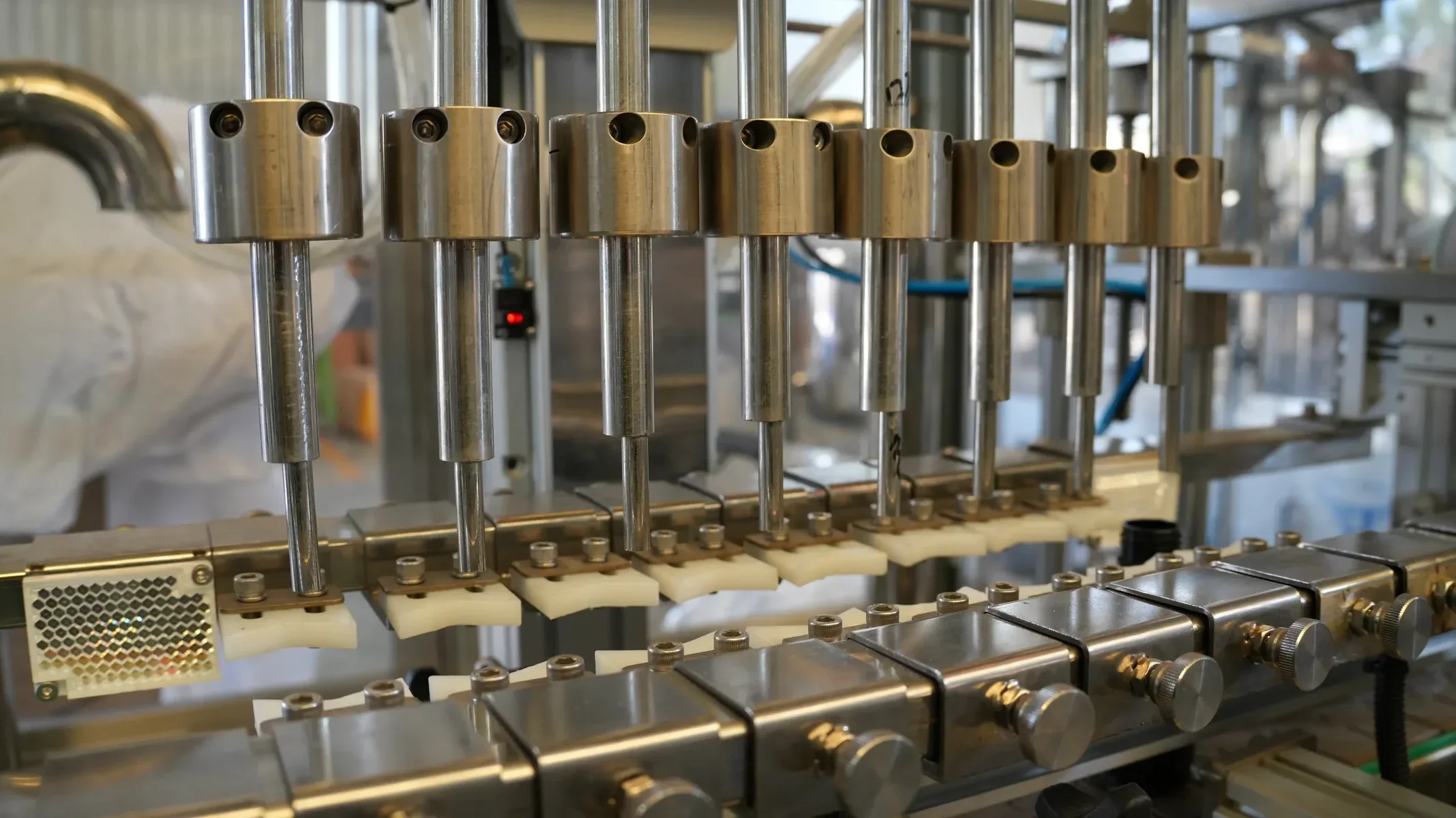
Fully automatic filling machines dispense whole pickles (or sliced pickles) and brine into jars or bottles. These pickle filling machines are often volumetric (metering fixed volumes) or use vacuum/weight fillers to achieve precise fill levels. For example, an automated jar filling system will index empty jars, insert pickles (sometimes using a hopper or vacuum conveyor), and then pour or inject brine, all at high speed. Such machines feature adjustable fill volumes and can handle variable pickle sizes while minimizing overfill and spillage. Typical capacities range from dozens to several hundred jars per minute, depending on model. High-end fillers include stainless-steel contact parts and CIP (clean-in-place) capabilities for hygiene.
Pickle Jar Sealing Solutions
After filling, jar sealing machines apply lids and create airtight seals. Automatic cappers will place screw-type caps on jars and tighten them to a specified torque. Many jar lines use induction sealing: after capping, an induction sealer heats a foil liner under the cap to bond it, ensuring a vacuum seal (liner-on-lid) that keeps the product airtight. This “vacuum sealing” or induction sealing step is critical for shelf life. For metal cans, a seaming machine crimps the can lid hermetically shut. In all cases, the equipment ensures consistent, tamper-evident closures. Industry references note that sealed pickle containers must prevent oxygen ingress; effective sealing (with liners or sealed seams) keeps the pickles “securely sealed… to maintain freshness”.
Pickle Pouch Packaging Machines
Pickle pouch packaging machines form, fill, and seal flexible packs. In a typical vertical form-fill-seal (VFFS) system, rollstock film is formed into a pouch shape, then filled with pickle slices (or chopped pickles and brine) and sealed at the top and bottom. Alternatively, premade pouch fillers can handle stand-up pouches that are already formed. These machines are ideal for small portions like single-serve pickle dips or gourmet preserves. Pouch packers often include a gas-flushing option (e.g. vacuum before sealing) to enhance shelf life. While slower than jar lines, pickle pouch machines can reach on the order of a few dozen bags per minute. Their compact size makes them suitable for artisanal producers or as an auxiliary line. As one industry account observes, pickle machinery can handle “glass jars, plastic containers, and pouches” interchangeably with quick changeovers.
Vacuum Packaging for Pickles
Some pickle products use vacuum packaging. This method removes air from the package (jar, pouch, or tray) before sealing. Vacuum packaging for pickles extends shelf life by preventing oxidation and inhibiting aerobic bacteria. For example, vacuum chambers for jars can evacuate oxygen from the headspace and then apply lids, helping to preserve texture and flavor. Pouches can also be vacuum-sealed on specialized machines. The result is a tight pack with minimal air; benefits include extended shelf life and freshness retention. As ILAY Vacuum notes, vacuum packaging “protects pickles from bacteria and oxidation”. When used, vacuum systems for pickles are built of stainless steel (to resist acid corrosion) and equipped with powerful pumps to ensure complete air removal.
Pickle Packing Line Automation
For high-volume operations, individual machines are integrated into a pickle packing line automation. Conveyors link the filler, capper/seamer, labeler, and carton/pack case machine under PLC control. Sensors and automatic controls synchronize the line for smooth flow and minimal downtime. An automated pickle packaging line can switch between container types with change parts. For example, fully integrated jar lines might include an automatic jar unscrambler, filler, capping machine, induction sealer, labeler, and case packer. Such lines dramatically increase output and consistency: one equipment supplier notes that a turnkey pickle packing line offers “high-speed packaging capabilities” across multiple formats. In practice, automation reduces labor and ensures each jar or pouch is filled and sealed correctly. Modern systems often feature touchscreens for easy setup and servo-driven units for precise control. Together, these machines exemplify how pickle packing line automation streamlines production and maintains quality.
Criteria for Selecting Pickle Packaging Solutions
When choosing packaging formats and machinery for pickles, manufacturers should evaluate several key factors:
Production Throughput: Consider required speed (jars or pouches per minute). High-volume pickles may need fillers that handle 30–100+ jars/minute. Ensure any chosen machine can meet current and projected demand. Evaluate rated output and remember that product viscosity (thick brine, whole pickles) can slow filling speed.
Flexibility: Seek equipment that can adapt to different containers or sizes. Modular machines with quick-change parts let you switch jar diameters or pouch sizes without replacing the entire line. Flexible designs future-proof the line, so it can pack new pickle varieties or packaging formats as needs evolve.
Construction Quality: Pickle packing equipment should be industrial-grade and corrosion-resistant. Look for stainless steel (304/316) contact parts and rugged construction. Heavy-duty frames withstand continuous use. Well-built machines cost more upfront but reduce downtime. For example, equipment guides emphasize that food packaging machines must be “stainless steel and robustly built” to handle acidic foods.
Hygienic Design: Food safety is paramount. Machines must allow thorough cleaning (welded, sloped surfaces, CIP). Features like CIP-capable fillers, easily removable nozzles, and enclosed bearings prevent contamination. A hygienic pickle packaging machine “prioritizes hygiene and food safety” with easy-to-clean components. Ensure the equipment meets relevant standards (e.g. FDA, CE, GMP). Materials contacting pickles should be FDA- or NSF-approved.
Material Compatibility: The packaging material must suit pickles’ acidity. Containers should be food-grade and non-reactive. (For example, never use unlined aluminum or copper for pickles.) Equipment should also be designed for the chosen container – e.g. a capper configured for jar caps vs. a seamer for cans.
Cost and ROI: Balance machine cost against labor and efficiency gains. Fully automated lines are more expensive but pay off through higher throughput and lower waste. Semi-automatic fillers cost less but require more manual labor. Factor in total cost of ownership: energy use, maintenance, and spare parts availability. Vendors with good after-sales support can further improve ROI.
Cleanability and Maintenance: Since pickling lines handle food, machines should be easy to clean. Look for features like quick disassembly of contact parts, sanitary sealing, and guards to prevent debris buildup. Consider how parts (valves, gaskets) can be inspected or replaced. Good technical support and accessible spare parts are also important.
Selecting the right pickle packaging solution means matching the container type and materials to the product, and matching the machinery to the scale and requirements of production. By considering throughput, flexibility, build quality, and hygienic design, manufacturers can choose packaging that maintains pickle quality and maximizes line efficiency.
Conclusion
Pickle packaging requires a balance of suitable container formats, food-safe materials, and reliable machinery. Glass jars, plastic containers, flexible pouches, and lined metal cans each serve different niches. All containers must use food-grade materials (e.g. PET, HDPE, PP plastics or properly lined metals) that resist vinegar. Equipping a line with the right machines – automatic pickle filling machines, pickle jar sealing solutions, pickle pouch packers, and vacuum systems – ensures that pickles are filled and sealed consistently. Modern pickle packing line automation can integrate these machines into high-speed lines, reducing labor and waste. Ultimately, the chosen packaging system should keep pickles fresh and safe (e.g. through airtight vacuum seals) while meeting production and budget goals. Professionals should apply the criteria above and consult equipment experts to implement a packaging solution optimized for their pickle products. By carefully selecting materials and machines, food manufacturers can achieve efficient, high-quality pickle packaging.
Pickle Packaging FAQS
The following are some common questions about pickle packaging collected by yundu.
Pickle packaging refers to the process of filling, sealing, and protecting pickled products using containers such as jars, bottles, cans, or pouches to ensure food safety and shelf life.
The most common pickle packaging formats include glass jars, plastic containers, metal cans, and flexible pouches, each suited to different production scales and markets.
Glass jar pickle packaging is popular because glass is non-reactive, resistant to acidic brine, and provides excellent product visibility and airtight sealing performance.
Food-grade pickle packaging materials include glass, PET, HDPE, PP plastics, and properly lined metal containers that can safely withstand vinegar and salt solutions.
An automatic pickle filling machine is designed to accurately dispense pickles and brine into containers, improving speed, consistency, and hygiene in pickle packaging lines.
Vacuum packaging for pickles removes air from the container before sealing, reducing oxidation and helping extend the shelf life of pickled products.
Pickle pouch packaging machines form, fill, and seal flexible pouches, commonly used for small portions, sliced pickles, or specialty pickle products.
Pickle jar sealing solutions typically include screw capping combined with induction sealing or vacuum sealing to ensure airtight and tamper-evident closures.
Pickle packing line automation integrates filling, sealing, labeling, and conveying equipment into a continuous system to increase production efficiency and reduce labor.
The right pickle packaging solution depends on factors such as production capacity, container type, packaging material compatibility, hygiene requirements, and automation level.