 English
  Arabic
  Indonesian
  Vietnamese
  Malay
Malay  Thai
Thai  Korean
  Russian
  French
  Italian
  Japanese
  Portuguese
  Turkish
  Spanish
 Blister packaging – often called a blister pack or blister package (German: Blisterverpackung) – is a rigid or semi-rigid unit-dose packaging system consisting of pre-formed plastic cavities sealed with a backing film or foil. Each cavity (the “blister”) holds one dose or item, creating an individually enclosed pocket for products such as pills, capsules, snacks, or small hardware. This format is widely used in pharmaceuticals, food, and consumer goods because it combines product protection, tamper evidence, and dosage accuracy in one package. In blister packaging, every unit is isolated from the environment and other units, which greatly enhances stability and safety.
Blister packs come in many consumer formats: e.g. blister cards where plastic blisters are sealed onto printed cardboard, clamshells (hinged plastic enclosures), and blister boxes (cartons holding multiple blister sheets). They may also be referred to by product or region (e.g. “blister pack” in English, Blisterverpackung in German). Whatever the term, the core idea is the same: protect each item inside a sealed, custom-shaped cavity.

Key Advantages of Blister Packaging
Blister packaging is chosen for specific technical and practical advantages. In industry terms, its primary goals are protecting product integrity and ensuring safety and compliance. The key benefits include:
Environmental Protection
Multi-layer films and foils in blister packs form strong barriers against moisture, oxygen, light, and dust. For example, materials like PVC, PET or Aclar (a cyclic olefin copolymer) can be coated or laminated with barrier layers, and aluminum foil backing is often used for maximum protection. These barriers “shield [the contents] from exposure to moisture, oxygen, light, and contaminants,” which can otherwise degrade sensitive pharmaceuticals or foods. Studies note that PVC has very low water vapor permeability, and laminated aluminum foil has negligible permeability to moisture and light. In short, blister packs keep hygroscopic or light-sensitive products stable by tightly sealing each dose.
Tamper Evidence and Security
A blister pack is inherently tamper-evident. The sealed cavity cannot be opened without damage; as one packaging guide explains, “removing the lid from the blister card leaves visible damage,” so any interference is immediately obvious. Sonoco Packaging notes that thermoformed blisters “protect Product from transport and pilferage” while the transparent film lets consumers see the product. In addition, unique blister designs (child-resistant push-pull packs, peel-push lidding, or tear-off strips) make unauthorized opening difficult. Overall, blister packaging helps meet safety regulations: a breached blister clearly shows tampering to both consumers and regulators.
Dose Accuracy & Compliance
In pharmaceuticals, each blister cavity holds exactly one tablet or capsule, enforcing unit dosing. This patient-centric design makes it easy to track consumption (important for clinical compliance) and minimizes dosage errors. For example, printed calendars or labeled cavities (e.g. Monday–Sunday blister sheets) ensure patients take the right dose at the right time. Because each piece is separated, breaking one blister does not compromise the remaining doses. This precisely-measured, unit-dose approach is harder to achieve with bottle or bulk packaging.
Portability and Convenience
Blister packs are lightweight, compact, and usually easy to handle. Consumers can carry a week’s worth of pills or a small kit of hardware tools in a neat blister card. The rigid backing (card or film) keeps the pack flat and easy to store. In retail, hanging blister cards and clamshells are convenient for display and pick-up. Since each dose or item is individually sealed, users only open what they need, keeping the rest protected.
Product Visibility and Branding
The transparent plastic used in many blisters lets customers see the actual product (tablets, candy, electronics, etc.) before purchase. This window effect can increase consumer confidence and appeal. Meanwhile, the printed backing card or foil offers space for branding, instructions, and regulatory information. For instance, blister cards allow attractive graphics and safety text on the cardboard, while keeping the product in front view. This combination of visibility and printability aids marketing without sacrificing protection.

Cost and Efficiency
Blister packaging can be very cost-effective at volume. Plastic films (PVC, PET, PP, etc.) and aluminum foil are inexpensive, and high-speed thermoforming machines can produce thousands of cavities per minute. The IQS directory notes that blister packs use low-cost raw materials and have high production efficiency. Moreover, since the shape of the mold matches the product, there is minimal wasted space or product movement inside the pack, reducing damage. In many cases, contract packagers handle blister assembly, allowing manufacturers to scale quickly without heavy investment.
Regulatory Compliance and Traceability
In regulated industries (pharma, medical devices), blister packaging facilitates serialization and tamper-control as required by law. Each blister card or pack can be printed or coded with batch numbers, barcodes, and expiry dates. The sealed nature of blister packs also meets strict hygiene and safety guidelines. The design inherently meets FDA definitions of tamper-evident packaging, since any breach is immediately visible.
Together, these benefits explain why blister packaging is prevalent across many markets. It offers a complete solution: preserving shelf life (by barrier protection), protecting patients/consumers (via tamper-evidence and child-safety options), and streamlining packaging lines (through automation and unit-dose simplicity).
Types and Formats of Blister Packs
Blister packaging comes in several format variations, depending on application and protection needs. Two fundamental families are thermoformed blisters and cold-formed (Alu-Alu) blisters, but many specialized designs exist. Major types include:
Thermoform Blister Packs
In this common method, a plastic film (often PVC, PET, or polypropylene) is heated and vacuum- or pressure-formed over a mold to create the blister cavities. Tablets or items are then placed into the formed pockets and sealed with a backing (usually aluminum foil or a laminated lid film). Thermoformed blisters are transparent (good for inspection), cost-effective, and fast to produce. They are suited for products that only need moderate moisture or light protection. (For example, many over-the-counter pills and small consumer products use PVC-based thermoformed blisters.) The sealing is typically done by heat-sealing the foil to the plastic, often in a continuous, high-speed process.

Cold-Form (Alu-Alu) Blisters
When maximum barrier is needed (e.g. for very moisture- or oxygen-sensitive drugs), aluminum laminates are used instead of plain plastic. In cold-form blistering, a multi-layer foil (typically polyamide/Aluminum/PVC) is pressed into cavities by mechanical dies at room temperature. The resulting pack is opaque but provides excellent barrier to moisture, oxygen, and light. This is why life-saving drugs like nitroglycerin or certain biologics often use Alu-Alu blisters. The sealed laminate is then also covered with a lidding foil (often aluminum with heat-seal coating). The tradeoff is lower line speed and no product visibility, but the protection can extend shelf life substantially.

Carded Blister Packaging
Common in retail for electronics, toys, and hardware, blister cards are formed blisters sealed onto a printed cardboard backing. The plastic blister (face seal blister) covers the product and is mechanically heat-sealed to the paper or foil-coated card. The card displays product info and branding. Variants include full-face seal blisters (plastic seals completely over the card, often stapled or heat-bonded for extra strength) and trapped blisters (where the plastic is pinched between two layers of card). These formats improve shelf presentation and tamper resistance (any attempt to rip off the plastic tears the card).
Clamshells
A clamshell is a two-part, hinged plastic enclosure (sometimes sealed by RF welding) that surrounds the product on all sides. Clamshells replace the need for a backing card entirely. They are very tough (often child-resistant) and allow 360° visibility. On-the-shelf clamshells may have hang holes or flat bottoms. Popular for power tools, security software, and high-end cosmetics, clamshells are harder to open (enhancing security and reducing theft) but are also recyclable in some systems.
Peelable/Punch-Through Blisters
Some blisters use a peelable foil for consumers who cannot or should not push items through foil. In peel-push designs, one peels away part of the lid to reveal a cavity, then pushes the product out. These are used for items like soft gels or where a sterile opening is needed (e.g. surgical kit). Calendar packs are another specialty: a series of blister cells labeled by day/time (useful in chronic therapy to track doses). There are also child-resistant blisters that require greater force or special tools to open.
These types illustrate the flexibility of blister packaging. Whether sealed cups, cards, or trays, each blister style is built to match product needs. The material and seal choices (discussed next) determine whether the pack is a low-barrier retail blister or a hermetically sealed medical tray.
Materials and Sealing Technologies
The materials chosen for a blister pack are critical to its performance. Selecting the right film or foil depends on the product’s sensitivity and the intended shelf life. Key considerations include moisture transmission, gas permeability, transparency, and mechanical strength.
Forming Films (Base)
Common blister-forming films include PVC (polyvinyl chloride), PET (polyethylene terephthalate), and PP (polypropylene). PVC is most widely used in thermoforming because it is inexpensive, easy to form, and has decent clarity. PVC films can be uncoated or coated with barrier layers (e.g. PVDC or acrylic) to reduce oxygen/moisture ingress. For higher barriers, multilayer laminates like PVC/PVDC/PE are used. PET is more rigid and has better moisture barrier than PVC, so it’s chosen for products needing a stiffer pack or slightly longer shelf life. A newer PVC-free material, Aclar (COC resin), offers very low moisture transmission and heat resistance, at higher cost, making it suitable for very sensitive drugs.

Lidding Materials
The lidding film or foil seals the blister after filling. Aluminum foil (often 20–40 μm thick) is standard in pharmaceuticals; it provides an excellent barrier to moisture, oxygen, and UV light. A heat-sealable coating on the aluminum bonds to the forming film during sealing. For products where printing or gloss finish is important, paper/foil laminates are used on cards or unit-dose packs. These allow high-quality printing of instructions and branding on the exposed side. Lids can be designed as push-through (peel-off) or peelable depending on how the consumer is expected to access the product.
Barrier Enhancements
To protect against moisture and light, manufacturers may use multi-layer constructions. For example, Alu-Alu blisters (used in cold-forming) consist of a laminate like OPA/Al/PVC. The polyamide provides strength, aluminum provides the barrier, and the PVC layer supports sealing. This laminate is then heat-sealed with another foil, effectively double-wrapping the product in impermeable material. According to packaging analyses, these films are so effective that humidity, light, and oxygen cannot penetrate under normal conditions. In cases where product visibility is desired with barrier strength, opaque black or tinted plastics can also block light.
Sealants and Adhesives
The bond between lid and blister depends on the sealant layer. Heat-seal coatings (often acrylates or polyesters) are applied to the underside of the foil or to one film layer. The sealing parameters (temperature, pressure, dwell time) must be carefully controlled for a hermetic seal. Some seals are designed to peel (for easy opening) or require puncture (for tamper resistance). Modern blister lines often monitor seal integrity via cameras or mechanical testers to ensure every cell is properly sealed.
Sustainability Trends
As regulatory and consumer pressure grows, recyclable and bio-based materials are emerging. For example, some firms are introducing PVC-free films like COC or PLA and mono-material lidding structures to ease recycling. Recyclable foils that delaminate easily from plastic are also under development. Anti-counterfeit features (holograms or security inks) can be printed on the foil for product authentication.
In summary, material selection is a balance between protection vs. cost and machinability. PVC is cheap and fast-forming, aluminum is an excellent barrier, and advanced laminates trade cost for performance. The end goal is a package that keeps the product within specification until use.
Blister Packaging Machinery and Process
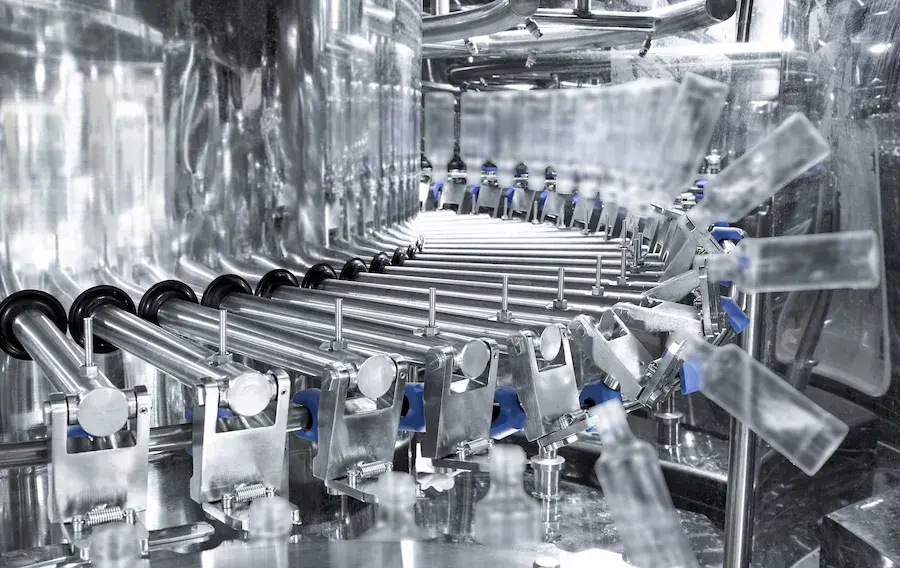
Blister packs are produced on specialized packaging machines that automate forming, filling, and sealing. A typical blister packaging line works as follows:
Film Unwinding: A continuous roll of forming film (PVC, PET, or Alu-laminate) is fed into the machine under tension. Tension control and web guiding ensure the film is perfectly aligned before forming.
Cavity Formation: For thermoform machines, the film passes over a heated plate or is struck by heated metal dies. Vacuum (and sometimes pressure) pulls the softened film into cavities in a drum or die, creating the blister shape. (In cold-form machines, the aluminum-laminate film is pressed into cavities at room temperature.)
Filling: The formed cavities advance to a filling station. Products (tablets, capsules, candy, electronic parts, etc.) are dropped into each blister pocket. High-speed feeders (vibratory or pick-and-place robots) handle delicate pharmaceutical items, while gravity or auger fillers might dispense powders or small solids. Alignment guides and brushes ensure each cavity is correctly filled.
Sealing: A roll of lidding material (usually aluminum foil or laminated film) is unwound and placed over the filled blisters. A heat-sealing station then bonds the lid to the base. Temperature, pressure, and dwell time are tightly controlled to achieve a hermetic seal without damaging heat-sensitive products. Some machines emboss lot numbers and expiry dates onto the foil in-line.
Cutting and Finishing: The continuous web of sealed blisters is cut into individual cards or strips by die-cutting or punch tooling. Excess material (scratch-cut) is trimmed. At this stage, vision systems may inspect each blister for fill level, seal integrity, or foreign particles, rejecting any defects. The finished units can then be collated, inserted into cartons, or labelled for shipment.
Cartoning/Secondary Packing: Often, blister cards are grouped and placed into folding cartons or blister boxes for final packaging. Automated cartoners or case packers then palletize the final packs.
The above flow is performed by blister packaging machines. These high-speed machines can form and seal hundreds or thousands of cavities per minute. For liquids and semi-solids, there are also blister cup filling machines (forming cup-shaped blisters, filling them, then sealing with foil). For example, Yundu’s Automatic Blister Cups Filling and Sealing Machine integrates forming, filling, and heat-sealing in one continuous line. Such machines handle products like yogurt, sauces, or creams in single-serve cups. In solid-dose blister lines, the machinery typically includes unwind stations, servo-controlled formers, precise electronic fillers, and thermal sealers all synchronized by PLC controls.
Key to all blister equipment is speed and precision. Each process step must align to keep up with the line speed. Machines use hot/cold forming stations, compression rollers, and knife units. Automated vision inspection (presence/absence sensors, leak testers) ensures each cavity is filled and sealed correctly. Because blister packaging is common in pharma, most machines comply with Good Manufacturing Practices (GMP) and can include clean-in-place features for hygiene. Many manufacturers either invest in this equipment or outsource to contract packagers who specialize in blister assembly.