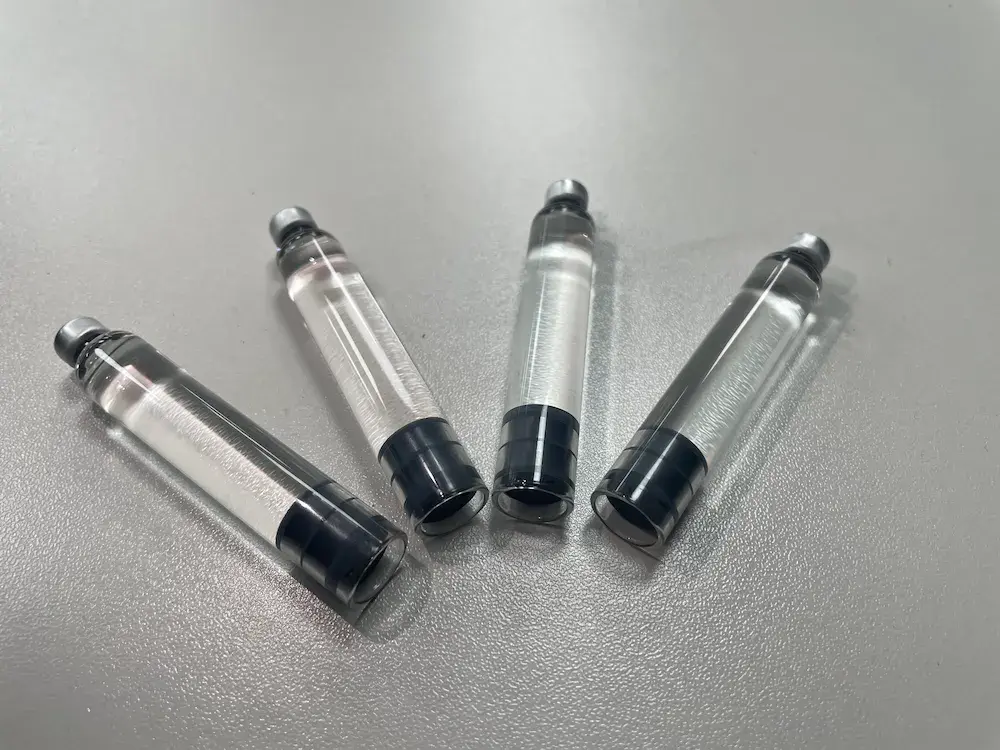
A prefilled syringe filling machine is specialized pharmaceutical equipment that automates the process of loading, filling, stoppering, and sealing pre-sterilized syringes with liquid medication. In other words, it fills and seals syringes that are already sterile and ready for use. These machines handle multiple syringes per cycle using precise pumps and computer controls to ensure each syringe receives the exact dose. The end result is a ready-to-use syringe that meets high accuracy and sterility requirements for injectable drugs.
Purpose and Industrial Relevance
Prefilled syringe filling machines meet the growing demand for ready-to-use injectable packaging in the pharmaceutical and biotech industries. One review notes that over 20 companies produce PFS for around 50 injectable products, amounting to roughly $500 billion in annual sales. Prefilled syringes eliminate manual fill steps, boosting yield and patient safety. Automated fillers have become essential: they replace labor-intensive vial transfers with precise, high-speed automation that improves efficiency and product quality. For example, industry experts note that syringes “increase dosing accuracy, making it easier to handle costly drugs”.
These machines are widely used in sterile fill-finish operations. They appear in vaccine production, biologics manufacturing, and hospital medication lines. By automating the fill-finish of crucial drugs (vaccines, antibodies, hormones, etc.), manufacturers can rapidly scale production while maintaining tight quality control. In short, the prefilled syringe filling machine plays a key role as the industry shifts toward ready-to-use formats.

Core Components and Features
A prefilled syringe filling machine is built from multiple subsystems designed for aseptic processing. Key components include:
- Feeding/De-nesting System: Transports empty sterilized syringes (often nested in trays or bags) into the machine. This may use conveyor belts, rotary dial wheels, or robotic arms. Many lines include automated bag or tub openers (ABO/ATO) to aseptically remove syringes from packaging.
- Filling Station: A multi-needle filling head dispenses drug solution into each syringe. Precision dosing pumps (rotary piston or peristaltic) meter the volume. For example, some machines use high-accuracy rotary piston pumps or disposable peristaltic pumps to deliver consistent fill.
- Stoppering/Sealing Unit: After filling, syringes move to a station that inserts rubber stoppers into the barrel. This often uses vacuum-assisted or plunger mechanisms to seat the stopper, then checks seal integrity.
- Sterility Controls: All fluid paths and interior surfaces are stainless steel (typically 316L) for cleanability, and designed for CIP (clean-in-place) and SIP (sterilize-in-place) cleaning. The filling area is kept in ISO 5 (Grade A) air, often via an isolator or RABS, to maintain asepsis.
- Grippers and Aligners: Robotic grippers or vacuum arms hold each syringe during filling, stoppering, and discharge. Vision systems may detect syringe orientation or confirm the presence of plungers.
- Control Electronics: A PLC/HMI synchronizes all operations with servo-driven motion for indexing and actuation. The touchscreen interface allows recipe control (fill volume, speed, etc.) and displays diagnostics.
- Inspection Modules: Many lines include in-line inspection. Checkweighers or cameras verify fill volume and container integrity on each syringe. Defective units are automatically rejected.
One equipment supplier lists typical machine parts: moulds (syringe trays), filling head/needles, dial wheel, sterilization chamber, gripper system, pumps, trays, stopper tracks, vacuum sealing module, etc. These are arranged on a rotary platform or conveyor so each syringe passes through feeding, filling, and stoppering stations. All wetted parts meet pharmaceutical standards, and the entire machine is enclosed or cleaned to maintain sterility. Such machines achieve very high precision: built-in metrology (electronic scales, pressure sensors) maintains fill accuracy (often ±0.5%). One modular filler advertises servo drives, PLC/HMI controls, and “high dosing accuracy” to meet tight tolerances, while offering quick changeovers between syringe sizes.
Automation and Technology
Modern PFS fillers incorporate advanced automation and digital control:
- Servo Drives & Robotics: Servo motors precisely control the filling head, conveyor, and plunger mechanisms. Robotic arms (where used) handle trays or insert plungers, improving throughput.
- Machine Vision: Cameras inspect each syringe for correct fill level, label placement, or stopper position. Vision systems detect defects (particles, cracks) and reject any non-conforming units.
- Precision Dosing: Electronic controls regulate piston or peristaltic pumps for consistent flow. Many systems include vacuum withdrawal to eliminate drips.
- In-Process Monitoring: Sensors (weigh scales, pressure transducers) provide real-time feedback on fill volumes and stopper insertion. This keeps the process within tight tolerances.
- Controls & Data Logging: The PLC/HMI system offers recipe-driven operation and logs all batch data (fill weights, lot numbers, etc.) automatically. These electronic batch records support regulatory compliance (21 CFR 11).
- Sterile Barrier: Many machines run inside glovebox isolators or RABS. Entry ports use filtered no-touch transfer or H₂O₂ sterilization to bring materials into the sterile zone.
- Single-Use Paths: For some applications (e.g. potent or multi-product lines), disposable tubing and pump sets minimize cross-contamination.
- Digital Connectivity: Some systems now support IoT sensors and predictive maintenance, enabling remote monitoring and data analytics to optimize performance.
Together, these technologies allow continuous, unmanned operation. Suppliers emphasize “fully automated processes with minimal operator intervention”. In practice, a PFS filling line can run 24/7 with remote monitoring, ensuring consistent aseptic performance.
Use Cases in Pharmaceutical and Biotech Industries
Prefilled syringe filling machines are used wherever sterile injectables are produced. Common applications include:
- Vaccines: High-volume filling of vaccine syringes under aseptic conditions.
- Biologics (mAbs, hormones): Precise dosing and gentle handling of biotech drugs.
- Insulin & Hormones: Large-scale filling of diabetes and fertility medications.
- Emergency/Auto-Injectors: Prefilled epinephrine, naloxone, etc., for hospital or public use.
- Clinical Trials/CMOs: Flexible small-batch filling for R&D or phase I/II drugs.
(Some vendors note additional uses in veterinary medicine and lab settings.) In all cases, the machine ensures dose accuracy and sterility at production scale.
Advantages of Prefilled Syringe Filling Machines
Automating syringe fill-finish offers many benefits:
- High Throughput: Multi-needle heads and conveyors let machines output hundreds of syringes per minute, far beyond manual rates.
- Dose Accuracy: Precise electronic pumps deliver uniform fills every cycle, with in-line checks to catch deviations.
- Aseptic Quality: Closed, automated systems cut contamination risk. Modern machines enable “hygienic filling and closing of pre-sterilized syringes” inside isolators or RABS.
- Low Waste: Prefilled syringes need much less overfill than vials (often <2% vs 20–25%), and precise filling minimizes excess, increasing yield.
- Operator Safety & Quality: Enclosed filling keeps workers away from potent drugs. Integrated 100% inline inspection (cameras, weight checks) and electronic batch records ensure every syringe meets quality specifications.
- Flexibility: Many machines handle multiple syringe sizes or products. Quick-change fixtures and programmable recipes allow different formats with minimal downtime.
These advantages translate to higher efficiency and compliance in sterile fill-finish, which is crucial for high-value or time-sensitive products.
Key Considerations for Design and Sourcing
When designing or selecting a prefilled syringe filling machine, key factors include:
- Regulatory Compliance: Must meet GMP (FDA, EMA, PIC/S) standards. Product-contact parts should be 316L stainless and designed for CIP/SIP cleaning. Full qualification (DQ/IQ/OQ/PQ) and documentation are required.
- Throughput & Scale: Ensure the machine’s capacity matches demand. Equipment can range from bench-top units (~10–30 syringes/min) to large multi-needle lines (hundreds of syringes/min). The number of fill heads directly impacts throughput.
- Cleanroom Integration: The filling/stoppering area needs ISO 5 (Grade A) air, typically via an isolator or RABS. Plan how sterile syringes enter the machine: common methods include double-bag H₂O₂ transfer or no-touch transfer chambers.
- Cleaning and Sterility: For multi-product lines, cleanability is vital. Look for smooth welds, drainable ports, and CIP loops. Verify that all materials (elastomers, sensors) are compatible with sterilization methods.
- Format Flexibility: If running different syringe types or volumes, quick changeover features are important (adjustable rails, changeable nozzles). Modular or skidded designs can reduce downtime.
- Control System: The PLC/HMI should support your data needs. Features like recipe memory, MES connectivity, and 21 CFR 11 compliance (audit trails, electronic batch records) are increasingly standard.
- Containment and Safety: For potent drugs, ensure adequate containment. Glovebox isolators, downdraft booths, or local ventilation can protect operators. Check occupational exposure limits (OEB levels).
- Maintenance: Evaluate vendor support and spare parts availability. High uptime is essential in pharma production. Some suppliers offer remote diagnostics or predictive maintenance to prevent downtime.
- Built-in QA Features: The machine should include necessary quality controls. In-line weight stations, vision cameras, and container closure integrity testers help meet QA specifications. Integrated data logging and audit trails facilitate regulatory audits.

Pre-Filled Syringe Filling Machine FAQ
Transparency is the cornerstone of our Yundu team. That’s why below, you can find the most common questions and answers we receive surrounding our prefilled syringe filling machine.
A prefilled syringe filling machine is specialized equipment used in the pharmaceutical industry to accurately fill sterile syringes with liquid medication. It automates processes like filling, stoppering, and sealing to ensure precision dosing, sterility, and high production efficiency. These machines are critical for producing vaccines, biologics, and injectable drugs at scale.
The machine feeds pre-sterilized syringes into a filling station, where precision pumps dispense the required drug volume. Next, stoppers are inserted under sterile conditions, and quality control systems inspect fill accuracy and container integrity. The entire process is automated and enclosed to minimize contamination risks and improve throughput.
They improve patient safety, enhance dosing accuracy, reduce drug waste, and ensure compliance with Good Manufacturing Practices (GMP). By automating sterile filling, pharmaceutical companies can scale production while lowering contamination risks and labor costs. This makes them essential for producing modern injectable therapies.
Prefilled syringe filling machines are widely used for vaccines, insulin, monoclonal antibodies, hormones, analgesics, and emergency injectables like epinephrine. They are suitable for both biologics and small-molecule drugs, provided the liquid formulation is compatible with syringe materials and filling system requirements.
Key components include syringe feeding systems, precision dosing pumps, multi-needle filling heads, stoppering modules, grippers, control electronics, and inspection stations. Many machines also integrate isolators or Restricted Access Barrier Systems (RABS) to maintain sterility during operation.
Sterility is maintained through ISO 5 cleanroom standards, isolator or RABS enclosures, and sterilize-in-place (SIP) systems. Machines are designed with smooth, cleanable surfaces and often use single-use fluid paths. Compliance is ensured through electronic batch records, audit trails, and adherence to GMP and FDA/EMA guidelines.
Capacities vary from small-scale bench-top machines that process 10–30 syringes per minute to fully automated high-speed lines producing hundreds of syringes per minute. The choice depends on production demand, batch size, and whether the application is for R&D, clinical trials, or commercial-scale manufacturing.
Advantages include higher production speed, precise dosage accuracy, reduced risk of contamination, lower drug overfill, and improved patient convenience. Automated inspection also enhances quality control, while flexible machine designs allow for different syringe sizes and rapid product changeovers.
Consider production volume, syringe sizes, drug type, regulatory requirements, and cleanroom integration. Check if the machine supports quick changeovers, automated inspection, and electronic record-keeping. Partnering with a reliable supplier that offers validation, training, and maintenance support is also crucial.
While pharmaceuticals and biotech are primary users, these machines are also valuable in veterinary medicine, hospital compounding centers, and contract manufacturing organizations (CMOs). Their ability to deliver sterile, ready-to-use injectables makes them vital wherever precision and safety are critical.