 English
 Arabic
 Indonesian
 Vietnamese
 Malay
 Thai
 Korean
 Russian
 French
 Italian
 Japanese
 Portuguese
 Turkish
 Spanish
In today’s packaging industry, manufacturers need equipment that delivers speed, accuracy, and flexibility. A VFFS (Vertical Form Fill Seal) machine helps businesses automate the entire packaging process, from forming bags to filling products and sealing finished packages. It works with different products, packaging materials, and bag styles, making it a popular solution across the food, pharmaceutical, chemical, and pet food industries. But how does a VFFS machine work, and how does it compare with horizontal packaging equipment? This guide explores its working principles, applications, key benefits, and selection criteria, while highlighting what Yundu can offer manufacturers.

1. What Is a VFFS Machine?

A VFFS machine, also called a vertical form fill seal machine, is an automated packaging system that forms bags from a continuous roll of flexible film, fills them with products, and seals them in a vertical position. Unlike equipment that uses pre-made bags, a VFFS system creates each package during production. It combines several packaging operations into one continuous process, reducing manual handling and improving production efficiency.
A typical vertical form fill sealer uses a forming tube, a product dosing system, sealing jaws, and a cutting mechanism. Manufacturers can configure these components to handle different products and package formats. Depending on the application, the machine can produce pillow bags, gusseted bags, and other flexible packaging styles. Its compact structure and automated operation make VFFS a practical choice for businesses seeking reliable and cost-effective packaging solutions.
2. How Does a Vertical Form Fill Seal Machine Work?

A vertical form fill seal machine uses a continuous roll of packaging film to create, fill, and seal individual bags. The machine moves the film vertically through several stations while a suitable dosing system delivers the required product quantity. Although configurations vary according to product and packaging requirements, most VFFS systems follow five main steps.
Step 1: Film Feeding
First, the operator installs a roll of flexible packaging film onto the unwinding system. The machine pulls the film through rollers and guides it toward the forming section. Servo motors and sensors help control film movement and maintain accurate positioning. When manufacturers use printed film, registration sensors can detect printed marks and coordinate the cutting position to keep package graphics aligned.
Step 2: Bag Forming
Next, the film passes around a forming collar and forming tube. The machine folds the flat film into a cylindrical shape and seals its longitudinal edge to create a continuous tube. This process establishes the basic bag structure before the machine introduces the product.
Step 3: Product Dosing and Filling
The dosing system measures the required product quantity and releases it through the forming tube into the open bag. Different products need different filling technologies. Multihead weighers handle snacks and granules, auger fillers dispense powders, and liquid pumps transfer sauces and other fluid products. The correct filling system helps manufacturers maintain accurate portions and reduce product waste.
Step 4: Bag Sealing
After filling, horizontal sealing jaws close the top of the filled bag while forming the bottom seal of the next package. The machine applies controlled heat and pressure to bond the film layers together. Operators must adjust sealing temperature, pressure, and dwell time according to the packaging material to achieve strong, consistent seals.
Step 5: Cutting and Discharge
Finally, the cutting mechanism separates the completed bag from the continuous film. A discharge conveyor then transfers finished packages for inspection, cartoning, or further handling. By repeating these operations automatically, a VFFS packaging machine maintains a continuous production cycle and reduces the need for manual packaging.
3. VFFS vs. HFFS: What Is the Difference?

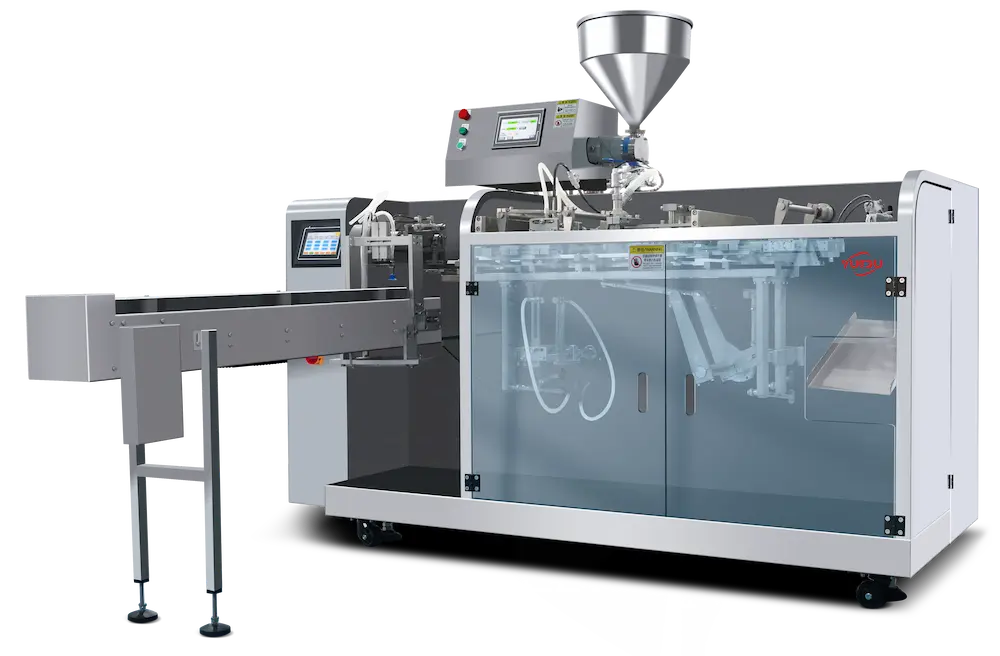
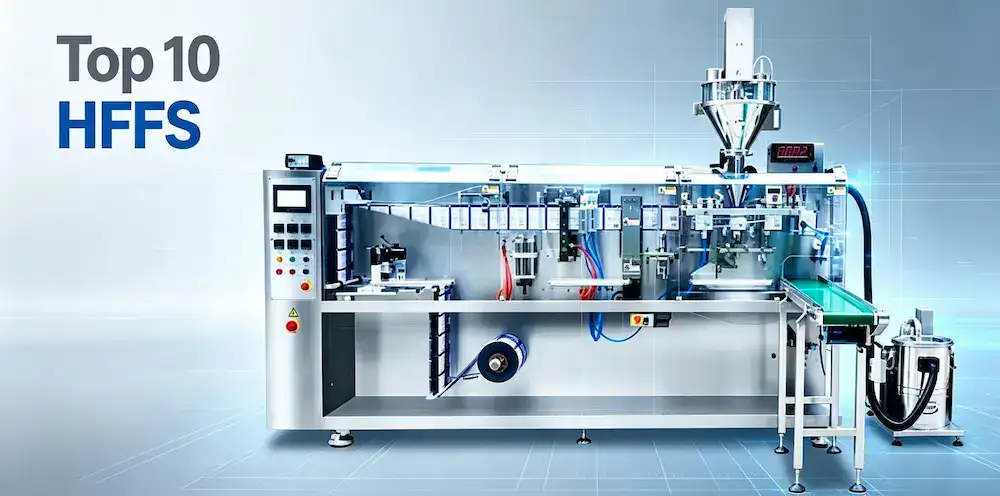
Both VFFS and HFFS (Horizontal Form Fill Seal) machines automate bag forming, filling, and sealing. However, they use different product-feeding directions and packaging configurations. A VFFS machine forms bags vertically and usually fills them from above, allowing gravity to move products into the package. An HFFS machine forms and transports packages horizontally, then places or feeds products into them from the side or above. The right choice depends on product characteristics, packaging design, production requirements, and available factory space.
Key Differences Between VFFS and HFFS
| Comparison | VFFS Machine | HFFS Machine |
|---|---|---|
| Packaging direction | Vertical | Horizontal |
| Product feeding | Usually drops product from above | Places or feeds product horizontally |
| Suitable products | Powders, granules, snacks, liquids | Solid, delicate, flat, or regularly shaped products |
| Common packages | Pillow bags, gusseted bags | Flow packs, horizontal pouches |
| Floor space | Generally more compact | Often requires a longer production layout |
| Main advantage | Efficient bulk and portion packaging | Flexible product positioning and handling |
Which Packaging Machine Should You Choose?
Choose VFFS when you package products that can flow, drop, or dispense into a bag, such as coffee beans, rice, sugar, snacks, and powders. It offers an efficient solution for continuous bag production and makes good use of gravity-assisted filling.
HFFS works better for products that need careful positioning or horizontal transportation, such as biscuits, chocolate bars, medical devices, and other delicate or regularly shaped items. It can also support specific flow-wrap and pouch packaging formats. Before choosing, evaluate your product’s shape, fragility, packaging style, and production targets rather than relying on machine orientation alone.
4. What Products Can VFFS Packaging Machines Handle?

One of the biggest advantages of VFFS packaging is its versatility. Manufacturers can integrate different filling systems to package products with different physical properties, including powders, granules, solid pieces, and liquids.
Common applications include:
Food products: Potato chips, nuts, coffee beans, rice, sugar, candy, spices, frozen foods, and snack products.
Powder products: Milk powder, protein powder, flour, seasoning, and other powdered ingredients.
Pharmaceutical products: Tablets, capsules, powdered medicines, and selected healthcare products.
Pet food: Dry dog food, cat food, bird food, and pet treats.
Chemical products: Detergent powder, cleaning products, fertilizers, and industrial granules.
Liquid products: Sauces, beverages, oils, and other compatible liquid formulations.
By matching the dosing system, packaging film, and bag design to the product, manufacturers can build a VFFS packaging solution that meets their specific production needs.
5. How to Choose the Right VFFS Packaging Machine

Choosing the right VFFS packaging machine requires careful evaluation of your product, packaging materials, production targets, and future business needs. Instead of comparing equipment based only on price or advertised speed, consider the following factors.
1. Identify Your Product Characteristics
Start by identifying whether you need to package powders, granules, solid products, or liquids. Consider particle size, density, flowability, viscosity, and product fragility. These characteristics determine which filling technology will work best. For example, an auger filler suits fine powders, while a multihead weigher works well with snacks and irregular solid products.
2. Select the Right Bag Style and Material
Your packaging requirements directly affect machine configuration. Consider whether you need pillow bags, gusseted bags, or other flexible packaging formats. Also, check bag dimensions, film thickness, barrier properties, and heat-sealing compatibility. Make sure the selected vertical form fill and seal machinery supports your required packaging materials and bag specifications.
3. Evaluate Speed and Filling Accuracy
Your equipment should meet your production targets while maintaining consistent package quality. Check the actual operating speed under your product conditions rather than relying only on maximum advertised capacity. You should also evaluate weighing accuracy, dosing consistency, and sealing performance to minimize product loss and rejected packages.
4. Check Automation and Maintenance
Modern VFFS equipment often integrates PLC controls, servo motors, and touchscreen interfaces. These features help operators adjust settings, monitor production, and maintain stable machine operation. Also, consider cleaning procedures, maintenance access, spare parts availability, and technical support before purchasing.
5. Plan for Future Production Growth
Think beyond your current packaging requirements. If you expect to introduce new products or increase production capacity, choose flexible equipment that supports different filling systems and auxiliary devices. A scalable packaging solution can help reduce future upgrade costs and support long-term business growth.
6. Why Choose Yundu for VFFS Packaging Solutions?

Yundu provides automated packaging equipment and customized solutions for manufacturers across different industries. Its VFFS technology integrates bag forming, dosing, filling, sealing, and cutting to simplify packaging operations. Rather than offering a one-size-fits-all solution, Yundu considers product characteristics, bag requirements, production capacity, and factory layouts when developing packaging solutions.
Flexible Packaging Configurations
Yundu supports different packaging applications and bag formats, helping manufacturers adapt equipment to their product and packaging requirements. Its solutions can accommodate a range of products, including powders, granules, snacks, and other compatible materials. Customers can discuss their packaging samples and requirements with the Yundu team to identify an appropriate configuration.
Precise Filling and Automated Operation
Yundu integrates suitable dosing and weighing technologies to support accurate product filling. Its packaging solutions can incorporate multihead weighing systems, powder filling equipment, and other compatible filling technologies. PLC controls and servo-driven systems help coordinate film feeding, filling, sealing, and cutting, supporting stable operation and consistent packaging quality.
Reliable Components and Quality Control
Component quality plays an important role in equipment performance and service life. Yundu uses components from recognized suppliers, including ABB, Schneider, Siemens, and Omron, across its equipment configurations. Selected equipment also uses 304 stainless steel for product-contact surfaces. These features support reliable operation and help meet the requirements of demanding packaging environments, depending on the selected configuration.
Customized Packaging Line Solutions
Every production facility has different automation needs. Yundu can help customers develop integrated packaging solutions that combine VFFS equipment with weighing, feeding, conveying, and other auxiliary systems. This approach helps reduce manual handling, coordinate different production stages, and make better use of factory space. Customers can also discuss production capacity and budget requirements to develop a suitable packaging line.
Support for Multiple Industries
Yundu serves packaging applications across food, pharmaceutical, chemical, and other industries. Its equipment solutions accommodate different product characteristics and packaging requirements, allowing manufacturers to explore suitable configurations for their operations. From initial packaging discussions to equipment selection and technical support, Yundu works with customers to identify practical packaging solutions.
7. Conclusion
VFFS technology offers an efficient way to automate bag forming, product filling, sealing, and cutting in one integrated process. A suitable vertical form fill seal machine can help manufacturers improve productivity, maintain consistent package quality, and handle a wide variety of products. Compared with HFFS equipment, VFFS generally suits products that can be dispensed vertically, while HFFS offers more flexibility for products that require horizontal handling or positioning.
Choosing the right equipment means understanding your product, packaging format, production targets, and long-term requirements. With flexible configurations, automated filling technologies, and customized packaging line solutions, Yundu helps manufacturers explore practical VFFS packaging options. Contact Yundu to discuss your packaging needs and find a solution that supports your production goals.