 English
  Arabic
  Indonesian
  Vietnamese
  Malay
Malay  Thai
Thai  Korean
  Russian
  French
  Italian
  Japanese
  Portuguese
  Turkish
  Spanish
 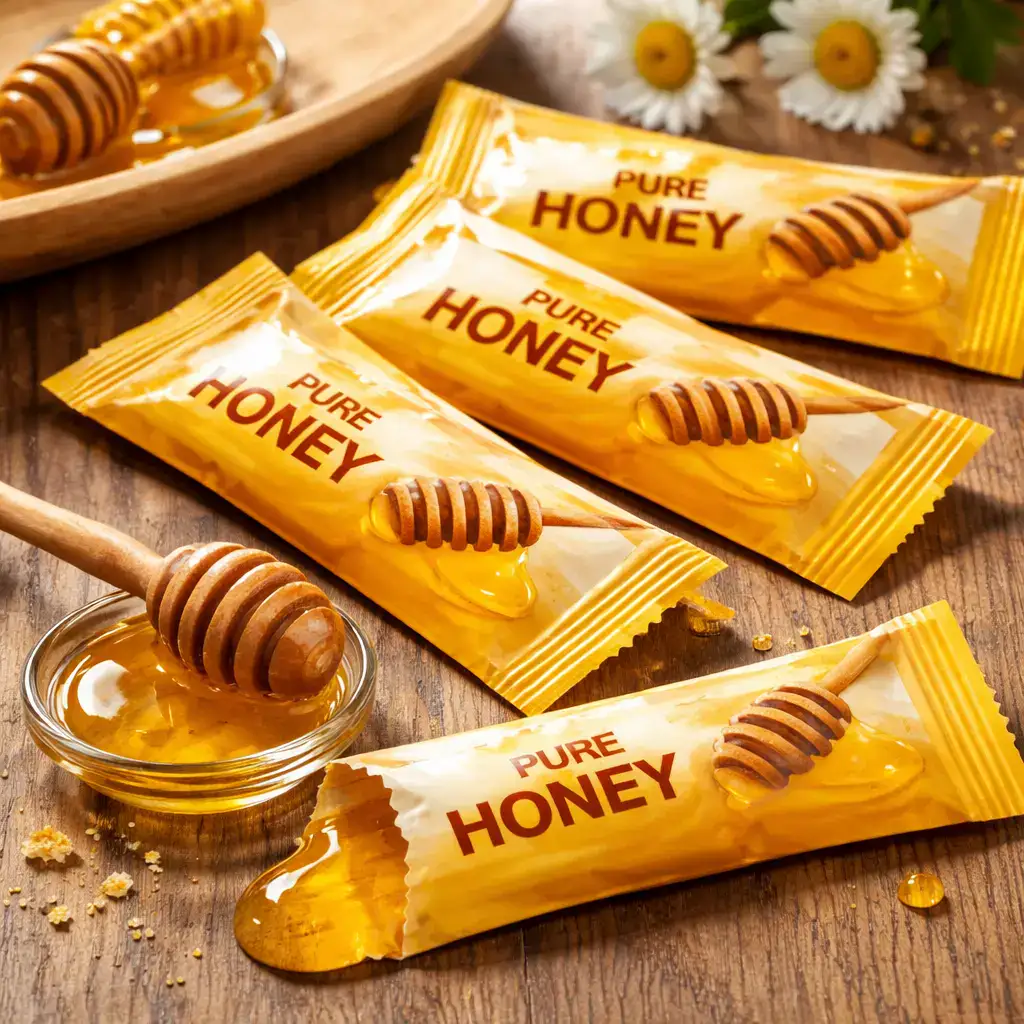 Honey sachet packaging refers to small, single-use packets or pouches filled with honey. Each sachet is a sealed, pre-measured serving of honey – usually enough for one cup of tea or a meal. These packets are typically made from food-grade plastic or foil laminate and are heat-sealed on all sides. In simple terms, honey sachets are like tiny, disposable honey bottles in packet form. They’re designed for one-time use: you tear or cut open the corner and squeeze the honey out. Consumers often recognize them as the little honey packs served with coffee in cafés or found in travel snack kits.
Honey sachets come in various shapes (flat pillow packs or stick packs) and sizes, but they all serve the same purpose: providing just the right amount of honey without needing a jar or spoon. This makes them especially handy when you want to sweeten a drink or meal on the go. Each sachet keeps the honey fresh and free from outside contamination until you open it, ensuring a clean, easy experience.
Key Advantages of Honey Sachet Packaging
Honey sachet packaging offers several clear benefits, especially for everyday convenience and hygiene. Below are the main advantages that make these little packets popular:
Convenience and Portion Control
Honey sachets are incredibly convenient. Since each packet has a pre-measured amount of honey, there’s no need to estimate or pour from a jar. You simply tear, squeeze, and get the perfect sweet dose. This portion control means there’s no messy leftover honey in a jar, and you won’t accidentally use too much. It’s great for people who want just a teaspoon or two of honey at a time. In busy places like cafés or offices, sachets save time by removing the need for spoons or clean-up. The single-serve size also reduces waste of the honey itself — you use what you need and no more.
Hygiene and Freshness
Because each honey sachet is individually sealed, it stays clean and fresh until you open it. This is a big benefit in shared or public settings. For example, in a coffee shop, everyone can have their own honey packet rather than dipping a communal spoon into a jar. The sealed pouch prevents germs or moisture from getting in, so the honey stays sanitary. Sachets also protect against spills and leaks in transport. The airtight seal locks in flavor and prevents the honey from absorbing moisture, so it retains its natural taste and quality. In short, you get pure honey with no chance of contamination.
Portability and Travel-Ready
Honey sachets are made for on-the-go use. They’re light, compact, and easy to toss into a bag or pocket. Unlike a glass jar or plastic bottle, a sachet won’t break or leak if handled roughly. This makes it perfect for travel, camping, school lunches, or anywhere you want a sweetener without carrying extra bulk. Many airlines, train services, and hotels use honey sachets for this reason — they fit neatly in a tray or kit. Because sachets keep honey sealed, you can store them at room temperature for a long time (months or even a year) without spoiling. Their small size and durability make honey sachets an ideal snack-time companion when you’re away from home.
Where You Might Encounter Honey Sachet Packaging
Honey sachets are common in many everyday settings. Here are some places and situations where you’re likely to find them:
- Cafés and Coffee Shops: Often offered alongside tea, coffee, and other beverages for sweetening.
- Airlines and Train Services: Included in meal trays or beverage service kits on flights and long-distance trains.
- Hotels and Bed-and-Breakfasts: Provided at breakfast buffets or in-room coffee/tea stations.
- Office Break Rooms and Catering: Stocked in kitchens or pantries for employees to use with coffee or tea.
- Packaged Lunches and Meal Kits: Found in box lunches, picnic packs, or meal delivery kits to add a touch of sweetness.
- Hospitals and Schools: Included in patient meal trays or school cafeteria condiments for convenience and hygiene.
- Food Trucks and Outdoor Events: Sold individually or offered with drinks at fairs, markets, and food festivals.
- Travel Packs and Camping Gear: Part of travel-friendly snack packs for campers, hikers, or travellers who want quick energy.
In short, anywhere people want a portable, mess-free sweetener, honey sachet packaging is used. They serve all the same needs as sugar packets or creamers but with honey inside.
How Honey Sachet Packaging is Made
Producing honey sachet packaging involves automated machinery designed to handle thick, sticky liquids like honey. Here’s a simple overview of the process:
Film Feeding and Pouch Forming: The production starts with a roll of food-safe film (plastic or laminated foil). A form-fill-seal machine pulls the film and folds or shapes it into individual pouches or stick packs. For example, a vertical form-fill-seal (VFFS) machine will shape the film into a vertical tube, then seal one end to make a pouch. This forms empty bags ready to be filled.
Filling with Honey: Next, the machine precisely dispenses honey into each pouch. Because honey is thick, the machine might use an auger filler (a small screw that pushes honey) or a heated pump to ensure smooth flow. Companies like Yundu make these sachet filling machines to be very precise and clean. Yundu’s equipment, for example, uses stainless steel parts and servo motors to measure the exact amount of honey for each packet. The honey is dispensed through nozzles into the open sachets. Some machines have multiple filling heads (lanes), so they can fill many sachets at once – boosting production speed.
Sealing the Sachet: Once filled, the machine immediately seals the pouch. This is usually done by heat sealing along the top edge (and sometimes the sides) of the pouch, creating an airtight seal. The heat comes from hot bars that press the film together until it melts and sticks. After sealing, the machine often cuts the sachet free from the film roll. The result is a perfectly sealed honey packet with no leaks.
Cutting and Counting: The filled-and-sealed sachets are then cut apart and collected. Automated systems may also print batch numbers or expiration dates on each packet before cutting. High-speed machines can produce dozens of sachets per minute. Because the line is automated, only the initial setup and refilling of honey in the hopper require human work. This automation keeps the process hygienic and efficient.
Equipment and Providers: All the equipment used is made from food-grade materials like stainless steel to meet safety standards. Yundu, for instance, is one leading manufacturer of such machinery. Yundu’s machines are known for being reliable and easy to clean. They offer both vertical (VFFS) and horizontal (HFFS) form-fill-seal systems. Some Yundu models are 4-side sealing machines that can make pillow-style sachets quickly. Using machines from companies like Yundu ensures that each honey sachet is filled cleanly, accurately, and quickly, ready to be packed in boxes and shipped to customers.
Overall, honey sachet production is a careful dance of machinery: forming pouches, measuring honey, sealing the packets, and keeping everything sanitary. Modern machines have simplified all these steps into one continuous line, producing thousands of single-serve honey packs every hour.
Honey Sachet Packaging Machine FAQ
Transparency is the cornerstone of our Yundu team. That’s why below, you can find the most common questions and answers we receive surrounding our honey sachet packaging.
Honey sachet packaging refers to small, single-use sealed packets filled with a measured portion of honey. Each packet holds just enough honey for one serving (like a cup of tea) and is designed to be opened and used on-the-go.
Packaging honey in sachets offers convenience and portion control. It eliminates the need for a jar and spoon, prevents sticky messes, and keeps each serving sealed and fresh until use. It’s especially useful in places like cafes, hotels, and travel where single servings are needed.
You can encounter honey sachets at coffee shops, airlines (in-flight meals), hotel breakfasts, office break rooms, and catered events. They’re also included in travel snack kits, picnic packs, and often sold in bulk for use in restaurants and caterers.
Yes. Each sachet is individually sealed, so the honey stays clean and protected from contamination until you open it. This makes them more sanitary than communal jars – no double-dipping or exposure to air.
To use a honey sachet, simply tear or cut off one end of the packet. Then squeeze the sides gently to dispense the honey. It’s that easy – no spoon needed. You can drizzle it directly onto your food or into your drink.
In manufacturing, specialized form-fill-seal machines create honey sachets. These machines automatically form the pouch from plastic film, fill it with a precise amount of honey, and seal it shut. Companies like Yundu build these food-safe machines. Yundu’s equipment can run multiple lanes at high speed, ensuring each packet is filled and sealed accurately and hygienically.
Honey itself has a very long shelf life, and the airtight sachets help preserve it. Most honey packets will have a “best before” date (often 1–2 years), but if kept sealed and dry, the honey inside remains edible for a long time, often well beyond the printed date.
Most traditional honey sachets are made of mixed plastic or foil films, which can be hard to recycle through normal bins. This single-use packaging does create extra waste. Some brands are developing compostable or recyclable sachets, but for now, most are thrown away after use. It’s best to check local recycling rules or opt for brands that advertise eco-friendly packaging.
No. Honey sachets are meant for one-time use. Once you open and squeeze out the honey, the packet cannot be resealed. They are designed to use up all the honey in one go. If you don’t need all the honey at once, it’s best to empty the rest into a clean container rather than saving the opened sachet.
A typical single-serve honey sachet contains roughly 5–15 grams of honey, which is about one teaspoon. The exact amount varies by brand and purpose. The portion is chosen to be just enough for sweetening a drink or meal without leftovers.