The Ultimate Guide to Functional Packaging

Table of Contents

Functional packaging – packaging designed to do more than simply contain a product – is rapidly transforming the industry. It incorporates features that add value for consumers, such as convenience, freshness, safety, or interactivity. For example, a cereal box with a built-in lunchbox insert or a shampoo pouch that easily reseals are forms of functional packaging. By emphasizing utility and experience, these designs can drive purchase decisions and brand loyalty. Industry analysts note this is a fast-growing category: consumers now expect packaging that is easy to use and offers perceivable benefits (like freshness or portability). In short, functional packaging elevates the role of a package from passive container to active brand and user interface.

Functional Packaging Types, Benefits, Design, and Examples

Understanding Functional Packaging

At its core, functional packaging is any package that goes beyond the basic function of containment to deliver extra benefits to the user. This can include flexible formats (pouches, stick packs) with resealable closures, smart labels or QR codes, modular components (handles or displays), or even built-in utensils – essentially any feature that adds convenience or value. As Avery Dennison explains, functional packaging “helps people enjoy a variety of benefits, including greater confidence in the freshness of their purchases, greater ease of use, and greater convenience”. Packaging experts often categorize these innovations into active and intelligent (smart) packaging. Active packaging interacts with the product or environment (for example, scavenging oxygen or releasing preservatives to extend shelf life), while intelligent packaging provides information (such as freshness indicators, time-temperature labels, or RFID tags) about the product’s condition. Together, these approaches transform packaging from static shells into dynamic solutions that protect, inform, and delight consumers.

Active and Intelligent Packaging

Active packaging directly improves product life or safety. For instance, sachets of oxygen absorbers or moisture pads inside food packages neutralize harmful gases or liquid, slowing spoilage. Antimicrobial films and vapors can inhibit bacterial growth, extending shelf life without altering the product. A regulatory definition even calls “active materials” those designed to “extend the shelf-life or maintain or improve the condition of packaged food” by releasing or absorbing substances. Common examples include vacuum-pack films that seal in modified atmospheres (nitrogen/CO₂) and desiccant packs in medical kits.

Intelligent (smart) packaging, on the other hand, monitors and communicates. It uses built-in indicators or digital tags to relay data about the package. This could be a freshness sensor that changes color as food spoils, a QR code that links to product information, or an NFC tag that confirms authenticity. For example, an ethylene sensor in a fruit carton might display ripeness level via a visual cue. Radio-frequency ID (RFID) chips and Internet-of-Things (IoT) tags embedded in packages can track items through the supply chain and trigger alerts for tampering or temperature excursions. According to Packaging Digest, such smart features are increasingly used to “unlock product stories, track supply chains, and even provide augmented reality experiences” on the shelf. Thus, intelligent packaging enhances transparency and engagement, letting consumers and retailers “scan” the package for real-time product status.

top 10 VFFS machine manufacturers
Yundu VFFS Machine

Types of Functional Packaging

There are several key types or strategies of functional packaging:

Flexible and Reclosable Packaging

Pouches, stand-up bags, and stick packs are inherently versatile. When equipped with pressure-sensitive reclosure strips or spouts, they allow easy dispensing and resealing. Many food brands now use zip-lock pouches or spouted caps to keep contents fresh and convenient. As Avery Dennison notes, flexible pouches with smart closures are a hallmark of functional designs.

Easy-Open and Ergonomic Design

Simple features like tear notches, snap-fit lids, or built-in handles greatly improve usability. Corrugated box handle inserts and ergonomic grips make carrying heavy items easier. Packaging experts point out that such details create a positive first impression and reduce user frustration. For example, plastic handles or reinforced hand holes on boxes minimize tearing and improve shelf life under transit.

Multi-Functional Packaging

Some designs repurpose the package itself. For instance, a coffee cup sleeve that doubles as a coaster, or a pizza box printed with a game board, give extra utility. Even minimalist examples like Apple’s iPhone box – which is both aesthetic and structurally optimized – can be considered multi-functional because they protect and organize the product with minimal material waste.

Active Packaging (described above)

Using absorbers, emitters, or protective coatings to maintain product quality. Types include moisture-absorbing trays, antimicrobials on film, and modified atmosphere packaging (MAP).

Intelligent/Smart Packaging (described above)

Incorporating electronics, sensors, or interactive codes into the package. This ranges from simple QR/NFC labels to advanced RFID systems for full traceability.

Each type may overlap with others (for example, a pouch with a resealable cap that also includes a freshness sensor). The unifying theme is added functionality: anything that enhances protection, communication, convenience, or sustainability beyond a plain container.
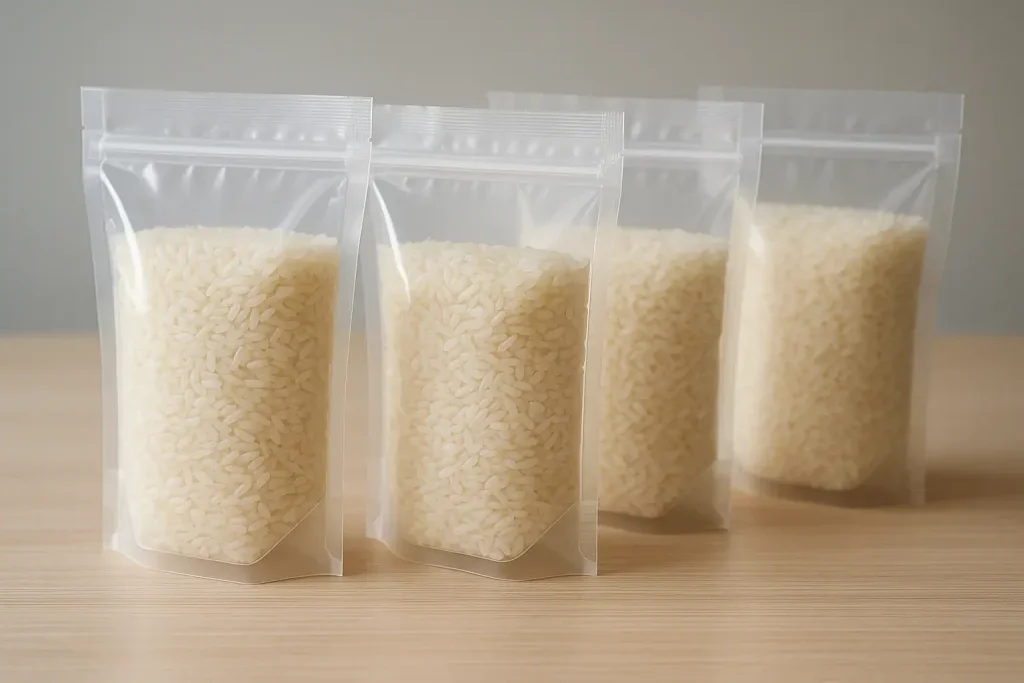
Modern rice pouches

Benefits of Functional Packaging

Functional packaging offers a range of benefits for both consumers and brands:

Improved Convenience and User Experience

Consumers increasingly expect packaging that is easy to open, carry, and store. Features like zip-locks, snap closures, ergonomic handles, or tear tabs create instant positive impressions. For example, a resealable cereal bowl lets people pour and cover leftovers. Packaging Strategies notes functional packaging “provides value-added benefits, such as greater convenience or ease of use”. These conveniences can boost satisfaction; in focus groups, shoppers consistently chose resealable packs (cookies, lettuce, wipes, etc.) for their ease-of-use and implied freshness.

Enhanced Product Protection and Shelf Life

Active functional packaging can significantly reduce waste by keeping products fresh longer. By controlling moisture or oxygen, it maintains quality without preservatives. A better-protected package also reduces damage during transit. As Amazon’s packaging team emphasizes, designing for “cube efficiency” – compact packaging without sacrificing protection – ensures products arrive undamaged. Indeed, Amazon reports it now uses about 36% less raw packaging material per shipment than six years ago, thanks in part to smarter designs.

Stronger Brand Differentiation and Loyalty

Creative packaging features help a product stand out. Interactive elements (like QR-triggered games or collectible designs) invite engagement and repeat business. Good functional design can tell a brand story — a minimalist box conveys premium quality, while a pouch that becomes a kid’s toy adds playfulness. Case studies show that consumers often pay a premium for brands with sustainable or user-friendly packaging. Moreover, packaging that “resonates with customers” builds emotional connection and loyalty over time. For instance, simple improvements like making a multi-unit pack easy to hang or display can boost retail appeal.

Operational and Sustainability Advantages

Innovative packaging can lower costs and waste. Lightweight designs mean lower shipping weight and volume, saving fuel and materials. For example, P&G’s Tide Eco-Box (a cardboard box with spout instead of a plastic jug) greatly cuts plastic use and package weight. Using such packages, companies meet sustainability goals while often improving functionality. As one industry author notes, “functional packaging becomes a visible, tactile representation of a brand’s values” – a minimal, reusable package signals a company’s eco-commitment. Lighter, recyclable components also simplify compliance with evolving regulations on packaging waste.

In summary, well-designed functional packaging improves the consumer experience (through ease-of-use and engagement), ensures product integrity (freshness, safety), and strengthens the brand’s market position (by differentiating products and reinforcing values). It can also cut costs in logistics and disposal, making it a win-win for manufacturers and customers alike.

A package of torn gummy bears

Functional Packaging Design

Designing functional packaging requires a strategic balance of utility, aesthetics, and brand identity. Packaging designers begin by identifying the key consumer and product needs – for example, portability for an on-the-go snack or precise dosing for a medical device – and then engineer solutions to meet those needs. This might involve user testing to refine how easily a package opens or how securely it re-closes. Specialized components (like custom handles, locking clips, or display aids) can be integrated to solve specific problems. For instance, ergonomic handles and box reinforcements make a heavy box easier to lift without tearing, while snap-fit clips allow parts of a package to close tightly for reuse.

Good functional design also removes unnecessary elements. Streamlined, minimalist structures often perform better: eliminating excess material or assembly points can both enhance the look and cut costs. The design team at Apple is famous for this approach; their smartphone packaging uses very thin, rigid cardboard that precisely fits the device, achieving protection with minimal material. Such minimalist design aligns with sustainability goals by reducing waste and weight.

Additionally, packaging designers consider the end-to-end user experience. This means ensuring the package is intuitive at every stage: from shelf appeal (clear branding, attractive form) to unboxing (easy opening, pleasing reveal) to disposal or reuse. For example, a package with a fold-out display tab not only works on a store shelf but also can serve as a temporary hands-free holder at home. Reusable components (like durable jars or refillable cartridges) are also a design choice that extends the package’s function after purchase. Throughout, the design must “tell a story” that resonates with consumers – combining form and function so the package feels like an intentional part of the product.

Modern functional packaging design increasingly involves cross-disciplinary innovation: materials engineers, graphic designers, and technology specialists collaborating. They may embed NFC chips in labels, use biodegradable films instead of plastic, or 3D-print custom package inserts. Many brands work with packaging specialists to prototype new ideas quickly, testing them in real-world conditions. The trend is toward modular design systems that can be easily adapted – for example, a standard box frame that can accept different inserts or clips for varied products. This flexibility speeds up product launches and allows personalization (such as seasonal graphics or customer names) without redoing the entire package structure.

Overall, functional packaging design is a holistic process focused on solving specific problems and enhancing value. It is guided by clear goals (freshness, convenience, sustainability, etc.) and grounded in rigorous testing. When done well, it delivers packaging that “works as well as it looks,” fulfilling all practical requirements while reinforcing the brand.

Sustainable Functional Packaging

Sustainability is a natural fit for functional packaging: by definition, adding function often means eliminating waste or enabling re-use. Today’s consumers and regulators demand greener solutions, so packaging must be both useful and eco-friendly. Functional designs achieve sustainability in several ways:

  • Material Reduction: Lightweighting is a common strategy. By trimming material (as in thin-corrugation boxes or thin-wall plastic bottles), companies use fewer resources. For example, Apple’s slim smartphone box uses less cardboard and shipping weight. Amazon’s Frustration-Free Packaging efforts (e.g. the Tide Eco-Box) aim to “use as little material as possible” while protecting products. Amazon reports using ~36% less raw packaging than a few years ago, cutting carbon emissions in the process.

  • Reusability and Circularity: Some functional packages are designed for multiple cycles. Unilever’s Loop initiative reimagines everyday items (like shampoo or mayo) in durable, refillable containers. Customers return empty Loop containers to be cleaned and refilled, eliminating single-use bottles. Because these packages are built to last, they reduce ongoing material demand and appeal to eco-conscious shoppers.

  • Compostable or Biodegradable Materials: Biopolymers and plant-based fibers are replacing petroleum plastics in some functional packaging. For instance, edible cups and straws made from seaweed (like Loliware) mean the package itself can be consumed or composted, providing nutrients instead of waste. Compostable pouches or molded fiber trays for food can deliver freshness (active function) while returning harmlessly to the environment after use.

  • Enhancing Recycling and Messaging: Designing for recyclability is also a functional goal. Obvious visual cues – using brown paperboard instead of colored plastic, or printing recycling instructions on the box – turn the package into a communication tool about sustainability. As Allen Field notes, “packaging that’s obviously reusable, recyclable, or minimal in materials reinforces a brand’s environmental values at a glance.”. This transparency can build trust: one industry source observes that “sustainable functional packaging promotes credibility with eco-conscious buyers” because it validates a company’s environmental claims.

These sustainable approaches do not compromise function; in many cases they enhance it. For example, lightweight paper alternatives not only cut plastic use but also make handling and opening easier. The U.S. Plastics Pact has set a goal that “100% of plastic packaging will be reusable, recyclable or compostable by 2025”, underscoring how seriously the industry must treat this issue. Consequently, manufacturers are innovating materials (like seaweed-based films, recycled textiles, and injection-molded pulp) that offer durability and performance while meeting green standards. The result is packaging that is both functional for the user and responsible for the planet.

Conclusion: Trends and Takeaways

Functional packaging is now a critical strategy for brands seeking to stand out, satisfy eco-conscious consumers, and deliver better products. Key takeaways include:

  • Consumer-Centric Value: Brands must prioritize packaging features that consumers notice and appreciate – convenience, freshness, safety, and environmental responsibility. As market research confirms, shoppers increasingly want packaging that “works as well as it looks,” offering easy-open functionality, reusability, or interactive elements.

  • Integration of Sustainability: The future is circular. Industry initiatives (like the U.S. Plastics Pact) are pushing toward 100% recyclable or compostable packaging. Packaging professionals should integrate sustainable materials (recycled content, plant-based films, edible coatings) and design for minimal waste. Doing so not only meets regulations and consumer demands, but often improves function (lighter packages, compostable films with active barriers, etc.).

  • Technology and Smart Packaging: The lines between packaging and technology will continue to blur. Expect wider use of sensors (temperature, freshness, tamper-detect), blockchain for traceability, and AI to optimize packaging design. QR codes and RFID will become commonplace ways to communicate with products after purchase. These smart functions can enhance safety (e.g. real-time freshness alerts) and engagement (e.g. personalized promotions) without adding significant cost.

  • Customization and Modularity: Brands are likely to move towards modular design systems that can be tailored for different SKUs or markets. Digital printing and on-demand manufacturing enable personalized graphics or limited editions. Packaging will increasingly be tested and iterated rapidly using AI-driven simulations and consumer feedback loops, to ensure each design meets exact performance and experiential goals.

Looking ahead, packaging professionals should remain vigilant of emerging materials and user trends. The confluence of sustainability and functionality will likely yield unexpected innovations: imagine biodegradable active films, reuse-and-refill networks, or even packaging that provides on-package utility (like planters, educational games, or emergency tools). As one expert notes, “the most intriguing part is seeing how AI and technology will continue to create smarter, more efficient solutions,” blending eco-friendly design with digital consumer experiences.

In summary, functional packaging is not just a trend but a fundamental shift in packaging philosophy. By designing packages that truly serve the user – through convenience, protection, and sustainability – companies can gain competitive advantage and customer goodwill. As the packaging landscape evolves, professionals who master these principles will set the standard for the industry’s future.

Functional Packaging FAQ

Transparency is the cornerstone of our Yundu team. That’s why below, you can find the most common questions and answers we receive surrounding our functional packaging.

Functional packaging refers to packaging that goes beyond containment and protection to offer additional utility—such as easy‑open features, resealable closures, portion control, or interactive labeling. It’s designed to improve user experience, extend product shelf life, and reinforce brand positioning through added convenience and functionality.

The five basic functions of packaging are:

  1. Containment – holding the product securely.
  2. Protection – guarding against physical damage, contamination, and spoilage.
  3. Preservation – maintaining freshness and quality.
  4. Information – communicating ingredients, instructions, and branding.
  5. Convenience – enabling easy handling, storage, and use.

In addition to the basic five, packaging often serves two more roles:
6. Promotion – attracting consumers through design and branding.
7. Compliance – meeting legal, safety, and environmental regulations.
Together, these seven functions ensure products arrive safe, appeal to buyers, and satisfy regulatory requirements.

Functional requirements include:

  • Barrier properties to moisture, oxygen, and light.
  • Mechanical strength for stacking and transport.
  • Ergonomics for easy opening and handling.
  • Clarity of information on labels.
  • Sustainability through recyclability or reusability.

Meeting these criteria ensures product integrity and user satisfaction.

A package typically performs five key functions:

  1. Contain the product.
  2. Protect it from damage and contamination.
  3. Preserve its quality and freshness.
  4. Inform consumers with labeling and instructions.
  5. Facilitate handling, storage, and usage through design features like handles or resealable seals.

The 5 P’s framework comprises:

  1. Product – understanding the item’s characteristics.
  2. Protection – safeguarding during distribution and storage.
  3. Presentation – visual design that attracts and informs.
  4. Promotion – branding and marketing communication.
  5. Practicality – ease of use, transport, and disposal.

The four essential packaging functions are:

  1. Containment – keeping product components together.
  2. Protection – preventing physical and chemical damage.
  3. Communication – conveying regulatory, promotional, and usage information.
  4. Convenience – enabling easy handling, opening, and resealing.

Functional packaging design is the process of integrating practical features—such as tamper‑evident seals, ergonomic shapes, or active barriers—into packaging structures. By combining materials science with user‑centered engineering, it ensures products are safeguarded, easy to use, and aligned with brand identity and sustainability goals.

Common functional packaging examples include:

  • Resealable stand‑up pouches for snacks.
  • Single‑serve stick packs for powders or sauces.
  • Airless pump bottles in cosmetics to prevent oxidation.
  • Microwave‑safe meal trays with vented lids.
  • Smart labels that monitor freshness or temperature.

Functional packaging is vital because it:

  • Extends shelf life and reduces waste.
  • Enhances user experience through convenience features.
  • Differentiates brands in crowded markets.
  • Ensures compliance with safety and environmental regulations.

By addressing practical needs and sustainability, it drives customer satisfaction and loyalty.

Share The Post Now:
Picture of Hey there, I’m Daisy

Hey there, I’m Daisy

I’m the Sales manager of Yundu. We have been helping manufacturing industries increase their productivity and capacity with our advanced filling machines for over 20 years.
Have questions? Reach out to us, and we will provide you with a perfect solution.

Related Articles

Get Instant Quote

If you’d prefer, a representative from Yundu can contact you directly. Please provide the information below and a member of our sales team will contact you shortly. * fields are required.