 Thai
 English
 Arabic
 Indonesian
 Vietnamese
 Malay
 Korean
 Russian
 French
 Italian
 Japanese
 Portuguese
 Turkish
 Spanish
Food manufacturers face intense pressure to ship safe, consistent products at high line speeds. A single hidden contaminant—whether a tiny metal shard, a bone fragment, a stone, or a broken needle—can trigger costly recalls, regulatory penalties, and lasting brand damage.
ความทันสมัย food X-ray machine gives processors a reliable way to spot hazards that human eyes and standard sensors miss. By pairing advanced imaging with smart rejection systems, manufacturers intercept foreign objects before contaminated goods ever leave the plant.
ที่ ยุนดู, our proprietary X-ray R&D system builds precision and durability directly into every inspection unit. Engineered for demanding production floors, Yundu systems help food, beverage, and ingredient processors maintain strict quality standards without slowing down throughput.
Why X-Ray Inspection Matters on Modern Production Lines
High-speed packaging lines leave almost zero margin for manual checking. Bags, pouches, cans, jars, and bulk streams move continuously, and operators cannot inspect every unit by hand.
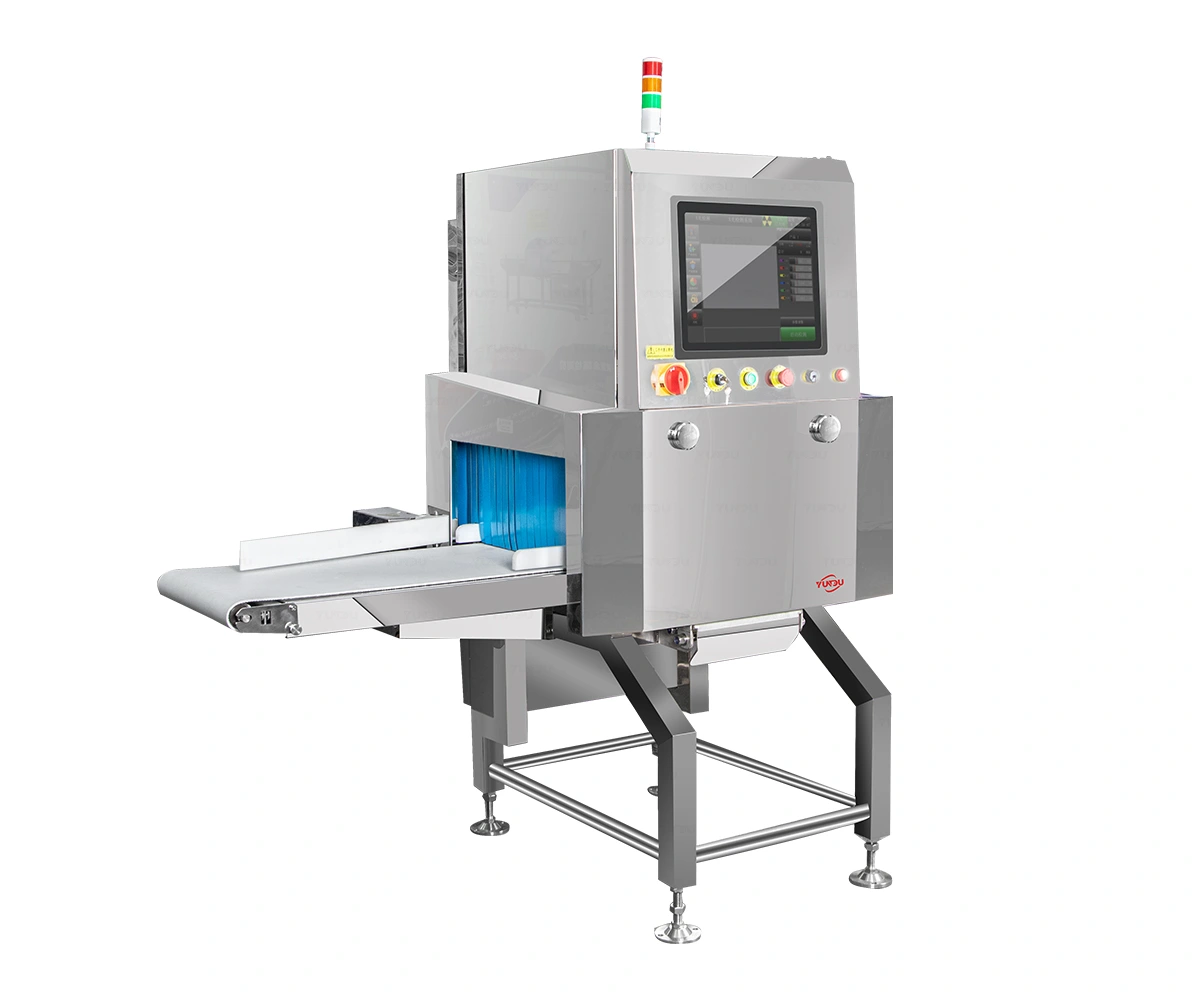
Deploying X-ray food inspection equipment strengthens quality control across several critical operational areas:
Consumer Protection: X-ray systems detect dense and medium-density contaminants—including metal, glass, stone, calcified bone, and rubber—that pose choking or injury hazards.
Recall Prevention: Catching foreign objects in-line prevents defective batches from reaching distributors, retail shelves, or foodservice kitchens.
Audit Readiness: Automated logging, image capture, and rejection verification simplify compliance with HACCP, ISO, and international food safety audits.
Line Efficiency: Real-time inline screening removes only flagged items while keeping conforming products moving smoothly.
“In real-world plant audits and buyer visits, processors rarely struggle with wanting higher safety standards—they struggle with false rejects and blind spots,” says Luna Li, Sales Manager at Yundu. “When an inspection system sees clearly through tough packaging and dense products, quality teams gain confidence without sacrificing line speed.”

How X-Ray Inspection Systems Work?
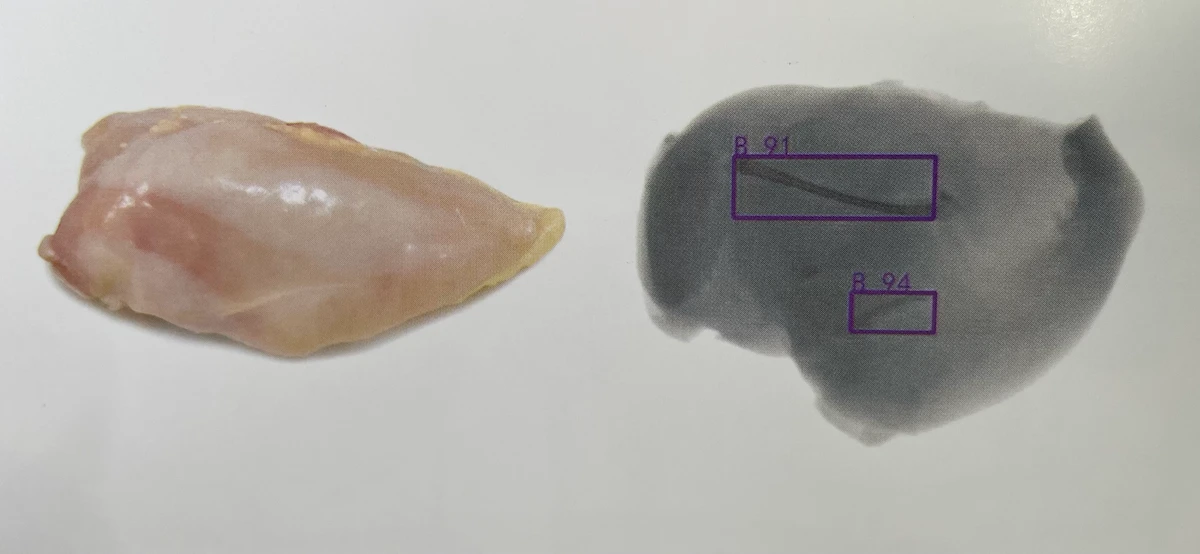
An X-ray inspection machine directs a controlled beam of low-dose X-rays through products traveling along a conveyor or enclosed line. Because different materials absorb X-rays at different rates based on density, thickness, and atomic composition, a detector array converts the transmitted beam into a grayscale or multi-energy digital image.
Advanced image-processing software analyzes those contrast variations in milliseconds. If a region shows abnormal density or shape compared to the surrounding product, the system triggers a mechanical pusher, air blast, or diverter to remove the item.
Single-Energy, Dual-Energy, and Side-Emission Imaging
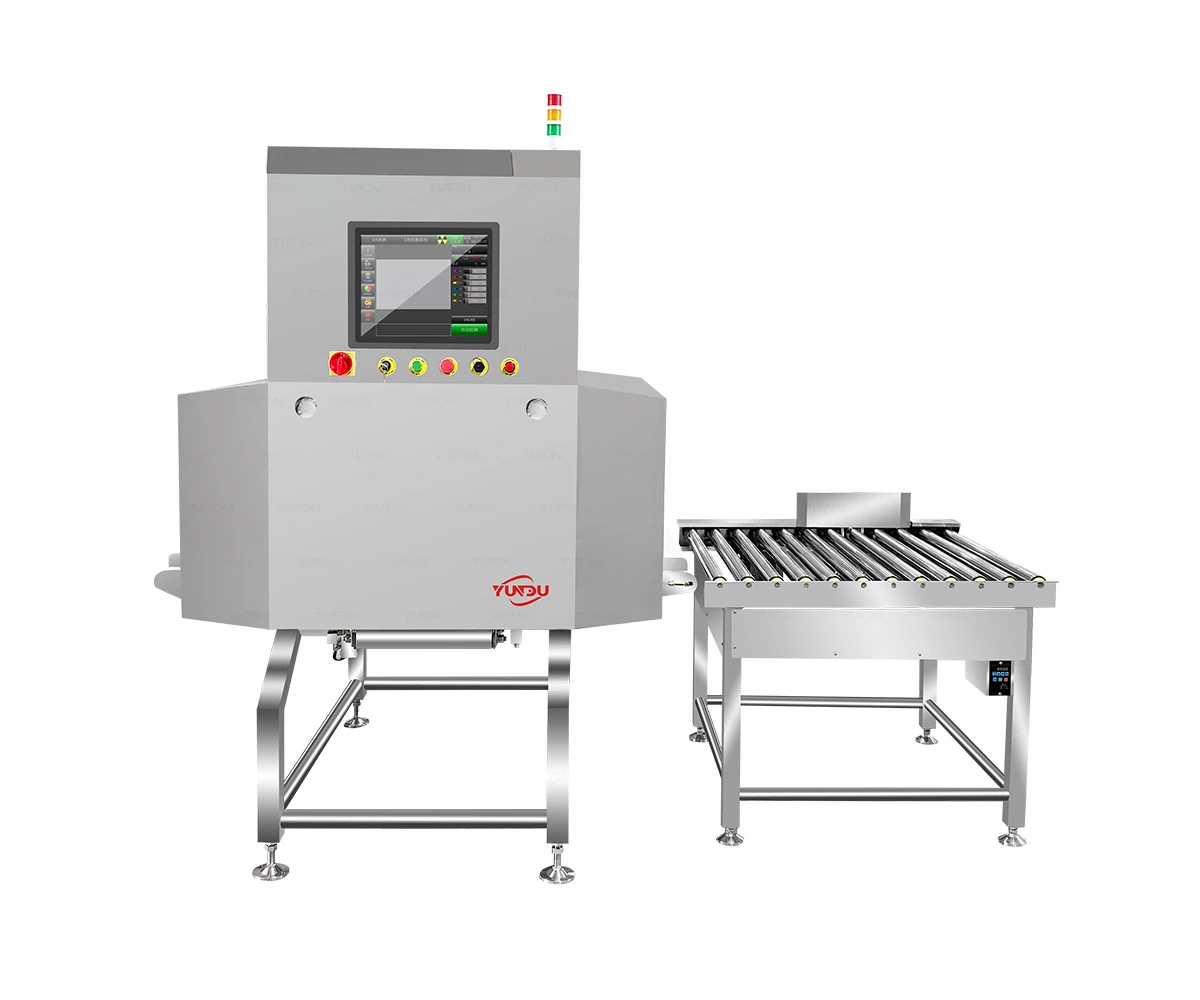
Different food matrices call for different imaging approaches:
Multi- and Single-Energy Imaging: Standard and multi-energy systems excel at spotting high-contrast contaminants like metal, glass, and stones across uniform or bagged goods.
Dual-Energy Imaging: Dual-energy detectors capture X-ray absorption across two energy spectra and compare the data. This contrast comparison helps separate low-to-medium density items—such as small bone fragments or cartilage—from surrounding meat tissue.
Side-Emission X-Ray Design: For upright bottles, jars, and cans, side-emission X-ray beams project horizontally across thick container walls and reach curved bases or bottom seams where vertical beams often leave blind spots.
X-Ray Inspection Systems vs. Conventional Metal Detectors
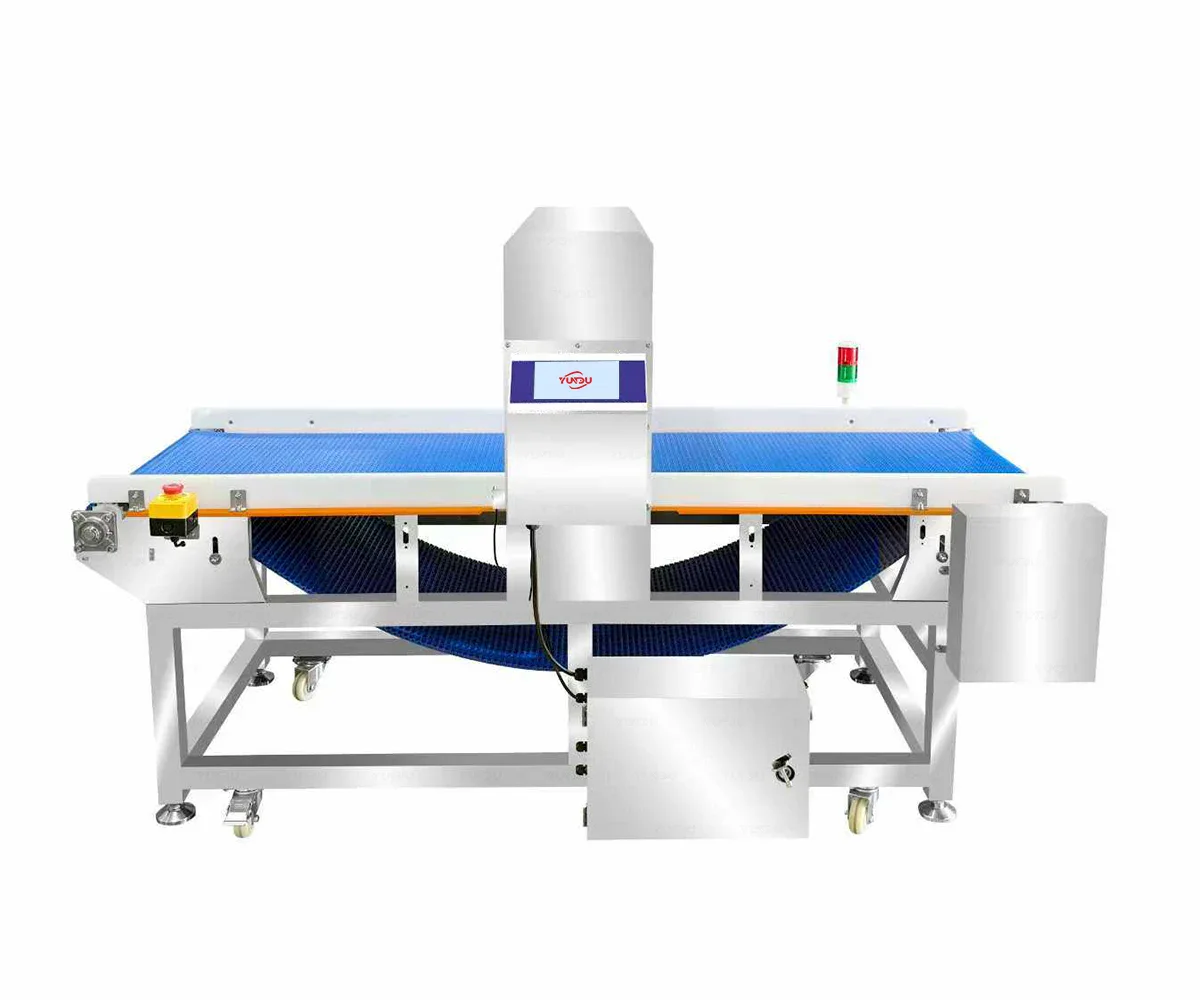
Metal detectors remain useful in many plants, especially for basic ferrous, non-ferrous, and stainless steel screening. However, an X-ray machine for food industry applications solves several limitations that conventional metal detectors cannot overcome.
| Feature / Capability | Conventional Metal Detector | Food X-Ray Machine |
| Metallic Contaminants | Detects ferrous, non-ferrous, and stainless steel | Detects metal plus non-metallic hazards (glass, stone, bone, dense plastic/rubber) |
| Packaging Compatibility | Struggles with metallized film or foil packaging | Penetrates foil pouches, cans, jars, and dense multi-layer packaging |
| Product Effect & Moisture | Affected by high salt, moisture, or temperature swings | Less sensitive to product moisture or salt variations; uses density contrast |
| Shape & Defect Checks | Primarily signals metal presence | Can support fill-level, integrity, or defect checks alongside contaminant detection |
| Upfront & Operating Cost | Lower initial investment and simpler setup | Higher initial investment; requires radiation safety shielding and calibration |
Choosing between the two is not always an either-or decision. Many processors run metal detectors at raw material entry points and deploy a food X-ray machine at critical finishing or high-risk stages where non-metal hazards or foil packaging occur.
Products That Require X-Ray Foreign Object Detection
No single machine fits every food format. Texture, moisture, container geometry, and contaminant risk shape which X-ray configuration works best on your line. Below is how specialized inspection models address distinct production challenges.
1. Bagged Food Products (Model: SXR-C4025)
Bagged snacks, frozen foods, dry goods, and mixed packs run at high speeds in large volumes. Tiny foreign objects hidden inside sealed bags are nearly impossible to spot with the naked eye.
การ SXR-C4025 uses multi-energy imaging technology to penetrate packaging and reveal internal foreign objects in real time. High-speed inline inspection intercepts risks before bagged products leave the factory.
2. Detection of Broken Needles in Pork (Model: SXR-C6035)
During hog slaughter and cutting, injection needles can occasionally snap and remain inside cuts such as the neck. Broken needles are tiny and often buried deep inside dense muscle and bone, defeating manual palpation and routine checks.
Effective detection of broken needles in pork requires high penetration and smart pattern recognition. Equipped with AI-driven analytical algorithms, the SXR-C6035 penetrates dense meat and bone to pinpoint subcutaneous broken needles while also catching bone fragments and other metal pieces before shipment.
3. Bulk Materials and Raw Ingredients (Model: SXR-BU4010)
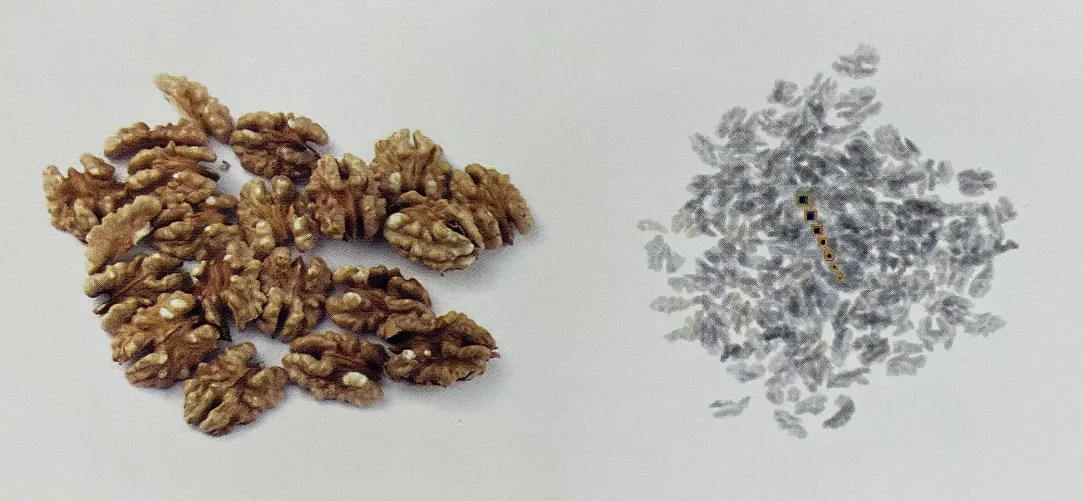
Nuts, traditional Chinese medicinal herbs, grains, and similar bulk ingredients flow loosely at high speed during preprocessing. Raw batches can carry heavy contaminants like stones or metal alongside defects such as insect damage or mold.
การ SXR-BU4010 uses high-penetration imaging to look through layered bulk streams. Paired with the Intelligent Vision inspection system, it spots both foreign objects and product defects, while an array of air-jet nozzles ejects contaminated pieces accurately to protect purity at the source.
4. Fluids and Semi-Fluids (Model: SXR-P60)
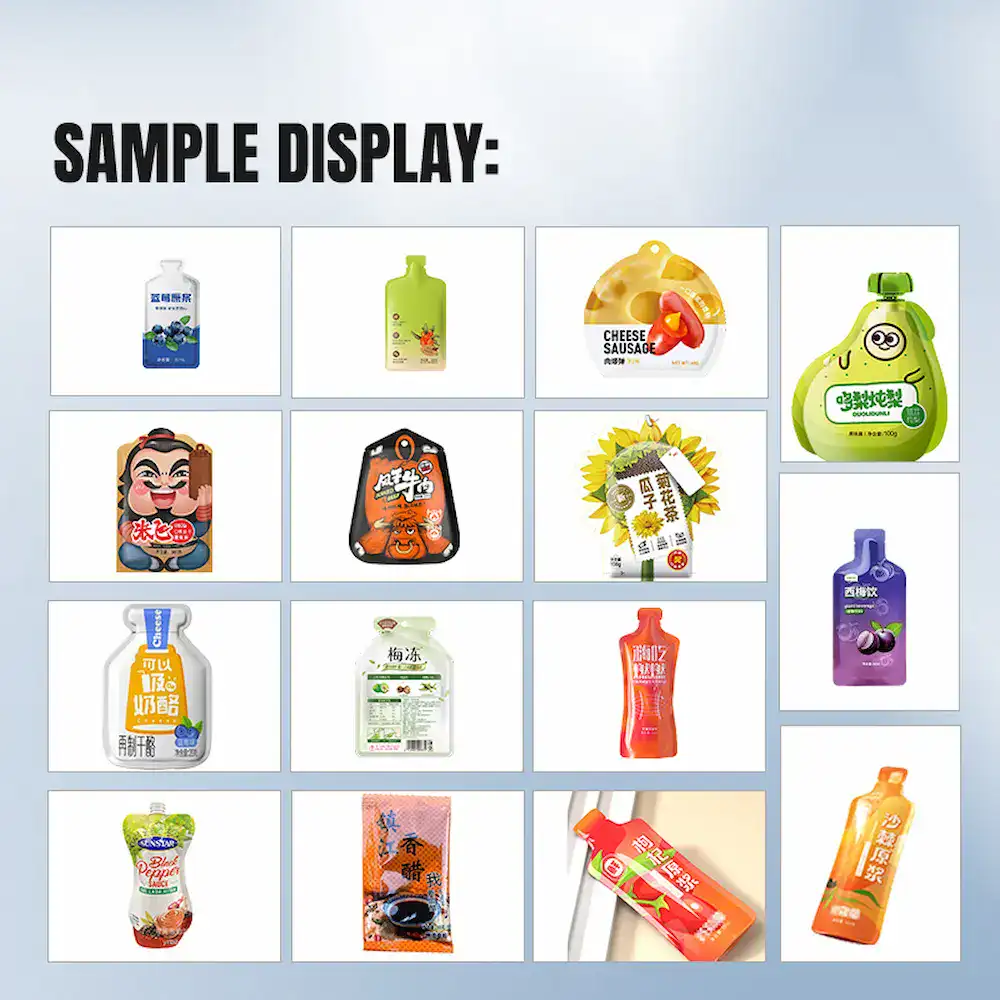
Sauces, jams, meat pastes, fruit juices, and soups face contamination risks from ingredients, pipeline wear, or detached equipment parts. Traditional conveyor X-ray units do not easily fit enclosed liquid piping.
การ SXR-P60 pipeline-integrated X-ray system uses a clamp-based connection to mount directly into existing enclosed lines. It inspects flowing liquids and semi-fluids continuously in real time, keeping every batch safe without breaking line flow.
5. Fish Bone Detection in Aquatic Products (Model: SXR-F4010)
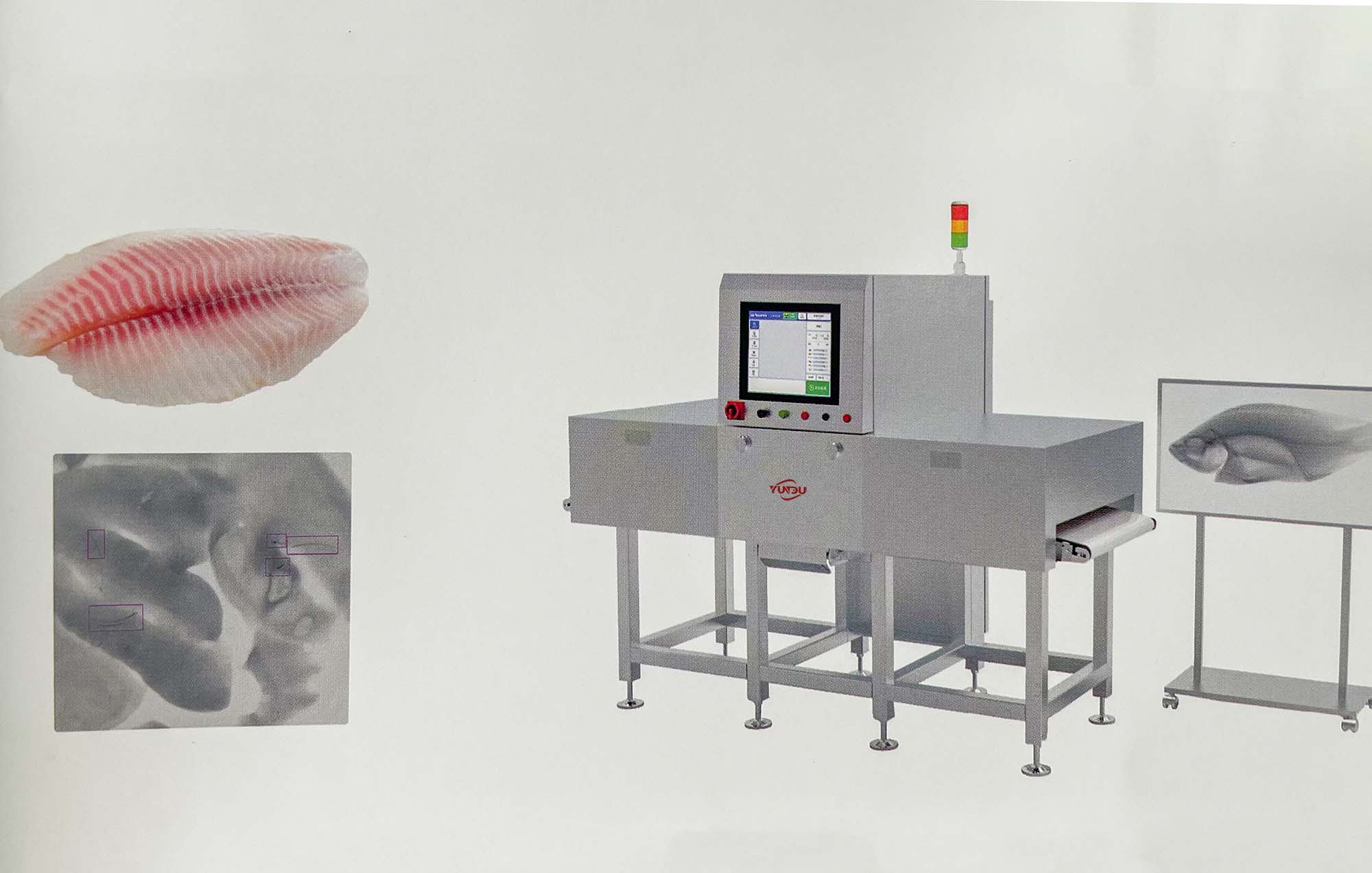
Small residual fish bones in fillets and seafood cuts create serious safety hazards and hurt repeat purchases. Hand-picking bones is slow and error-prone, and standard checks often fail to show exact bone positions.
การ SXR-F4010 combines high-resolution imaging with specialized bone-enhancement algorithms. It displays remaining bones clearly on a high-definition screen so operators can locate and remove them efficiently toward near-zero residual bone rates.
6. Dual-Energy Bone Fragment Detection in Meat (Model: SXR-C4025 Dual-Energy)
Poultry, beef, and lamb processing often involves low-to-medium density hazards like tiny bone shards or cartilage. Standard single-energy X-ray units can struggle to separate these fragments from surrounding meat tissue.
การ SXR-C4025 (Dual-Energy) compares X-ray data across different energy ranges to boost contrast on low-to-medium density objects. Hidden bone fragments in poultry, beef, or lamb stand out more clearly so processors can remove them before packing.
7. Bottled and Canned Products (Model: SXR-B1530)
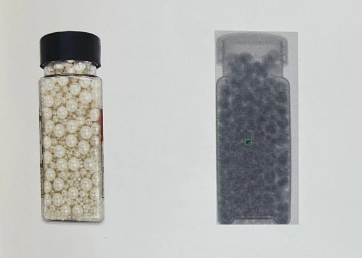
Jars, bottles, and cans come in many shapes—from thick sauces and clear liquids to tightly packed solids. Curved bottle bases and can seams easily create blind spots for conventional inspection.
การ SXR-B1530 uses a side-emission X-ray design that shoots through thick bottle walls and cans to reach bottom corners and dead zones. Combined with the Intelligent Vision smart inspection system, it checks upright containers thoroughly with minimal blind spots.
“Buyers often ask us whether they need a standard conveyor unit, a pipeline system, or a dual-energy setup,” adds Luna Li, Sales Manager at Yundu. “The right choice comes down to the exact product density, container shape, and target contaminant—whether that is a broken needle in pork, a stone in bulk nuts, or a bone chip near a can seam.”
How Yundu’s Proprietary X-Ray R&D System Delivers Precision and Durability
Food plants run long shifts in environments that test equipment every day—from washdown zones and humid processing rooms to dusty ingredient areas and continuous high-speed lines. Equipment that drifts out of calibration or fails under daily stress creates downtime and safety gaps.
Yundu invests in a proprietary X-ray R&D system engineered around precision และ durability:
High-Precision Detection: Tuned imaging hardware, specialized algorithms, and smart inspection software help isolate fine contaminants—from micro-needles and thin fish bones to low-contrast bone fragments and bottom-corner debris—while keeping false-reject rates practical.
Industrial-Grade Durability: Heavy-duty frames, sealed components, and reliable mechanical or air-jet rejection assemblies are built for continuous commercial operation and consistent long-term performance.
Application-Matched Engineering: Whether you need a conveyor unit (
SXR-C4025,SXR-C6035,SXR-F4010), bulk air-jet inspection (SXR-BU4010), inline liquid screening (SXR-P60), or side-emission bottle/can inspection (SXR-B1530), Yundu tailors solutions to real production workflows.
Practical Checklist Before Selecting a Food X-Ray Machine
Before you request a quote or factory trial, gather a few core details about your line so engineers can recommend the right configuration:
Product & Packaging Type: Identify whether your items are bagged goods, bulk raw ingredients, liquids/semi-fluids, fish/meat cuts, or upright bottles and cans.
Primary Target Contaminants: List what you must catch—such as metal, glass, stones, insect/mold defects, fish bones, cartilage/bone chips, or broken needles in pork.
Line Speed & Dimensions: Note conveyor or flow speed, product height/width/weight, and container materials (film, foil, plastic, glass, or metal).
Environment & Rejection Method: Specify plant washdown conditions, space limits, and whether pusher, flap, air-jet, or divert rejection best fits your line.
Ready to upgrade your quality control line? Visit Yundu to explore our packaging and inspection solutions or speak with our team about testing your sample products