 English
  Arabic
  Indonesian
  Vietnamese
  Malay
Malay  Thai
Thai  Korean
  Russian
  French
  Italian
  Japanese
  Portuguese
  Turkish
  Spanish
 In the fast-evolving pharmaceutical, biotechnology, and specialized cosmetics industries, precision packaging defines product quality. Among the various primary packaging formats available today, glass and plastic vials remain the gold standard for preserving liquid formulations, lyophilized powders, and sensitive biopharmaceuticals.
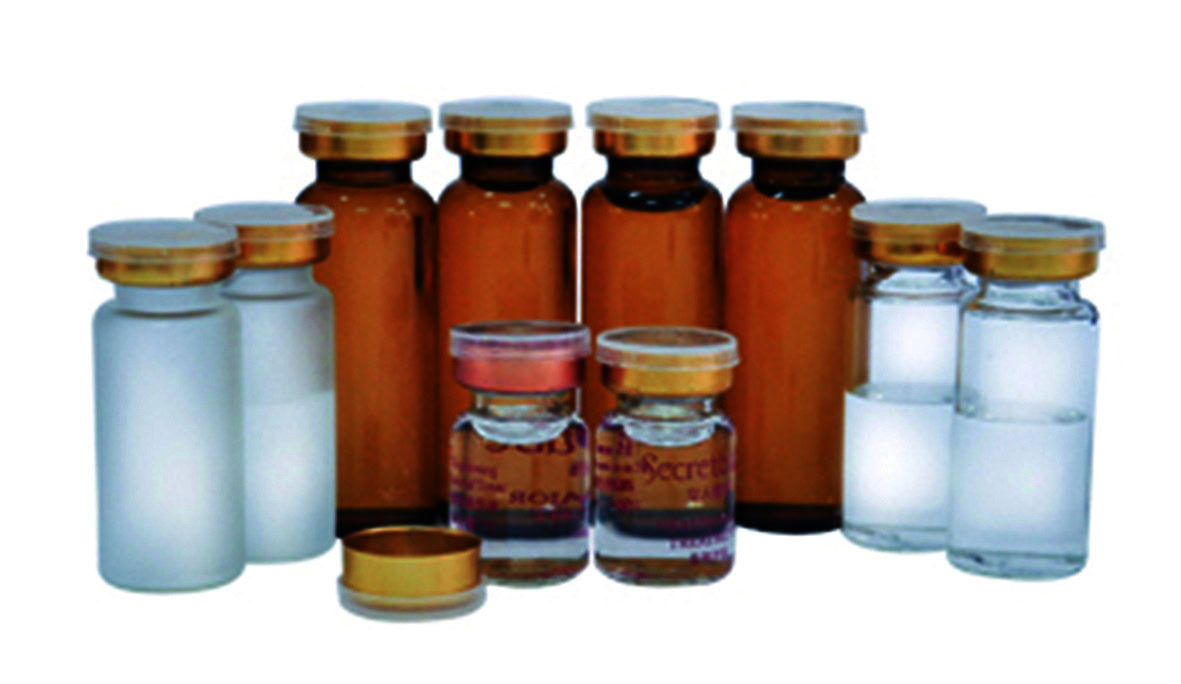
Whether you manufacture life-saving oncology therapeutics, high-potency vaccines, clinical trial samples, or premium skincare serums, implementing an advanced vial filling line is critical to your operational success.
Modern vial filling demands far more than simply dispensing liquid into a glass container. It requires a seamlessly integrated aseptic processing line that washes, sterilizes, fills, stoppers, and caps vials under ultra-clean conditions. Every step in this sequence must adhere to stringent Good Manufacturing Practice (GMP) regulations to eliminate contamination risks, safeguard delicate molecular structures, and guarantee dosage accuracy.
In this comprehensive guide, we unpack everything you need to know about modern vial filling lines, from critical equipment engineering features to the key market segments benefiting from Yundu’s cutting-edge filling solutions.
1. The Anatomy of an Aseptic Vial Filling Line
A complete automated vial filling line operates as a synchronized ecosystem. Each machine in the line performs a specialized role to transform raw, unwashed vials into sterile, hermetically sealed, and ready-to-distribute commercial products.
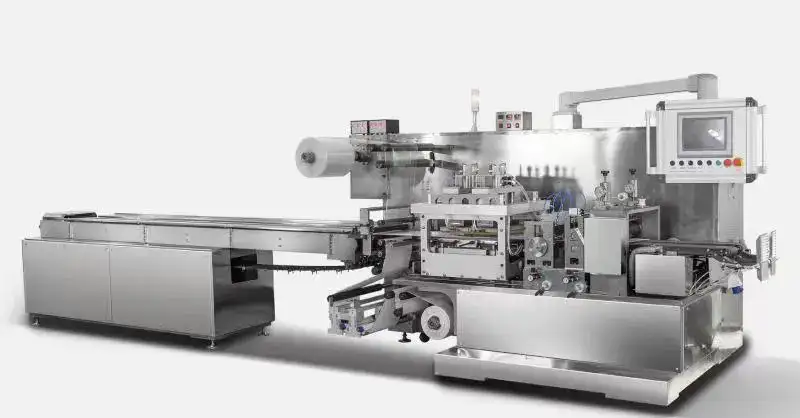
Understanding the critical control points within each stage helps manufacturers optimize production efficiency, prevent costly batch rejections, and protect end-user safety.
+-------------------+      +-----------------------+      +-----------------------+      +----------------------+
| 1. Vial Washer    | ---> | 2. Depyrogenation     | ---> | 3. Vial Filling       | ---> | 4. Capping Machine   |
| (Contamination    |      |    Tunnel Oven        |      |    Machine            |      | (Stopper Height      |
|  Control)         |      | (Thermal Processing)  |      | (Aseptic Dosing)      |      |  Verification)       |
+-------------------+      +-----------------------+      +-----------------------+      +----------------------+
2. Step 1: The Vial Washer – Securing Cross-Contamination Control
The aseptic process begins long before liquid touches the container. Unwashed vials arrive from glass manufacturers carrying microscopic glass particulates, airborne dust, and static charges. The primary mission of the vial washer is total cross-contamination control.
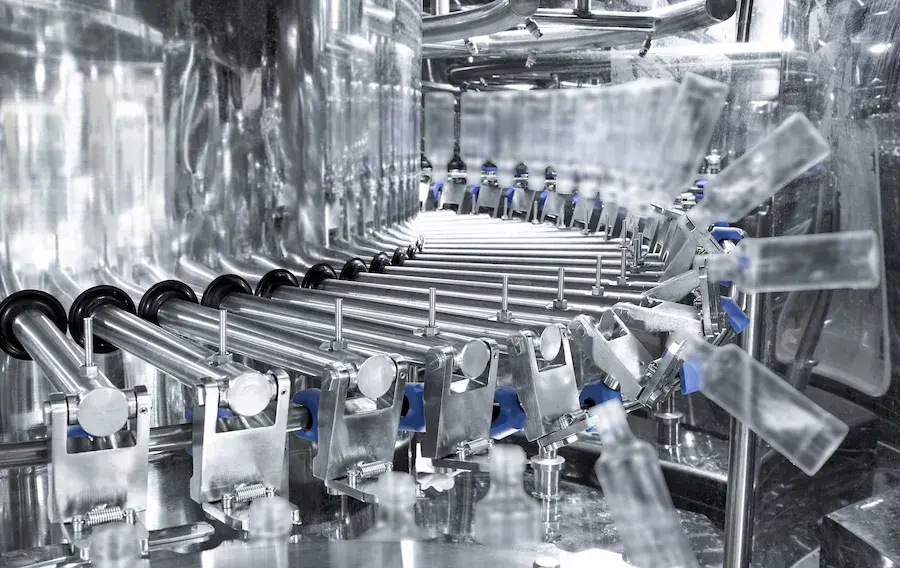
Modern automated vial washers utilize specialized gripper arms to invert vials over dedicated washing needles. The washer executes alternating cycles of Water for Injection (WFI), purified water, and clean compressed air (Filtered Air) to thoroughly cleanse both internal and external surfaces.
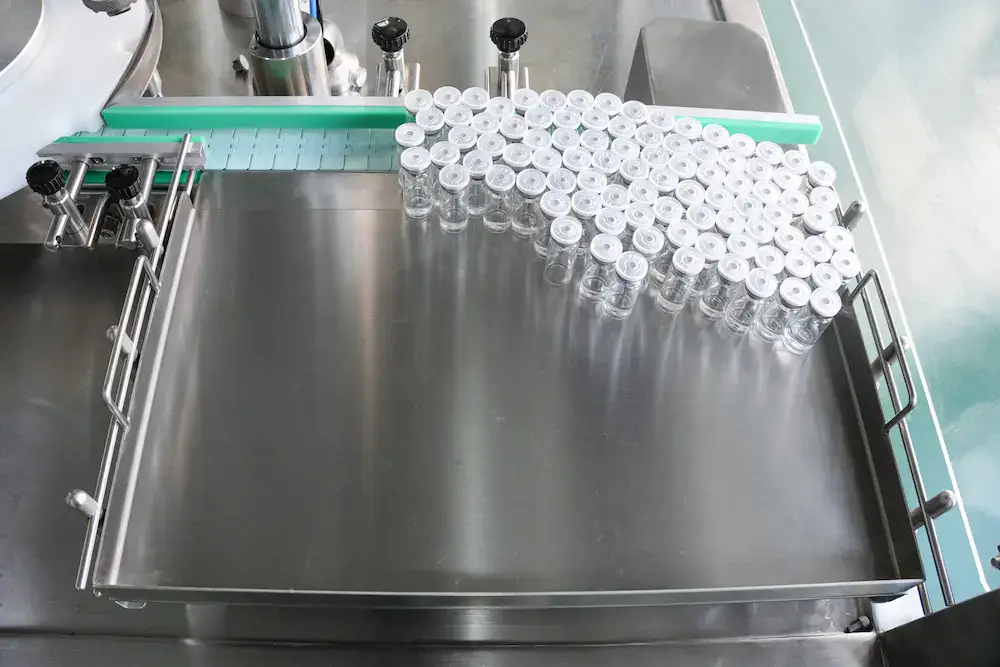
Eliminating Particulates and Media Carryover
Cross-contamination control remains vital when processing multi-product lines or switching between heavy formulation batches. Advanced washer units incorporate independent fluid channels and dedicated manifold systems to prevent cross-stream contamination between recirculated water and fresh WFI.
By achieving precise fluid pressure control and dynamic needle positioning, the washer removes all particulate residue, preparing the clean vials for thermal sterilization.
3. Step 2: The Depyrogenation Tunnel Oven – Thermal Sterilization and Airflow Integrity
Once clean vials exit the washer, a continuous sanitary conveyor transports them directly into the depyrogenation tunnel oven. This critical unit subjects the vials to extreme dry-heat thermal processing to destroy bacterial endotoxins (pyrogens) and achieve terminal sterilization.
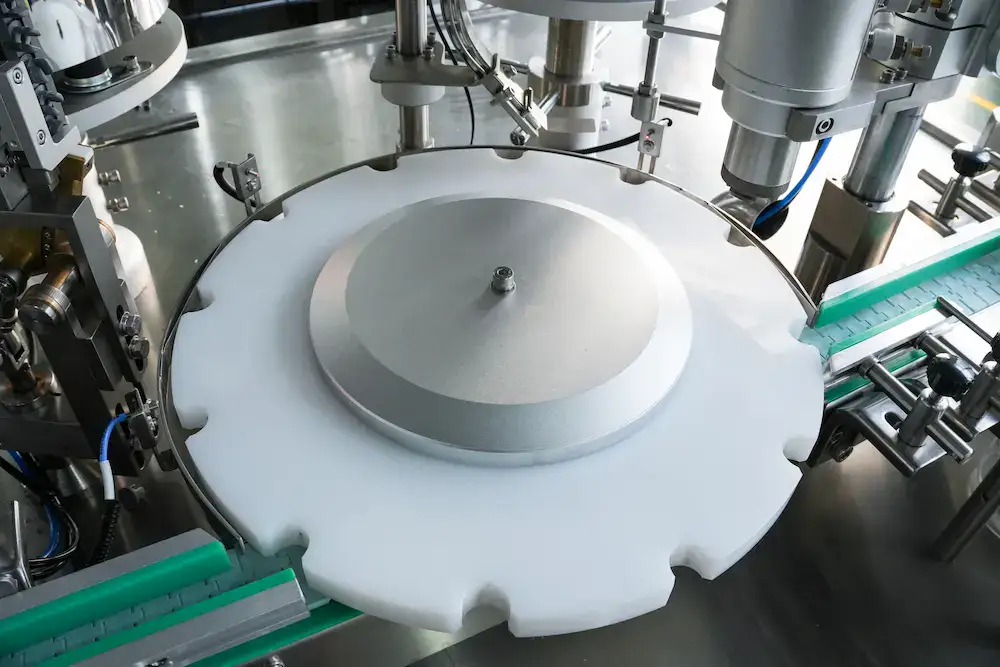
Operating a depyrogenation tunnel requires precise control over thermodynamic parameters, pressure differentials, and airflow direction across three primary zones: preheating, high-temperature sterilizing, and laminar cooling.
Preventing Pressure Backflow
Pressure backflow poses a major contamination threat in tunnel ovens. If cleanroom pressure dynamics fluctuate, non-sterile air from surrounding lower-grade areas can backflow into the hot or cooling chambers. High-performance tunnel ovens continuously monitor differential air pressure and regulate fan speeds to maintain a strict positive pressure cascade, guaranteeing that clean air always moves outward from the Grade A core.
Sterilization in the Cooling Zone
After enduring temperatures often exceeding 350°C in the heating zone, vials must cool down before liquid filling. The cooling zone must maintain strict sterilization conditions. High-efficiency particulate air (HEPA) filters supply vertical Grade A laminar airflow over the cooling vials, protecting them from micro-particulates while reducing glass temperatures to ambient levels suitable for heat-sensitive drug filling.
Mapping Temperature Distribution and Identifying the “Coldest Point”
A depyrogenation tunnel is only as reliable as its thermal validation profile. During qualification, engineers conduct comprehensive temperature distribution studies across the entire conveyor belt width.
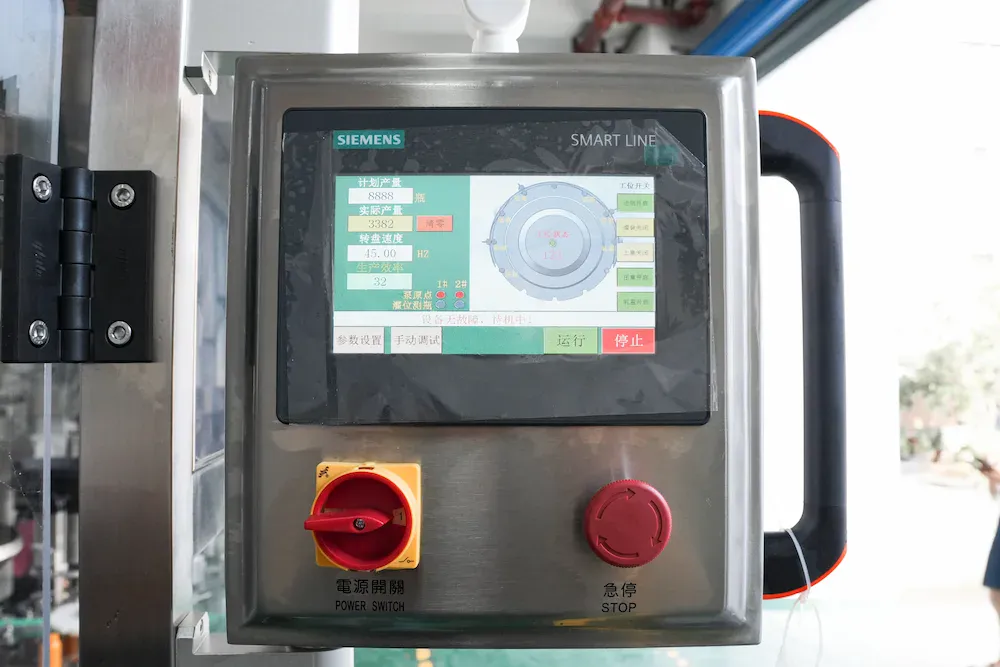
Identifying the “coldest point”—also referred to as the worst-case thermal location inside the tunnel—is mandatory. By proving that even the coldest point reaches and maintains the required temperature-time threshold for endotoxin reduction, manufacturers ensure complete pyrogen destruction for every vial in the batch.
4. Step 3: The Vial Filling Machine – Precision Dosing, Advanced Containment, and Biopharmaceutical Protection
The filling machine represents the technical heart of the entire vial line. At this stage, liquid dosing, stopper insertion, and environmental containment converge. Modern vial filling technology must deliver uncompromising dosing accuracy while protecting sensitive active pharmaceutical ingredients (APIs).
                      +-------------------------------------------------+
                      |          Vial Filling Core Station             |
                      +-------------------------------------------------+
                                               |
        +-----------------------+--------------+--------------+-----------------------+
        |                       |                             |                       |
+---------------+       +---------------+             +---------------+       +---------------+
|    100% IPC   |       | Dual Pump Tech|             | Barrier Tech  |       | Sterilization |
| (Real-time    |       | (Peristaltic  |             | (Isolators &  |       | Validation    |
|  Weighing)    |       |  & Ceramic)   |             |  VHP Cycles)  |       | (BIs & CIs)   |
+---------------+       +---------------+             +---------------+       +---------------+
100% In-Process Weighing (IPC)
Traditional filling operations rely on spot-checking vial fill weights every few hours, which risks losing entire batches if a pump drifts out of calibration. Modern high-speed filling lines integrate 100% In-Process Weighing (IPC).
High-precision tare-and-gross tare load cells weigh every individual vial before and immediately after liquid dispensing. The system calculates net volume in real time, automatically adjusting dosing pumps on the fly and sending out-of-spec containers to an individual vial rejection station without slowing down production line speed.
Dosing Technologies: Peristaltic vs. Ceramic Pumps
Choosing the right dosing system depends heavily on product fluid dynamics and API sensitivity:

Peristaltic Pumps: Ideal for single-use tubing assemblies and shear-sensitive biological molecules. Because the fluid contacts only sterile, single-use silicone or fluoroelastomer tubing, peristaltic pumps eliminate cleaning validation requirements and prevent cross-contamination between product campaigns.
Ceramic Pumps: Known for extraordinary durability, extreme chemical resistance, and long-term mechanical precision. Precision-machined ceramic rotary piston pumps maintain tight volume tolerances across millions of fill cycles without material degradation.
Addressing pump technology and technical innovation, Luna, Sales Manager at Yundu, emphasizes:
“Our factory holds patented technology for both peristaltic and ceramic pumps, ensuring precise control over filling accuracy. Customers are welcome to reach out with confidence—we are always online and ready to assist.”
Mitigating Shear Stress for ADCs and Therapeutic Proteins

Complex biological drugs—including Antibody-Drug Conjugates (ADCs), monoclonal antibodies (mAbs), and recombinant proteins—are highly vulnerable to physical degradation. Mechanical shear stress caused by aggressive pumping mechanisms can cause protein denaturation, aggregation, and loss of efficacy.
Yundu’s engineered peristaltic pump profiles deliver smooth, low-shear fluid movement, preserving delicate molecular folding and maintaining active biological potency throughout long filling campaigns.
Isolator Integration and Hydrogen Peroxide Residue Control
To achieve Grade A aseptic conditions while minimizing human operator intervention, high-containment Isolators or Restricted Access Barrier Systems (RABS) encapsulate the filling zone. Before production, operators run vaporized hydrogen peroxide (VHP) cycles to achieve complete surface decontamination.
However, residual VHP vapor can degrade biological products or proteins sensitive to oxidation. Advanced isolator systems feature engineered aeration cycles and catalytic converters to reduce hydrogen peroxide residue down to sub-ppm (parts per million) levels before liquid exposure occurs.
Sterility Assurance with Biological Indicators (BIs) and Chemical Indicators (CIs)
Validating the aseptic environment inside isolator systems requires rigorous monitoring:
Biological Indicators (BIs): Utilizing resistant bacterial spores (such as Geobacillus stearothermophilus), BIs confirm that the VHP decontamination cycle achieves a 6-log microbial reduction.
Chemical Indicators (CIs): CIs provide instant visual color change verification, confirming that hydrogen peroxide vapor reached every internal corner of the enclosure during the decontamination run.
5. Step 4: The Capping Machine – Guaranteeing Container Closure Integrity
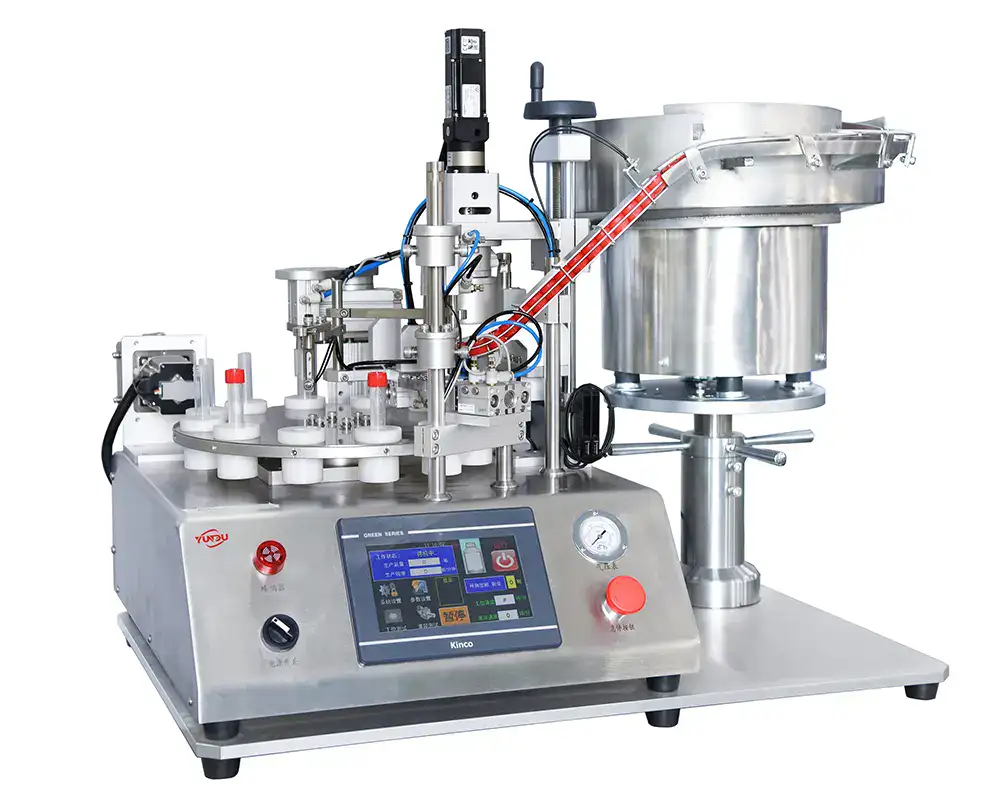
After filling and rubber stopper placement, vials travel to the capping machine for final sealing. A vial is only as secure as its closure; compromised container closure integrity (CCI) risks microbial ingress and product oxidation.
Verification of Stopper Height
Before applying the aluminum cap, the capping machine performs automated stopper height verification. Optical sensors, laser displacement detectors, or vision inspection systems scan each vial in motion.
If a stopper sits too high, is seated unevenly, or is missing entirely, the system flags the defect and routes the container to the individual vial rejection bin.
Low-Particle Crimping Techniques
During the final aluminum crimping step, the machine applies precise downward compression and side-roller pressure to form a smooth, tight seal around the glass neck. Advanced capping systems utilize gentle continuous-rotation crimping heads that minimize friction and prevent aluminum flake generation, protecting the Grade A cleanroom environment from metallic particle contamination.
6. Comparing Core Components of a Vial Filling Line
| Station | Primary Equipment | Critical Quality Attribute | Key Risk / Focus Area |
| 1. Washing | Rotary/Linear Vial Washer | Particulate & Endotoxin Removal | Cross-contamination control & fluid channel isolation |
| 2. Sterilization | Depyrogenation Tunnel Oven | Terminal Sterilization & Pyrogen Destruction | Preventing pressure backflow & validating the “coldest point” |
| 3. Filling & Stopper | Aseptic Filling Machine | Precise Dosing & Sterility Assurance | Shear stress mitigation, 100% IPC, low VHP residue, BIs/CIs |
| 4. Capping | Aluminum Capping Unit | Container Closure Integrity (CCI) | Stopper height verification & low-particulate crimping |
7. Target Customer Segments for Yundu’s Vial Filling Solutions
Yundu designs versatile, highly customizable vial filling platforms tailored to meet the needs of diverse industries, from large-scale commercial pharmaceutical plants to nimble R&D laboratories.
                      +-------------------------------------------------+
                      |    Target Customer Segments for Yundu Lines    |
                      +-------------------------------------------------+
                                               |
        +-----------------------+--------------+--------------+-----------------------+
        |                       |                             |                       |
+---------------+       +---------------+             +---------------+       +---------------+
| 1. Core Pharma|       | 2. Medical    |             | 3. R&D & Test |       | 4. High-End   |
|   & Biotech   |       |   Institutions|             |   Laboratories|       |   Cosmetics   |
+---------------+       +---------------+             +---------------+       +---------------+
1. Core Customers: Pharmaceutical and Biotechnology Companies
Pharmaceutical and biotech enterprises constitute Yundu’s primary customer base. These organizations demand robust, fully automated production lines capable of high-throughput commercial manufacturing under strict regulatory oversight.
Chemical Synthetics: Filling sterile powders and liquid injectables, including classic antibiotics like penicillins, where containment and cross-contamination control are vital.
Biopharmaceuticals: Processing sensitive biological products such as monoclonal antibodies, viral vector vaccines, recombinant proteins, and cell therapy reagents that require low-shear pumping and minimal oxygen/VHP exposure.
Traditional Chinese Medicine (TCM): Packaging freeze-dried TCM powders and liquid botanical extracts into standardized vials to preserve active phytochemical profiles and extend shelf life.
2. Key Customers: Medical Institutions, Hospitals, and Clinics
Hospitals, specialized health centers, and clinical facilities require compact, high-precision vial filling units for internal medication preparation and short-term dispensing.
Small-Dose Emergency Care: Dispensing small-dose sterile emergency medications, such as epinephrine injections, under strict aseptic conditions for immediate clinical readiness.
Hospital Compounding Units: Operating within GMP-compliant hospital pharmacy compounding rooms to prepare custom sterile formulations, such as specialized parenteral nutrition solutions and localized injection therapies.
3. Specialized Customers: Research Institutions and Laboratories
Academic universities, government research institutes, and contract testing organizations rely on Yundu’s versatile benchtop and pilot-scale filling machines for small-batch experimental work.
Experimental Sample Storage: Storing delicate biological media, cell culture fluids, experimental antibodies, and synthetic small-molecule drug candidates in sterile, light-protected environments.
Stability and Compatibility Testing: Serving as standard container fill systems during long-term drug stability trials, container-closure compatibility studies, and stress-testing protocols.
4. High-End Cosmetics Brands and Beauty Laboratories
The beauty and personal care sector increasingly adopts pharmaceutical-grade packaging to protect high-potency skin formulations.
Commercial Skincare Brands: Packaging active serums, peptide complexes, and freeze-dried collagen or vitamin powders. Brands leverage glass vials—especially light-shielding amber vials—to prevent photo-degradation, preserve active ingredient potency, and project an elite, clinical-grade brand image.
Beauty Formulation Laboratories: Utilizing compact vial filling equipment during product development and active ingredient R&D, ensuring contamination-free stability testing for new cosmetic formulations.
8. Why Partner with Yundu for Your Vial Filling Line?
Navigating the complexities of aseptic vial filling requires a equipment partner who understands both mechanical engineering and biopharmaceutical compliance. Yundu delivers end-to-end vial filling systems that combine user-friendly controls, advanced containment technology, and unmatched filling accuracy.
Whether you need a high-speed continuous production line complete with a depyrogenation tunnel and barrier isolator, or a compact modular filling unit for clinical batches, Yundu provides tailored engineering backed by patented innovation.
Take the Next Step in Aseptic Production
Optimizing your vial filling process starts with choosing the right technology. Explore Yundu’s range of patented peristaltic and ceramic pump filling solutions to elevate your production line quality, safeguard your formulations, and streamline regulatory compliance.
Contact the Yundu engineering team today to discuss your project requirements or request a customized equipment quote. Our experts are standing by to support your production goals!