Jam Packaging Guide: Container Types, Materials, Machinery

Table of Contents

Jam packaging encompasses the complete process of enclosing jam in jars, pouches, tubes, or boxes to protect quality and present it attractively. Good jam packaging is essential for preserving freshness, as it must “protect the product from moisture, air, microorganisms, and other factors,” thereby extending shelf life. It also serves a powerful marketing role: an eye-catching package can convey brand identity and product information. In fact, experts note that jam packaging is “far beyond a mere container” – it integrates material science, precision engineering, and food-safety protocols to ensure the jam’s safety, quality, and appeal.

What Is Jam Packaging?

Jam packaging refers to any container or wrapper used to store and ship jam, from the traditional glass jar to flexible sachets or gift boxes. Its primary role is to maintain quality and safety: for example, it keeps out moisture and oxygen, preserving flavor and color. Packaging must also meet regulatory standards (e.g. FDA, EU food-contact rules) and communicate essential information (ingredients, expiration, branding) to consumers. In practice, jam packaging combines protection and presentation. It safeguards the jam’s flavor and texture while making the product visually appealing on the shelf. This means choosing the right container (jar, pouch, etc.), sealing it properly, and designing labels or boxes that resonate with customers.

Jam packaging refers to any container or wrapper used to store and ship jam, from the traditional glass jar to flexible sachets or gift boxes.

Types of Jam Packages

Jam comes in many package forms, each suited to different markets and uses. Below are the common jam package formats:

Glass Jars

Glass jars are the classic jam container. They are chemically inert and impermeable, meaning they won’t react with acidic jam or let gases through. This preserves the jam’s authentic flavor and aroma. Their transparency lets consumers see the jam’s color and texture (fruit chunks, etc.), which can be a key selling point. Glass jars also lend a premium, artisanal look and are infinitely recyclable. Some brands even package glass jars in decorative gift boxes to enhance shelf appeal – for example, “Some of the jam glass jars come in a box… making it suitable as a gift!”. Jam boxes and cartons often hold one or several glass jars, serving as secondary packaging for display or gift sets.

Glass jars are the classic jam container. They are chemically inert and impermeable, meaning they won’t react with acidic jam or let gases through.

Plastic Containers (Jars and Buckets)

Plastic jars and buckets are popular for bulk and value-oriented jams. They are lightweight (reducing transport cost) and shatterproof, making them practical for large-volume producers. For example, plastic buckets come with a handle and lid, ideal for wholesale or restaurant use. (The plastic bucket “has a large capacity and a handle,” and is durable yet lightweight.) Rigid PET or HDPE jars are also used in retail; they are cheaper to produce than glass and can be molded into various shapes. Drawbacks include lower barrier properties (oxygen can slowly permeate some plastics) and recycling concerns, though many manufacturers now use recycled PET to improve eco-credentials.

Plastic jars and buckets are popular for bulk and value-oriented jams. They are lightweight (reducing transport cost) and shatterproof, making them practical for large-volume producers.

Metal Cans and Tins

Metal cans (often tin-plated steel or aluminum) offer robust protection. They block light and air completely, greatly extending shelf life (jam in metal cans can last years). Cans withstand rough handling and are fully recyclable. Aluminum cans are lighter than glass, reducing shipping weight. The downside is that metal is opaque (consumers can’t see the jam) and requires an inner food-safe lining because jam is acidic. Properly lined cans eliminate corrosion issues. Metal cans are typically used for commercial or industrial jam production, or specialty gourmet products where shelf life and durability are priorities.

Metal cans (often tin-plated steel or aluminum) offer robust protection. They block light and air completely, greatly extending shelf life (jam in metal cans can last years).

Flexible Pouches and Sachets

Flexible packaging (plastic or composite film pouches) is a growing trend in jam packaging. Stand-up doypacks and spouted pouches offer resealable convenience and take up little shelf and shipping space. For example, a spouted pouch allows easy squeezing of jam and controlled pouring. Stick packs and sachets are single-serve pouches (often foil-backed) that deliver one portion of jam (popular in hospitality or on-the-go snacks). These formats are lightweight and portable, with features like easy-tear notches or screw caps. They cater to travelers, children’s snacks, or sampling. (Indeed, trends show single-serve jam packets and sampler packs are rising in demand.)

Flexible packaging (plastic or composite film pouches) is a growing trend in jam packaging.

Tubes and Bottles

Squeeze tubes (like toothpaste tubes) filled with jam are relatively new but growing in popularity. They allow “mess-free” dispensing: the consumer simply cuts or squeezes the tip to release jam, and often the tubes have resealable caps. Mini squeezable bottles (think honey bear bottles for jam) serve a similar purpose. These formats are seen as fun and convenient, especially for children’s snacks or travel-size jams.

Squeeze tubes (like toothpaste tubes) filled with jam are relatively new but growing in popularity.

Sampler and Gift Boxes

Gift sets and multi-flavor samplers often use specialty boxes. For example, a jam sampler pack might contain several mini-glass jars of different flavors arranged in a decorative box. This approach is common for artisanal and gourmet jams. As one source notes, gift boxes for jam jars add “a touch of class” and make them suitable as presents. Jam boxes may also refer to cardboard cartons that hold multiple jars or pouches for shipping and display. Modern designs even include novelty elements (e.g. compartments or seed-paper labels) to stand out.

Gift sets and multi-flavor samplers often use specialty boxes. For example, a jam sampler pack might contain several mini-glass jars of different flavors arranged in a decorative box.

Comparison of Jam Package Types

Package Type Key Features Advantages Disadvantages Typical Use Cases
Glass Jars Chemically inert, impermeable to air & moisture; transparent • Best preservation
• Showcases color & texture
• Premium, artisanal look
• Infinitely recyclable
• Heavy & fragile
• Higher shipping cost
Premium retail, gift sets, home use
Plastic Containers
(Jars & Buckets)
Food‑grade PET/HDPE; lightweight & shatterproof • Cost‑effective
• Durable & lightweight
• Ideal for bulk/wholesale
• Moldable into various shapes
• Lower oxygen barrier
• Recycling limitations
• May require multi‑layer films
Foodservice, bulk distribution, value retail
Metal Cans & Tins Aluminum or tin‑plated steel; blocks light & air; lined for acidity • Excellent barrier
• Durable in transit
• Fully recyclable
• Extended shelf life
• Opaque (no product visibility)
• Requires food‑safe lining
Industrial/commercial jams, gourmet products
Flexible Pouches & Sachets Multi‑layer films; stand‑up pouches, spouted & stick packs • Ultra‑light & space‑saving
• Single‑serve convenience
• Low shipping cost
• Resealable options
• Difficult to recycle
• Less premium feel
• Needs specialized filling equipment
On‑the‑go snacks, single‑serve packets, travel kits
Tubes & Bottles Squeeze tubes or mini bottles with resealable caps • Mess‑free dispensing
• Reclosable
• Fun/novelty factor
• Limited volume per unit
• Mixed‑material recycling challenges
Travel size, kids’ snacks, innovative product launches
Sampler & Gift Boxes Cardboard boxes with mini‑jars or sachets; custom inserts • High visual impact
• Perfect for gifting
• Customizable printing
• Higher packaging cost
• Increased waste volume
Corporate gifts, artisanal samplers, holiday promotions

Materials for Jam Containers

Jam containers are made from materials chosen for their barrier properties, cost, and aesthetic. The main materials are:

  • Glass: Composed of silica (sand) and other natural minerals, glass is inert and impermeable. It won’t leach chemicals or absorb aromas, preserving the jam’s taste. Glass’s transparency and weight convey quality. It is 100% recyclable (infinitely) without losing quality. However, glass is heavy and breakable, which can raise shipping costs and risk. High-energy production temperatures are required to melt glass, affecting environmental footprint.
  • Plastic (Polymers): Common plastics include PET, PP, HDPE, etc. Plastic jars and bottles are lightweight and shatterproof, which saves transport cost and adds convenience. They can be made in many shapes and colors. However, plastics may have lower oxygen barriers than glass and may not be recyclable everywhere. Multi-layer or coated plastics (e.g. PET with EVOH layer) are used to improve barrier performance. 
  • Metal (Steel, Aluminum): Metals offer the strongest barrier to light and oxygen. Tin-plated steel cans and aluminum cans are durable and often used for long-term storage (shelf life up to 5 years). Aluminum is lightweight compared to steel or glass. Modern cans have polymer linings that prevent acid corrosion, so there’s no interaction with jam. Used cans are widely recycled, making metal an eco-friendly option if properly processed.
  • Flexible Films and Foils: These include laminates of plastics, metallized films, or bio-polymers. Stand-up pouches, spouted bags, and stick packs use multi-layer films engineered for high barrier. Each layer can block oxygen, moisture, or light (for example, an EVOH layer for oxygen). The lightweight nature of films greatly reduces material usage and shipping volume. Innovations like biodegradable pouch materials or seed-paper labels are emerging to meet sustainability trends. For specialized uses, laminated tubes (plastic/aluminum) provide the convenience of a tube with more barrier.

In summary, choose the container material based on product needs: glass or metal for maximum protection and a premium look, plastic or composite if weight and cost are concerns, and flexible films for portability and modern appeal.

The Role of Packaging Machines

Packaging machines are vital for efficient, hygienic jam production. They automate the filling, sealing, and labeling steps so each jar or pouch is uniformly packed. Key equipment includes:

Filling Machines

These deposit precise amounts of jam into containers. For thick, fruit-laden jam, piston fillers or pump fillers are used. Modern jam fillers can handle various container sizes automatically. For example, one manufacturer describes a “fully automatic tracking filling machine that is compatible with a variety of bottles of different sizes… with one-click cleaning” for easy maintenance. Many lines now use servo-driven multi-head fillers, ensuring both speed and accuracy for high-viscosity products. Automated fillers often include anti-drip nozzles to prevent waste and CIP (clean-in-place) capability to meet food safety standards.

Capping/Sealing Machines

After filling, jars and bottles must be sealed. Capping machines can apply metal or plastic lids (twist-on or snap). For pouch packaging, heat sealers or induction sealers apply film closures. Proper sealing preserves freshness. For instance, jam lines often use induction foil sealing under the lid for extra tamper-evidence.

Labeling and Coding Machines

These apply adhesive labels or print directly on containers with product info, logos, and barcodes. Automated labelers keep production moving at pace. Smart coding machines add batch numbers and expiration dates for traceability, as required by regulations.

Secondary Packaging Equipment

Once primary packs are filled and sealed, machines can group them into boxes, trays, or shrink-wrap for shipping. For example, collating machines bundle jars into sets or cases. Gift packaging often uses automated cartoners to insert jam jars into branded boxes.

Selecting the right packaging machine depends on your product and scale. Important features to look for include food-grade stainless-steel construction and easy-clean designs, because jam is sticky and sanitation is critical. Automated machines offer much higher output and consistency than manual methods: they can fill hundreds of jars per minute with minimal variance. This boosts efficiency and cuts labor costs. For example, businesses find that investing in a jam filling line “slashes production time” and ensures “accurate filling volumes,” improving both productivity and hygiene.

Example: Yundu Filling Machine

a leading packaging machine manufacturer, offers a range of automated jam filling machines (see jam filling machine) that integrate filling, capping, and labeling.

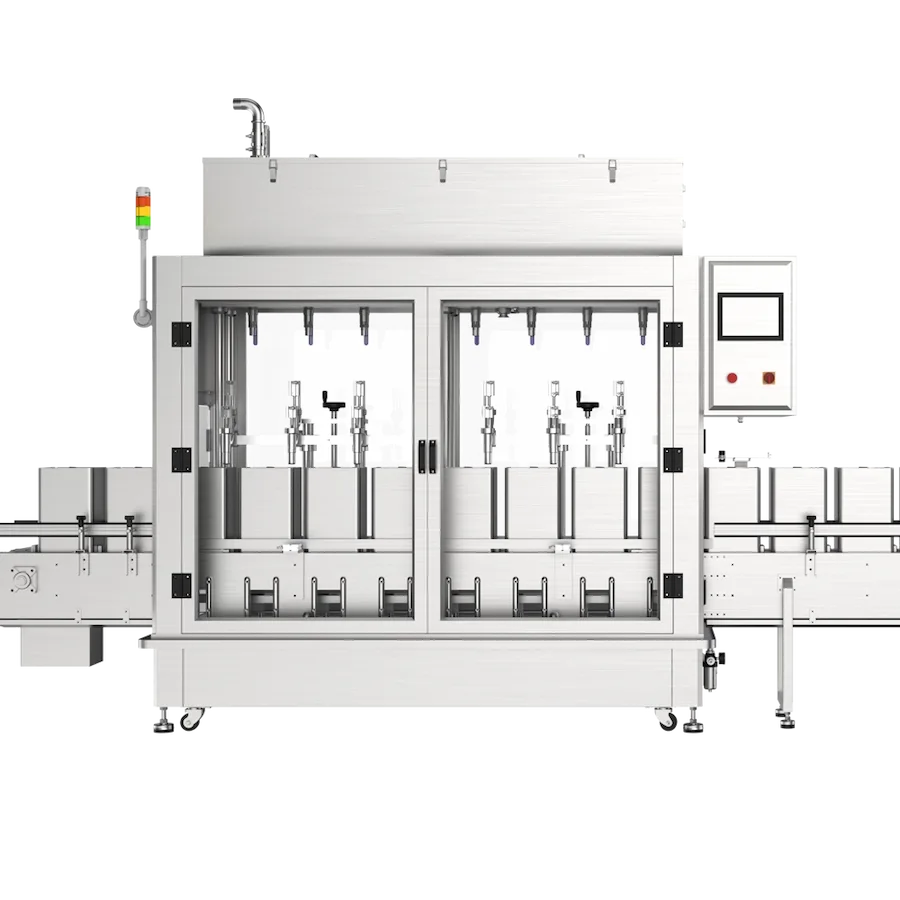
Automatic 12 Head Volumetric Filling Machine For Perfume,Shower Gel,Shampoo,Lotion,Toner,Facial Cleanser YDGZ-12

One design uses PLC control and servo-driven pistons to handle even thick jams steadily. Such integrated lines ensure each jam jar is filled, sealed, and labeled with minimal manual intervention.

Key Packaging Line Components:

  1. Conveyor/System: Feeds containers to each station.
  2. Jar Feeder/Unscrambler: Orients empty jars upright.
  3. Filler: Deposits jam. (Piston or pump filler, e.g. Yundu’s piston fillers.)
  4. Capping Machine: Places lids on jars (screw cappers, snap-on cappers).
  5. Labeler: Applies brand labels or prints lot information.
  6. Inspection: (Optional) Checks fill level or detects contaminants.
  7. Case-Packer: Groups jars into cartons or wraps them for shipping.

By automating these steps, packaging machines help deliver consistent quality and meet food-safety regulations. For instance, equipment built to ISO and CE standards (like Yundu’s machinery) provides traceability and reliability. Overall, investing in the right packaging line — from fillers to cappers and conveyors — is crucial for any jam producer’s success.

Trends in Jam Packing

The jam packaging industry is rapidly evolving. Key trends shaping the future include:

Sustainability and Eco-Friendly Packaging

Consumers increasingly demand green packaging. Many producers are switching to recycled or recyclable materials. Glass and metal remain popular since both are infinitely recyclable. Recycling PET plastics is also growing. Innovative materials are emerging too: compostable pouches and biodegradable films are being tested, and even seed-paper labels (which can be planted to grow flowers) have appeared. Companies are also exploring bulk and refill models (selling jam in larger containers with refills to cut waste). In sum, the industry is committed to reducing plastics and improving circularity, so expect more jam containers made from sustainable materials.

Convenience and Portability

Busy lifestyles fuel demand for single-serve and on-the-go jam packaging. Stand-up pouches, squeezable tubes, and stick sachets are in vogue because they are lightweight and easy to open. Jam mini-jars and sampler packs (collections of small jams) are popular as gift items or trial-sized products. Features like resealable caps, easy-pour spouts, and tear-tear pouches improve user experience. This trend also favors flexible packaging machines (like pouch fillers and stickpackers) that can make a variety of single-serve formats quickly.

Premiumization and Customization

There is a growing market for artisanal and premium jams, which calls for upscale packaging. Small-batch producers often use uniquely shaped glass jars, wooden lids, or custom labels to stand out. High-end gift boxes, embossed labels, and vibrant digital printing are used to convey quality. Flavor innovations (exotic fruit blends, organic jams) are matched by premium packaging that reinforces the product’s luxury appeal. In short, packaging is becoming as much about story and experience as protection: a beautiful jar or box can justify a higher price point.

Automation and Smart Packaging

Advanced technology is transforming packaging lines. Robotics and IoT (Internet of Things) are increasingly used to speed up jam packaging while reducing errors. For example, vision-guided robots can load jars into machines, and sensors monitor fill levels in real time. Smart labeling systems can print dynamic information (batch numbers, QR codes) on the fly, aiding traceability. Overall, “intelligent” packaging machinery offers higher throughput, consistency, and hygiene. Data-driven maintenance (predictive maintenance) minimizes downtime. Expect more integration of AI and automation as manufacturers aim for greater efficiency and adaptability.

These trends highlight that jam packing must balance consumer preferences with operational efficiency. Packaging decisions now consider environmental impact, convenience, and brand image alongside traditional concerns like shelf life.

How to Choose the Right Packaging Solution

Selecting the ideal jam packaging and machinery involves evaluating multiple factors. Consider the following steps:

  • Assess Your Product: Look at jam viscosity (chunky vs. smooth), acidity, and ingredients. Very high-viscosity jams may require piston or auger fillers, while runnier preserves could use simpler volumetric fillers. If pieces of fruit are present, ensure the filler’s nozzle won’t clog. Also consider portion size (mini jars vs. family-size jar vs. single-serve).

  • Define Production Scale: Are you a small artisanal producer or a large industrial operation? Small batches might start with semi-automatic machines, while large-scale production benefits from fully automated lines. For high volume, you’ll prioritize speed and consistency – look for multi-head fillers and fast conveyors.

  • Choose Container Type: Based on market positioning and logistics, decide on jars, pouches, tubes, etc. Glass jars give a premium image and simple barrier, but if weight or breakage is a concern, PET jars or pouches may be better. “Boxes for jam” can come into play if you need multipacks or gift packaging – plan for any carton-packing equipment needed. Make sure your chosen packaging material is compatible with available filling and sealing machines.

  • Prioritize Key Machine Features: Ensure machines can handle jam’s stickiness and cleaning needs. Look for food-grade construction and CIP (Clean-in-Place) systems. Adjustable filling heads or nozzle heights allow multiple container sizes. Anti-drip nozzles prevent waste. User-friendly controls can shorten training time. In short, pick machines rated for high viscosity and easy sanitation.

  • Consider Budget and ROI: Automatic jam packaging lines require significant investment, but they pay off. As one industry guide notes, the ROI often comes in a few years through labor savings, higher throughput, and less waste. Small businesses might start with a single filling/capping unit and expand later. Always compare costs relative to expected gains.

  • Supplier Reputation and Support: Work with experienced machinery suppliers. For example, Yundu Filling Machine is an ISO9001-certified manufacturer of liquid filling equipment. Reputable suppliers will help customize the solution to your needs and provide after-sales support. Check that the vendor offers training, spare parts, and can adapt the line as your business grows.

  • Future-Proofing: Plan for flexibility. Can the line be upgraded to new packaging formats? With sustainability in mind, ensure the machinery can handle emerging materials (biodegradable films, for instance). Advanced control systems (PLC, IoT connectivity) will keep you competitive.

By carefully matching packaging types (jars, pouches, etc.) and machinery to your product and market goals, you ensure a smooth, cost-effective production. As Yundu emphasizes, choosing ISO- and CE-certified equipment means investing in quality and reliability. The right jam filling machine (for example) will greatly improve efficiency and product consistency.

Conclusion

Jam packaging plays a pivotal role in the global food industry, ensuring that jams remain fresh, safe, and appealing to consumers. With the evolving trends in packaging, such as eco-friendly materials, customization, and innovative designs, manufacturers have more options than ever to meet market demands. By understanding the different types of jam packaging available and choosing the right packaging solution, businesses can ensure they stand out in a competitive market.

Whether it’s glass jars, plastic containers, or pouches, investing in the right jam packaging machine can help improve efficiency and product quality. As trends continue to evolve, it’s crucial for businesses to stay informed and adopt the latest packaging innovations to cater to consumer needs and expectations.

At Yundu Filling Machine, we offer state-of-the-art jam filling machines designed to meet these growing demands, ensuring smooth operations and the highest level of efficiency for your jam packaging needs. Contact us today to learn how our machinery can enhance your production process.

Jam Packaging FAQS

Transparency is the cornerstone of our Yundu team. That’s why below, you can find the most common questions and answers we receive surrounding our jam packaging.

Proper packaging protects the jam from spoilage (moisture, oxygen, microbes) and preserves flavor, color, and texture. It also communicates brand and product information to consumers. Good packaging enhances shelf life and boosts consumer trust by showing the product is safe and high-quality.

Glass jars, plastic bottles or buckets, metal cans, and flexible pouches are most common. Glass and metal offer excellent barriers (recyclable and inert), while plastics and films (PET, PP, multilayer pouches) are lighter and adaptable. The choice depends on cost, convenience, and brand image.

A jam filling machine is a type of Packaging Machine that dispenses jam into containers. It usually has a hopper to hold jam, a dosing system (piston or pump) for precise volumes, and a conveyor to move jars under the filler. Modern machines use sensors to start/stop filling only when a jar is present. After filling, the jam flows to the next station for capping. For example, Yundu’s jam filling machines use PLC and servo drives to handle different jar sizes accurately.

Yes, many machines are versatile. Some lines can switch between jars, bottles, and cans by adjusting tooling. For pouches, separate vertical form-fill-seal machines or pre-made pouch fillers are used. As one guide explains, jar fillers use piston pumps, pouch machines fill pre-made spouted bags, and tube fillers heat-seal small tubes. Always confirm with the supplier which container types each machine supports.

Look for the rise of sustainable packaging (recycled glass, plant-based plastics) and convenient formats (stand-up pouches, stick packs, on-the-go tubes). Premium and personalized packaging (custom jars and labels) is also growing. On the technology side, automated filling lines with smart sensors and IoT monitoring are improving efficiency. Adapting to these trends can keep your products appealing to modern consumers.

Use machines with precise dosing and built-in sanitation. Features like clean-in-place (CIP) systems and stainless-steel construction help meet hygiene standards. Automated cappers and sealers ensure each jar is sealed properly. Regular maintenance and quality checks (e.g. weight inspections) will also keep packaging consistent.

Share The Post Now:
Picture of Hey there, I’m Daisy

Hey there, I’m Daisy

I’m the Sales manager of Yundu. We have been helping manufacturing industries increase their productivity and capacity with our advanced filling machines for over 20 years.
Have questions? Reach out to us, and we will provide you with a perfect solution.

Related Articles

Get Instant Quote

If you’d prefer, a representative from Yundu can contact you directly. Please provide the information below and a member of our sales team will contact you shortly. * fields are required.