 Indonesian
 English
 Arabic
 Vietnamese
 Malay
 Thai
 Korean
 Russian
 French
 Italian
 Japanese
 Portuguese
 Turkish
 Spanish
Global pharmaceutical producers, medical device companies, and contract manufacturing organizations (CMOs) are rapidly replacing multi-dose vials with unit-dose parenteral containers. At the center of this transition sits the jarum suntik yang sudah diisi—a sterile, ready-to-administer delivery device that demands precision aseptic filling machinery to guarantee volumetric accuracy and multi-year shelf stability.

For plant engineers, procurement managers, and healthcare buyers, understanding both clinical device performance and upstream production machinery is essential. Evaluating pre-filled syringe filling machine manufacturers requires comparing dosing pump mechanics, vacuum stoppering systems, and cleanroom isolation, while clinicians and patients require clear guidelines on device selection and safe medication storage.
This guide explores the engineering architecture behind modern syringe filling lines (60% focus)—featuring a technical model comparison of Yundu’s pre-filled saline and pharmaceutical syringe filling systems—before examining manual pre-filled systems versus autoinjectors, sourcing channels for saline flush syringes, and safety rules for insulin and tirzepatide handling.
Automatic Feeding for Syringe Filling Machines
1. Inside the Modern Syringe Filling Machine: Core Engineering & Workflow
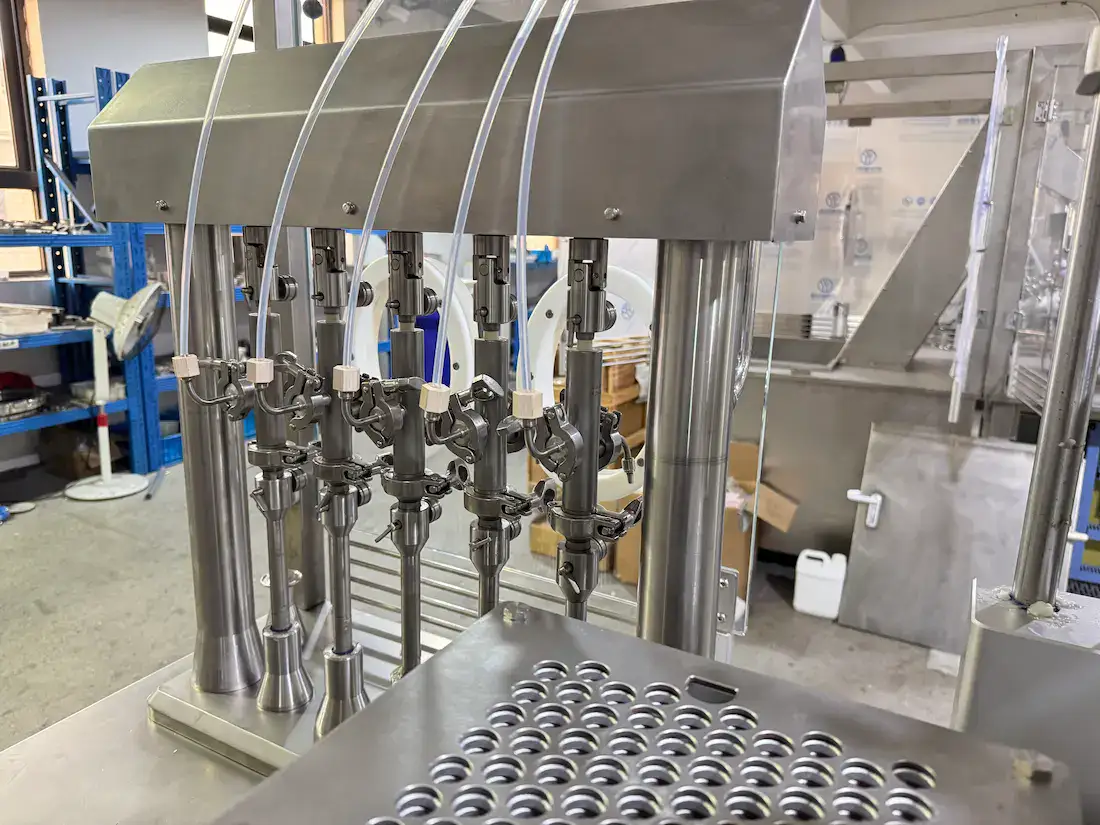
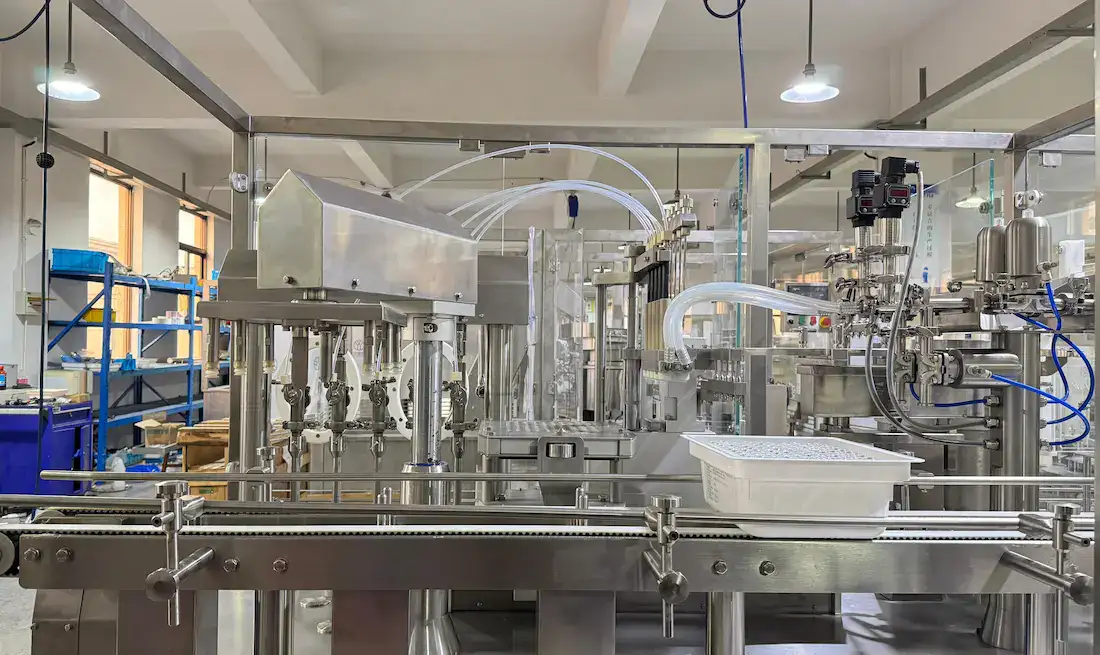
5-head dispensing pump for pre-filled syringe filling machines
Manufacturing a sterile jarum suntik yang sudah diisi at commercial speed requires automated equipment engineered to eliminate microbial ingress, entrapped air bubbles, and silicone oil migration. Terkemuka pre-filled syringe filling machine manufacturers structure aseptic fill-finish lines around five synchronized subsystems:
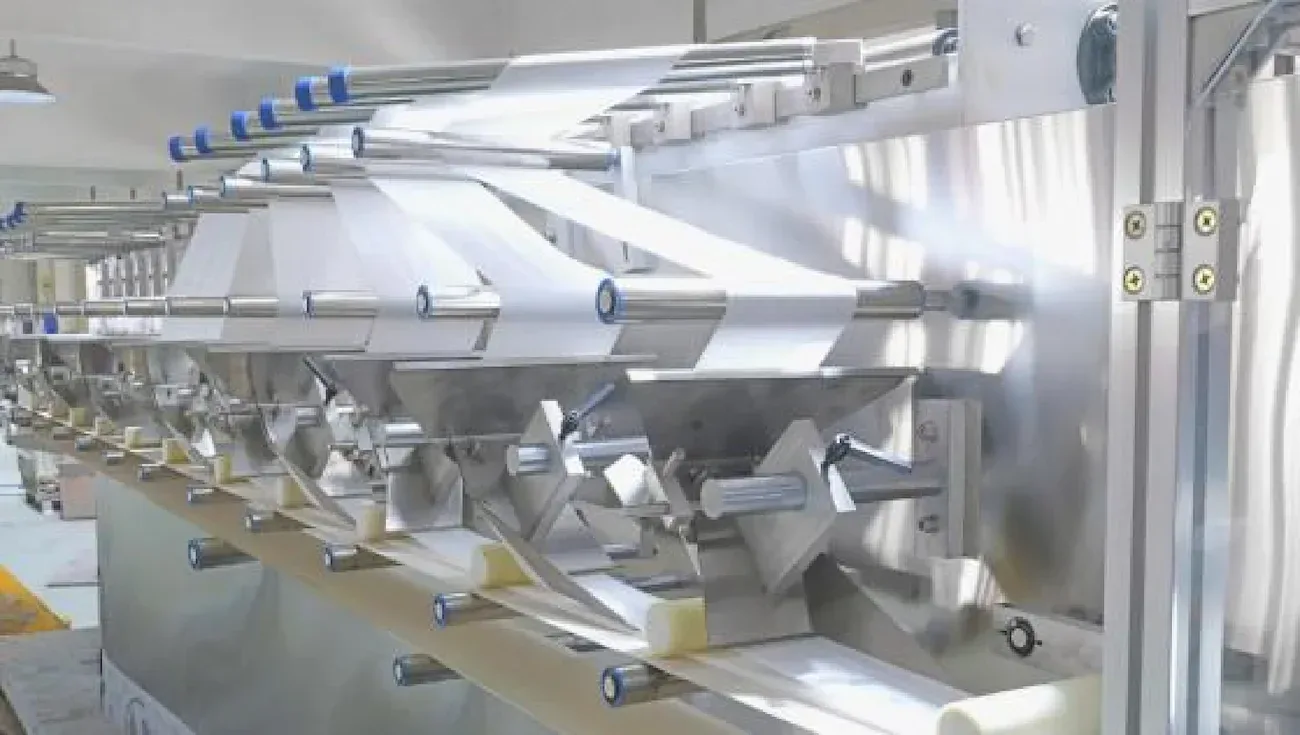
Automated Tub Denesting and Lifting: Ready-to-fill (RTF) glass or cyclic olefin polymer (COP/COC) syringes arrive nested inside sterile polypropylene tubs sealed with breathable Tyvek® lids.
 Automated denesting machines (such as Yundu’s TSB series) peel protective liners and transfer syringes into the ISO Class 5 laminar flow zone without operator contact. For un-assembled plastic catheter flush barrels, vertical syringe lifting units feed bulk barrels directly into assembly tracks.
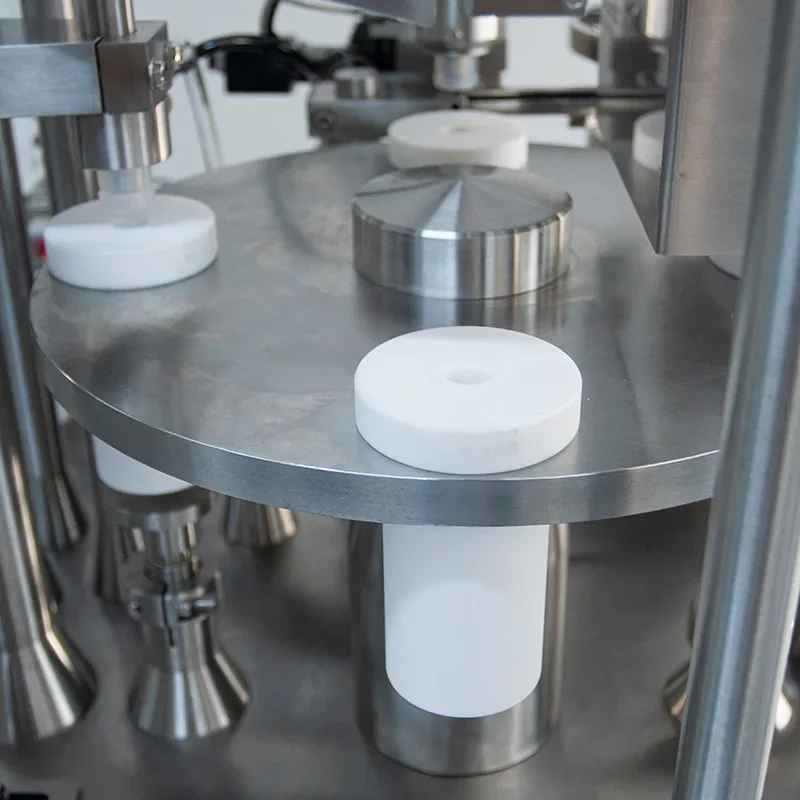
Precision Dosing Pumps (Ceramic Piston vs. Peristaltic):
Rotary Ceramic Piston Pumps: Machined from ultra-hard alumina or zirconia ceramic, these pumps meter both watery saline solutions and high-viscosity hyaluronic acid (HA) gels with high volumetric repeatability (±0.5% to ≤±1%).
Servo Peristaltic Pumps: Preferred for shear-sensitive biologics, monoclonal antibodies, and vaccines. Single-use medical-grade tubing prevents cross-contamination and speeds up batch changeovers.
Vacuum-Assisted Stoppering: Standard mechanical stopper insertion compresses air inside the barrel, risking plunger displacement during air transport or fluid leakage. Industrial vacuum stoppering stations evacuate air from the barrel headspace immediately before seating the rubber stopper, delivering bubble-free fills.
Online Vision Inspection and Checkweighing: Integrated optical sensors verify liquid fill levels, stopper seating depth, and cap presence, automatically rejecting defective units before downstream packaging.
Plunger Rod Assembly and Labeling: Downstream modules thread plastic plunger rods into seated stoppers, snap on backstops or safety needle guards, and apply serialized regulatory labels.
2. Yundu Pre-Filled Saline & Pharmaceutical Syringe Filling Machine Comparison

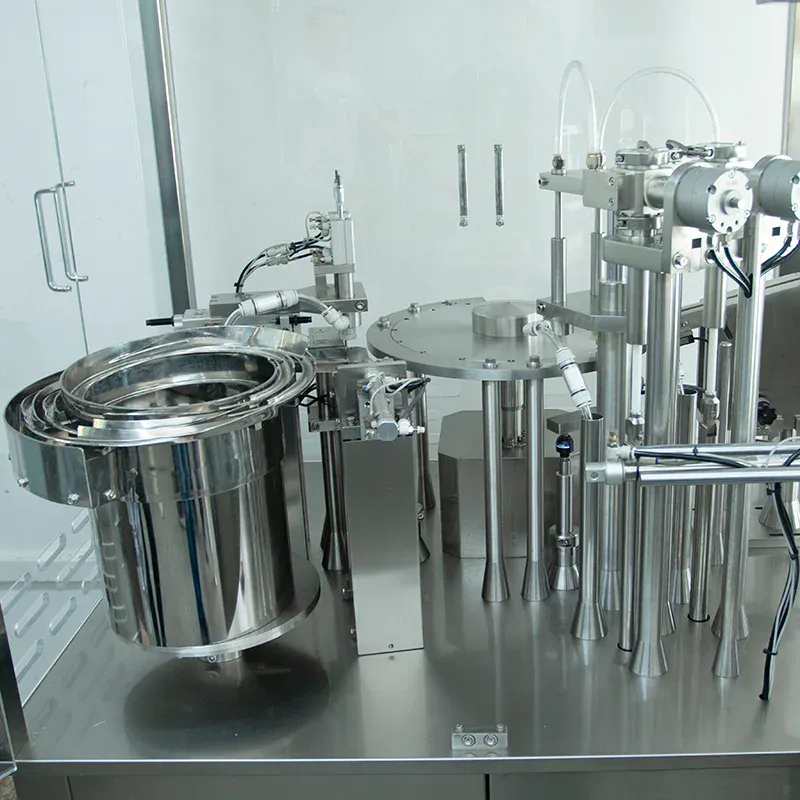
Filling section of a syringe filling machine GZB200
Selecting the right filling platform depends on whether your facility processes pre-nested glass/polymer syringes or four-piece plastic catheter flush syringes (barrel, tip cap, liquid fill, stopper, and plunger rod).
Below is a direct technical comparison of Yundu’s core syringe filling machine models designed for pre-filled saline flushes, aesthetic gels, and sterile injectables:
Incoming Component Format: If you source bulk, unassembled plastic syringe components for saline flush production, choose an integrated assembly-filling-capping line like the YD100. If you purchase pre-sterilized nested tubs, select a vacuum filling and stoppering system like the GZB200.
Cleanroom & cGMP Validation: Confirm that product-contact surfaces utilize 316L stainless steel or medical-grade ceramics, and verify that your supplier provides complete DQ/IQ/OQ validation documentation alongside optional 100-level laminar flow hoods.
Format Changeover Agility: Facilities running multiple barrel diameters (1 mL, 2.25 mL, 3 mL, 5 mL, and 10 mL) should specify quick-change star wheels, modular pump heads, and PLC recipe memory to minimize downtime between batches.
3. Key Advantages of Pre-Filled Disposable Syringes
Investing in automated syringe filling infrastructure delivers measurable clinical and economic returns across the healthcare supply chain. The advantages of pre-filled disposable syringes include:
20% Reduction in Drug Overfill Waste: Regulatory guidelines require pharmaceutical manufacturers to overfill traditional glass vials by 20% to 25% so clinicians can draw a full labeled dose. A factory-filled jarum suntik yang sudah diisi requires less than 2% overfill—enabling manufacturers to produce roughly 20% more sellable doses from every batch of expensive biologic active pharmaceutical ingredient (API).
Elimination of Dosing Errors: Factory-calibrated unit doses prevent manual measurement mistakes during high-pressure emergency room care and home self-administration.
Lower Contamination Risks: Bypassing needle aspiration from multi-dose vials eliminates rubber stopper coring and reduces microbial contamination vectors.
Faster Bedside Administration: Paramedics and nurses administer emergency medications and IV catheter flushes immediately without spending critical seconds reconstituting or drawing up fluids.
Integrated Needlestick Safety: Modern disposable pre-filled barrels seamlessly integrate passive safety shields that lock over the needle immediately after injection.
4. Pre-Filled Syringe vs. Autoinjector: Which Delivery System Wins?
When commercializing self-administered biologics, migraine treatments, or metabolic medications, pharmaceutical teams and patients frequently weigh a pre-filled syringe vs. autoinjector. Both devices protect the medication inside a primary sterile syringe barrel, yet they offer distinct mechanical designs and user experiences.
5. Where Can I Buy Pre-Filled Saline Syringes?
Pre-filled 0.9% sodium chloride (normal saline) flush syringes maintain patency in intravenous (IV) catheters and central venous access devices. If you are a clinic buyer, home health nurse, or patient asking “where can I buy pre-filled saline syringes?”, source them through authorized channels matched to your credentials:
Hospitals, Clinics & Dental Practices: Order bulk cases (typically 30 to 300 units per case) directly from licensed medical-surgical distributors such as McKesson, Cardinal Health, Henry Schein, Medline, or AD Surgical.
Home Infusion Patients & Caregivers: Because pre-filled saline flushes are regulated as prescription medical devices in the United States, patients holding a valid physician prescription can purchase retail boxes (such as BD PosiFlush 10 mL syringes) from accredited online medical supply retailers including Carewell, Vitality Medical, or local home-infusion pharmacies.
6. Patient Safety Guide: Pre-Filling Syringes at Home for Travel and Daily Dosing
Understanding how industrial filling machines preserve sterility also clarifies why patients must follow strict clinical rules when handling multi-dose vials at home.
Can You Pre-Fill Syringes with Tirzepatide?
No—pharmacists and physicians strongly advise against pre-filling disposable syringes with tirzepatide for future use. Standard polypropylene syringes serve exclusively as immediate administration tools, not sterile storage containers. Once you draw tirzepatide out of its sealed glass vial into a plastic syringe:
Sterility Degrades Rapidly: Standard disposable plungers lack the validated vacuum-sealed elastomeric closure integrity of factory-manufactured pre-filled systems, allowing airborne bacteria to enter within hours.
Silicone Oil Interaction and Peptide Adsorption: Disposable syringes coat their inner barrels with free silicone oil. Over days of storage, delicate peptide molecules like tirzepatide can adsorb onto plastic walls or interact with free silicone droplets, reducing medication potency.
Can I Pre-Fill My Tirzepatide Syringes for Travel?
Do not pre-fill syringes before boarding a flight or packing luggage. Traveling with pre-drawn syringes risks accidental plunger compression inside bags, pressure-driven leaks during airplane cabin depressurization, and airport security delays. Always pack your original pharmacy-labeled glass vial, unopened sterile syringes, and alcohol prep pads inside an insulated medical travel cooler in your carry-on luggage.
Can You Pre-Fill Insulin Syringes?
Patients or caregivers may pre-fill conventional insulin syringes only under strict, time-limited medical guidelines:
Approved Formulations: Only conventional human NPH, Regular, or pre-mixed 70/30 insulin formulations remain stable in plastic syringes. Never pre-fill rapid-acting insulin analogs (lispro, aspart) or long-acting basal analogs (glargine, detemir) unless explicitly instructed by your endocrinologist.
Storage Rules: Refrigerate pre-filled insulin syringes with the needle pointing upward so suspended insulin crystals do not clog the needle bore. Use pre-filled insulin syringes within 7 to 14 days (never exceed 30 days), and discard any syringe showing cloudiness or clumping.
The video below demonstrates how automated syringe filling systems execute precision dosing, stoppering, and cleanroom handling in production